

If you run a restaurant, hotel, senior living community, or multi-unit concept, you already know the story: ingredient prices never sit still. One quarter, cheese is stable; the next, it’s up 12%. Produce spikes when weather hits, and proteins swing with global demand. For operators, these fluctuations create a constant guessing game when it comes to managing margins.
That’s where price visibility comes in. In 2025, procurement isn’t just about what you’re paying today—it’s about understanding how prices shift over time, how categories behave in the market, and how you can use data to negotiate better contracts. InsideTrack’s Price & Market Trend Widget was designed to give operators just that: a clear view into their purchasing history, category-level impacts, and real market data, all in one place.
Why Price Visibility Matters in 2025
Food cost volatility is nothing new, but it has become sharper and more unpredictable. According to the National Restaurant Association, operators consistently cite food costs as one of their top three business challenges. Add in ongoing labor pressures and rising operating expenses, and visibility into costs is no longer a “nice-to-have”—it’s essential.
Price visibility means being able to see not only what you paid but how that price compares month-to-month or year-over-year. Without that context, you’re negotiating blind. You can use it to find overcharges, see how inflation affects your categories, and make decisions ahead of time instead of after the fact.
What Is the Price & Market Trend Widget?
The Price & Market Trend Widget from InsideTrack is a reporting tool that turns raw invoice data into useful information. You can think of it as your buying x-ray machine because it shows you how prices are changing over time, across categories, and in different places.
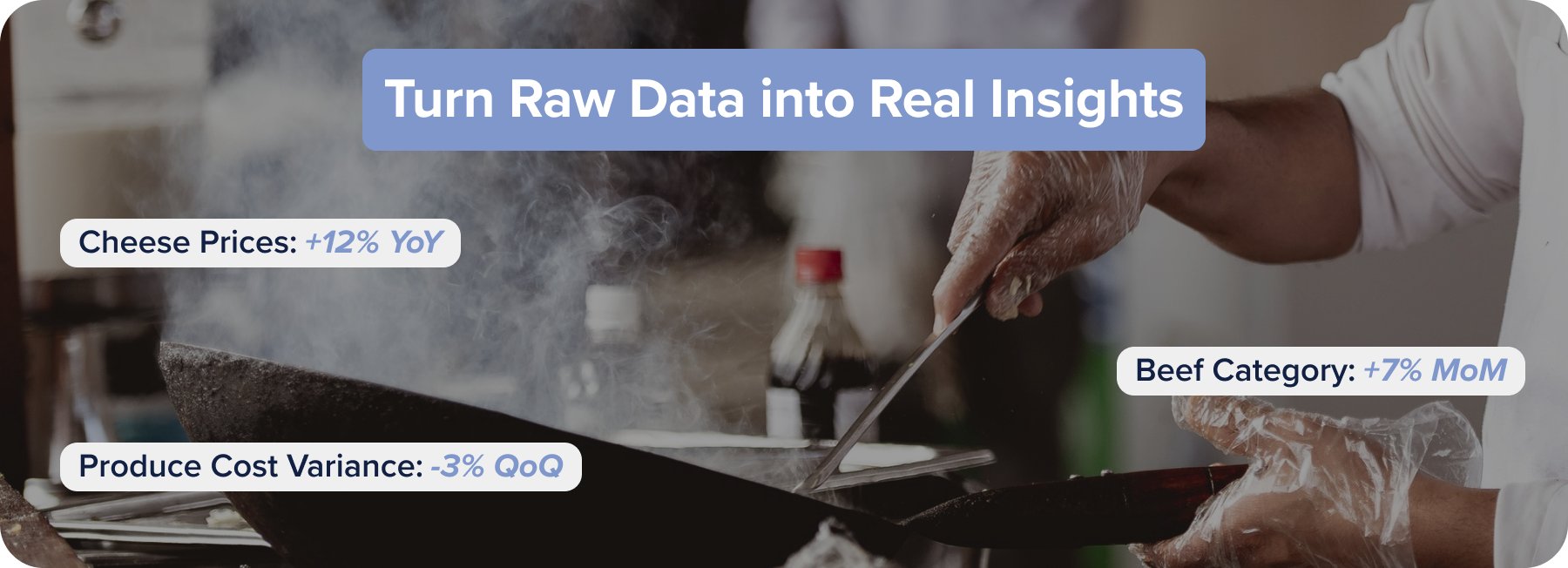
Here’s what it does:
- Compares product prices over time – month vs. month, quarter vs. quarter, or year vs. Year.
- Groups spend by major categories – proteins, dairy, produce, beverages, and more.
- Drills down to line-item detail – manufacturer, brand, pack size, product code, and unit type.
- Connects to over 9,000 USDA Commodity Markets – customized to your specific product mix.
The result? Operators no longer have to guess why food costs are rising. They can see exactly which products are driving the increases, by how much, and what the overall impact is on their spend.
Layering Market Intelligence with USDA Data
The Price & Market Trend Widget does more than just show you what you can buy. It gets its power from real-time USDA market data, which lets operators see over 2,700 USDA markets and get weekly updates on trends. Users can look at past market performance, set custom alerts, and download detailed reports—all from the InsideTrack platform.
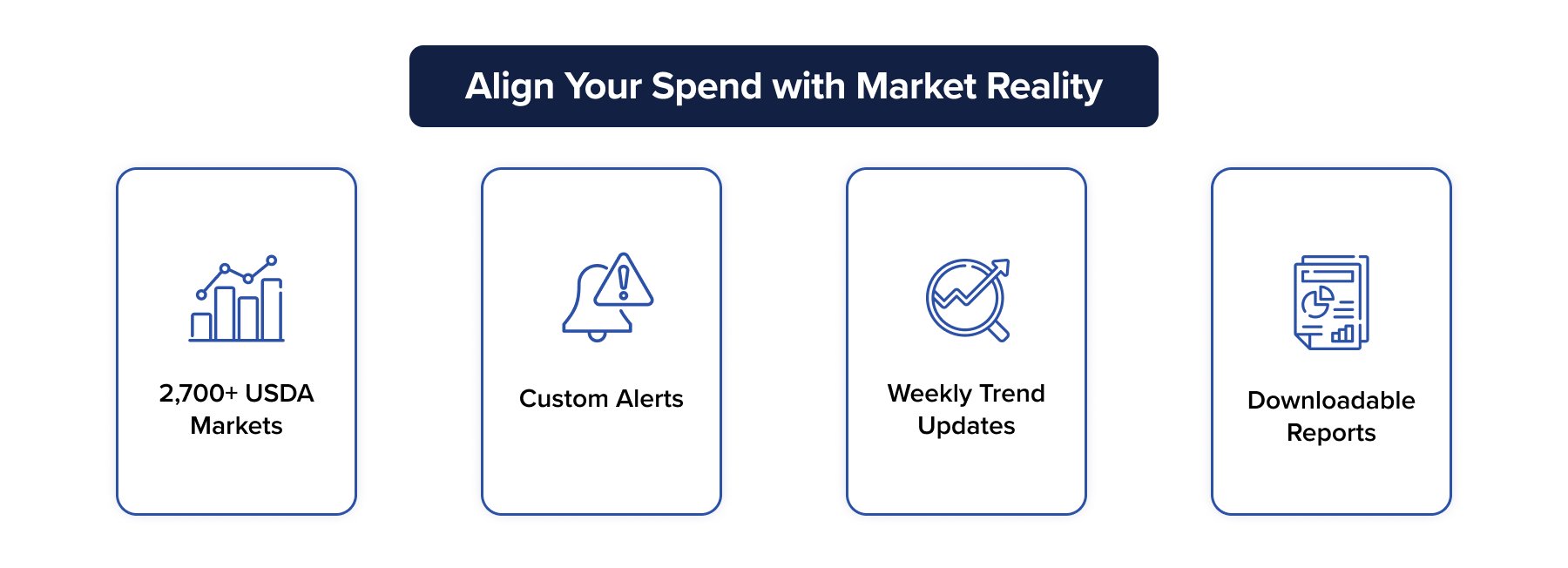
This integration provides operators with two critical views:
- Internal vs. External Pricing: Compare your actual spend against USDA market averages to ensure you’re maximizing every program.
- Historical and Predictive Insights: Identify trends, anticipate price movements, and reduce risk before costs escalate.
Whether you’re part of a Consolidated Concepts sourcing program or managing procurement independently, InsideTrack’s USDA market data helps you align real-time visibility with long-term strategy—so you’re never caught off guard by sudden market shifts.
Core Benefits for Operators
Here’s where the widget delivers real, measurable value:
-
Category Management Made Simple
Instead of looking at costs one invoice at a time, the widget groups spend into major categories. Operators can quickly see which categories are stable, which are volatile, and which are eating into margins.
-
Drill Down to the Line Item
It’s not enough to know that dairy is up 8%. You need to know why. The widget lets you click into cheese, yogurt, or milk and see the exact brand and pack size driving the increase. That’s the level of detail that arms you for negotiation and smarter purchasing.
-
Program Impact Measurement
Have you recently joined a GPO or negotiated a new manufacturer contract? The widget lets you measure the difference. Compare your spend before and after, and you’ll see whether those programs are delivering real savings—or if they need to be revisited.
-
Market Intelligence at Your Fingertips
With access to USDA commodity markets, you can layer your actual purchase data against national trends. For example, if your beef costs are rising faster than the market average, you’ll know it’s time to investigate.
-
Negotiation Power
Perhaps the biggest advantage: negotiation leverage. Walking into a supplier meeting with data changes the conversation. Instead of “we feel like prices are up,” you can say, “our cheese costs increased 12% year-over-year, and the USDA market only rose 7%. Let’s talk about the gap.”
How Operators Use It in Real Life
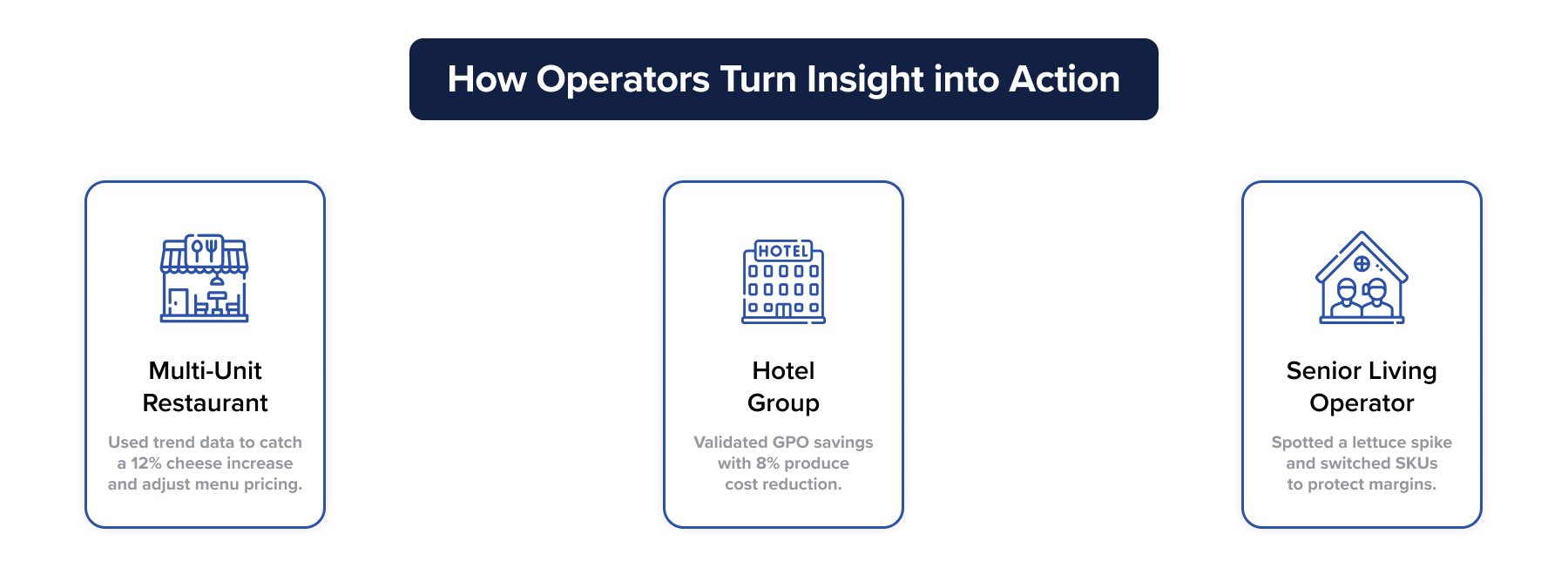
Scenario 1: Multi-Unit Restaurant
A regional pizza chain notices cheese costs creeping up. Using the widget, they see a 12% increase in mozzarella compared to last year. With that insight, they adjust menu pricing and negotiate with suppliers to prevent further margin erosion.
Scenario 2: Hotel Group
A resort system joins a GPO program that promises lower produce costs. The widget shows them a before-and-after comparison of spend, validating that the program delivered an 8% savings on fresh produce categories.
Scenario 3: Senior Living Operator
A senior living community monitors produce costs quarterly. When lettuce spikes unexpectedly, they use the widget to identify alternative SKUs, reducing reliance on volatile items and protecting their residents’ dining budgets.
Defining the Key Terms
Sometimes procurement language can feel like alphabet soup. Here are a few quick definitions:
- Category Management – Organizing products into broad categories (like dairy, protein, or produce) to better understand spend patterns and risks.
- Price Fluctuation – Changes in unit cost over time, often influenced by seasonality, supply chain disruptions, or market conditions.
- Procurement Intelligence – Turning raw purchase data into insights that guide smarter sourcing, negotiations, and cost control.
The Bigger Picture — Why This Matters for 2025
Operators are facing a tougher road than ever before:
- Food costs remain high and volatile.
- Labor shortages force teams to do more with fewer staff.
- Customers are increasingly price-conscious, limiting how much operators can raise menu prices.
Technology adoption is accelerating in response. In fact, 4 in 10 restaurants now use technology to boost productivity, and 47% of operators believe tech solutions for labor challenges will expand this year. InsideTrack’s Price & Market Trend Widget is part of that wave—helping operators gain clarity, control, and confidence in their spend.
A Quick Note on the Demo
If you’d like to see the widget in action, InsideTrack has a recorded Master User Group (MUG) session available that walks through its functionality. It’s a helpful way to see how real operators use the tool day-to-day.
Turning Data into Purchasing Power
Price volatility isn’t going away, but you don’t have to face it empty-handed. InsideTrack’s Price & Market Trend Widget gives operators the visibility they need to:
- Understand category-level cost impacts
- Drill down into item-specific changes
- Compare against market benchmarks
- Validate program effectiveness
- Walk into negotiations with confidence
With InsideTrack, you move from reactive purchasing to proactive strategy—turning every invoice into a source of intelligence.
Ready to stop guessing and start gaining clarity? Fill out the form below or click here to speak to an InsideTrack expert today!