
Food cost variance is one of those metrics every restaurant talks about, but not everyone truly understands. On paper, food costs may look “fine.” In reality, small variances can quietly drain margins week after week without ever setting off alarms.
For operators, food cost variance isn’t just an accounting exercise. It’s a signal. When you know how to calculate it, track it consistently, and act on what it reveals, it becomes one of the most powerful tools for protecting profitability.
This guide breaks down what food cost variance is, why it matters, how to calculate it, and—most importantly—how restaurants can control it in the real world.
What Is Food Cost Variance?
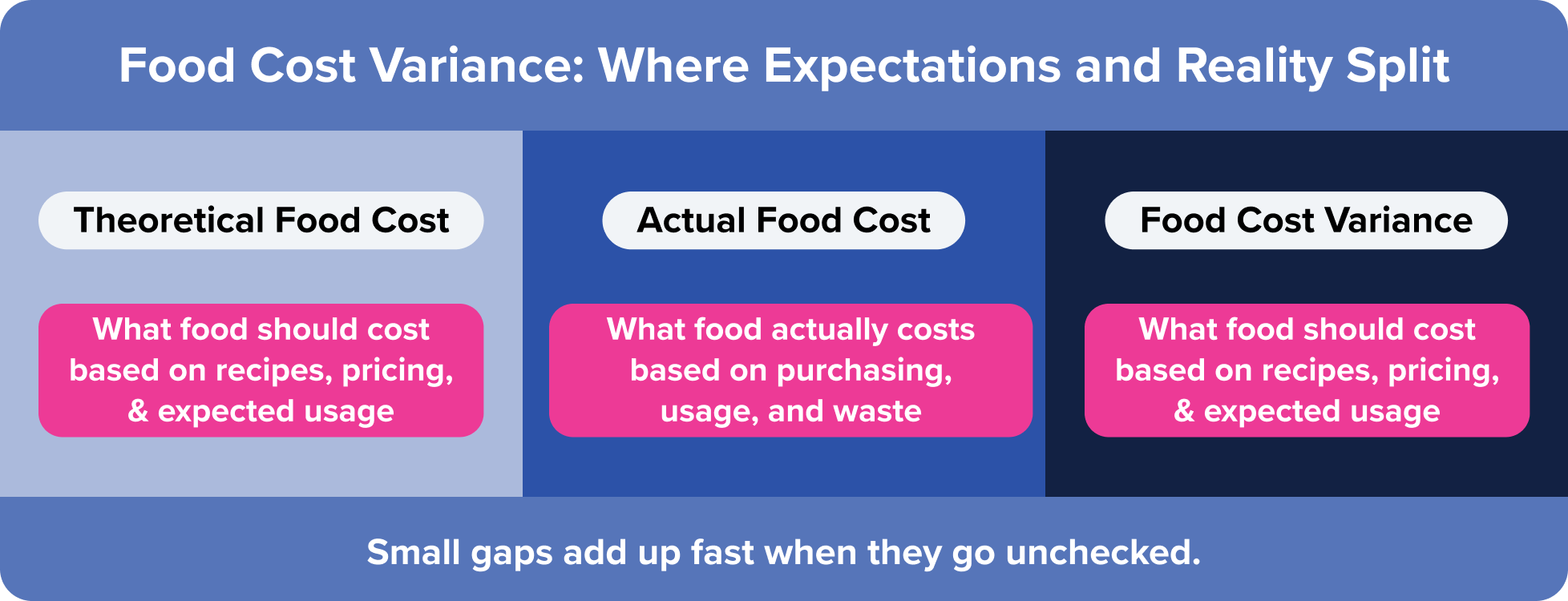
Food cost variance is the difference between what food should cost based on recipes, pricing, and inventory expectations, and what it actually costs once sales and usage are accounted for.
In simple terms:
- Theoretical food cost = what your food cost should be
- Actual food cost = what you actually spent
The gap between those two numbers is your cost variance.
Variance can show up slowly or all at once. A few extra ounces on every plate. A missed price increase from a supplier. Inventory counts that don’t match reality. Individually, these issues feel small. Together, they add up fast.
Why Food Cost Variance Matters for Restaurants
Margins in foodservice are thin by nature. That makes food cost variance especially dangerous because it often goes unnoticed until it’s already had a financial impact.
Consistently tracking variance helps restaurants:
- Identify waste and over-portioning
- Catch pricing errors and contract issues
- Spot operational breakdowns before they escalate
- Understand where food cost increases are actually coming from
Without visibility into variance, operators are often left guessing why food costs are climbing—even when sales look strong.
How to Calculate Food Cost Variance
While formulas can vary slightly by operation, the most common approach compares actual food cost to theoretical food cost.
Basic calculation:
- Food Cost Variance = Actual Food Cost − Theoretical Food Cost
Many restaurants calculate variance as a dollar amount, a percentage, or both. The key isn’t just the math. It’s consistency. Variance only becomes meaningful when it’s measured the same way, over the same periods, using reliable data.
How Often Should Food Cost Variance Be Measured?
There’s no universal rule, but waiting too long is where many restaurants go wrong.
Most operators benefit from:
- Weekly variance reviews for fast-moving items
- Monthly reviews for broader trend analysis
- Ongoing monitoring during periods of price volatility
The longer the gap between reviews, the harder it becomes to trace variance back to its source.
Common Causes of Food Cost Variance
Food cost variance rarely has a single cause. More often, it’s a combination of small issues across the operation.
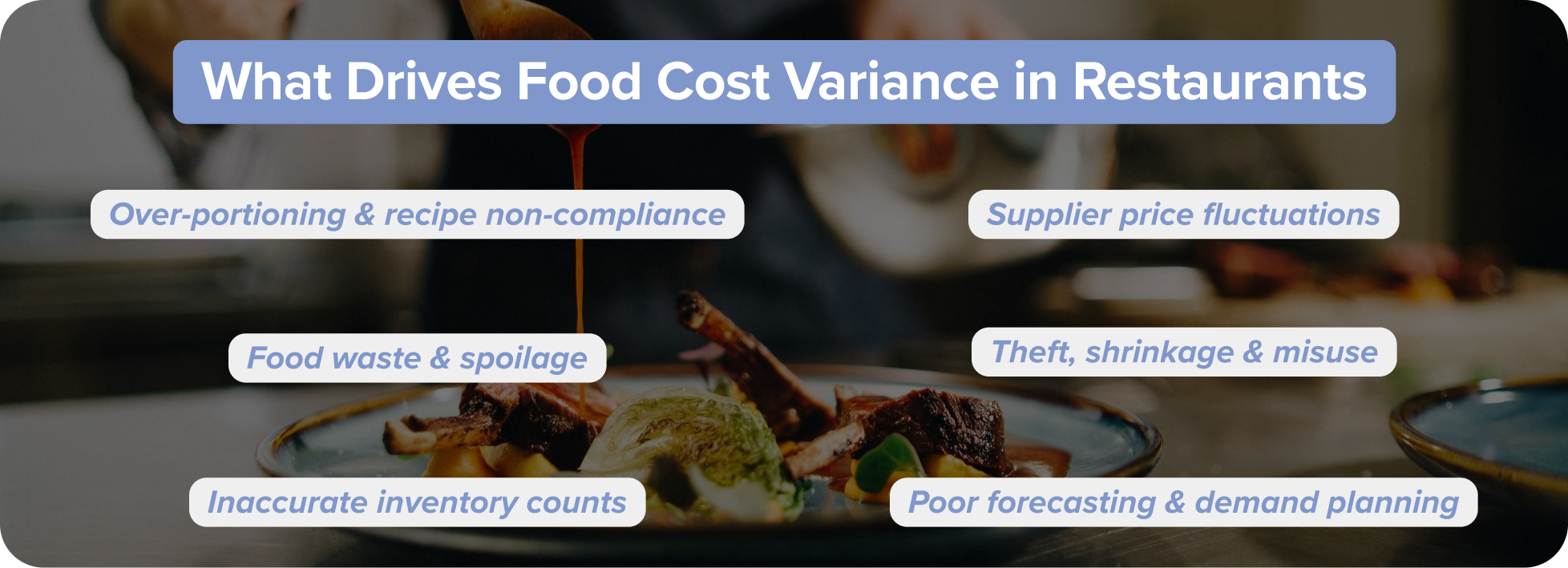
Over-Portioning and Recipe Non-Compliance
When recipes aren’t followed consistently, food costs creep up silently. A little extra protein here, an unmeasured scoop there—it adds up faster than most teams realize.
Food Waste and Spoilage
Untracked waste, expired product, and prep overages all inflate actual food cost without showing up in sales.
Inaccurate Inventory Counts
If inventory counts are rushed, inconsistent, or skipped, variance numbers lose credibility. Bad data in means bad insights out.
Supplier Price Fluctuations
Price changes, temporary surcharges, and incorrect invoicing can all create variance if they aren’t caught and reconciled.
Theft, Shrinkage, and Misuse
Variance can also signal issues beyond operations, including misuse of product or internal loss that isn’t immediately visible.
Poor Forecasting and Demand Planning
Ordering too much—or too little—leads to spoilage, emergency purchases, and higher per-unit costs.
Understanding Positive vs. Negative Food Cost Variance
Not all variance is created equal.
- Negative variance means the actual food cost is higher than expected. This is typically a red flag.
- Positive variance means the food cost came in lower than expected.
While positive variance sounds good, it still deserves scrutiny. It may indicate menu mix changes, incorrect theoretical costs, or inventory inaccuracies rather than true savings.
How to Control and Reduce Food Cost Variance
Getting Variance under control isn’t about running a perfect kitchen. It’s about building habits that hold up on busy nights, short-staffed shifts, and everything in between.
Standardize Recipes and Portion Control
When recipes are clear, portions are defined, and the right tools are used, your numbers stop drifting. Consistent execution keeps what you planned to spend much closer to what actually hits the plate.
Improve Inventory Accuracy and Count Frequency
Inventory only works if it reflects reality. More frequent, more accurate counts help you spot problems early—before small misses turn into big losses.
Strengthen Waste Tracking and Accountability
Waste happens. Ignoring it is the real problem. When teams log waste consistently, trends show up fast, and those trends are fixable with the right adjustments.
Monitor Supplier Pricing and Contract Compliance
Price creep is sneaky. Regularly checking invoices against contracted pricing helps catch errors early and prevents quiet margin erosion over time.
Align Purchasing With Forecasted Demand
Buying too much ties up cash. Buying too little leads to expensive last-minute orders. Smarter forecasting keeps purchasing aligned with actual demand and protects margins on both ends.
Train Staff on Cost Awareness and SOPs
Food cost control isn’t just a manager problem. When the whole team understands how prep, portions, and waste affect the bottom line, better decisions happen naturally during service.
Using Data to Track and Control Food Cost Variance
Variance really starts to matter when it’s connected to what’s actually happening in your operation. Data turns variance from a frustrating number into a clear signal you can act on.
Comparing Actual vs. Theoretical Costs
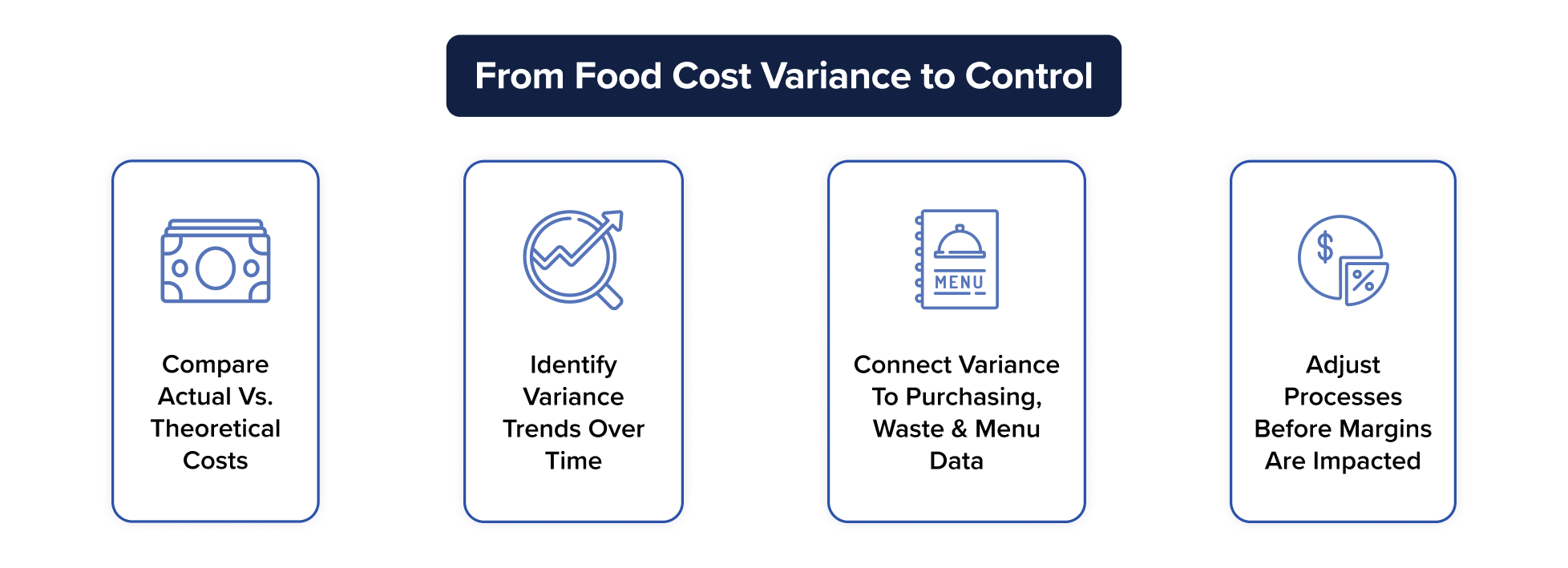
This is where the story starts. Lining up what you expected to spend with what you actually spent shows you exactly where things drifted—and gives you a place to start asking why.
Identifying Variance Trends Over Time
A rough week happens. A rough month means something deeper is off. Looking at variance over time helps separate one-off issues from patterns that need attention.
Linking Variance to Purchasing, Waste, and Menu Data
Variance doesn’t live in a vacuum. When you connect it to ordering habits, waste logs, and menu performance, the numbers start to explain themselves instead of just raising questions.
Turning Variance Insights Into Actionable Controls
The point isn’t another report sitting in a folder. It’s making small adjustments—tweaking orders, tightening prep, updating processes—before small issues turn into expensive problems.
Common Mistakes Restaurants Make With Food Cost Variance
Even restaurants that keep track of variance make the same mistakes.
Treating Variance as a One-Time Metric
Variance needs to be looked at on a regular basis, not just once in a while.
Relying on Infrequent Inventory Counts
Counts that don’t happen often make it hard to tell what caused what.
Ignoring Variance at the Item or Recipe Level
High-level variance hides problems with specific items.
Failing to Act on Variance Insights
Margins aren’t safe with data that isn’t followed up on.
Final Thoughts
Food cost variance isn’t about chasing perfection. It’s about visibility, consistency, and control.
When restaurants understand what’s driving variance—and respond quickly—they move from reacting to food costs to managing them with confidence. Over time, that discipline shows up where it matters most: in stronger margins and more predictable performance.
Click here to discover how InsideTrack can helps restaurants gain visibility into food costs and protect margins.
Food Cost Variance FAQs
What is the food cost variance formula?
Food cost variance is typically calculated by subtracting theoretical food cost from actual food cost.
What is considered an acceptable food cost variance?
Acceptable variance varies by concept, but consistent swings—positive or negative—should always be investigated.
How can restaurants consistently control food cost variance?
Regular inventory counts, standardized recipes, accurate pricing, and connected data systems help keep variance in check.
How does food cost variance affect profitability?
Unchecked variance erodes margins quietly, often without obvious warning signs until profits are already impacted.