

There was a time when managing food categories felt pretty straightforward. You picked your distributors, trusted your reps, checked invoices once in a while, and tried not to run out of top sellers. If something went up in price, you adjusted and moved on.
Those days are long gone.
Today’s operators are juggling more SKUs, more suppliers, tighter labor, unpredictable pricing, and guests who expect both consistency and value at the same time. In that reality, guessing your way through purchasing just doesn’t work anymore. That’s where Category Management becomes less of a “buzzword” and more of a survival skill.
Category Management gives operators a way to step back from the daily rush and actually understand how products behave across their business — what sells, what overperforms, what quietly drains margin, and where suppliers are truly adding value.
What Is Category Management?
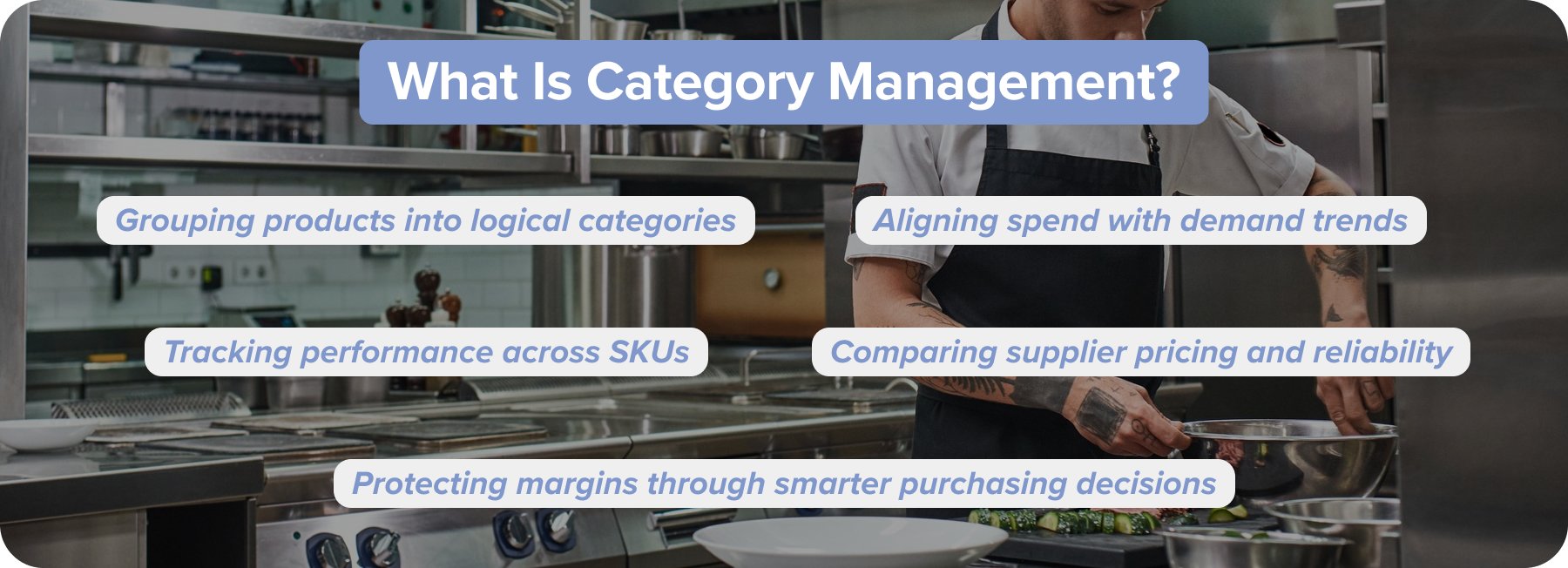
At its core, Category Management means organizing products into logical groups (proteins, dairy, beverages, disposables, produce, and so on) and managing each group like its own business.
Instead of evaluating one item at a time, operators look at:
- How the products perform together
- Which items drive volume versus margin
- How suppliers stack up inside each category
- Where pricing inconsistencies hide
- What demand patterns look like week over week
It’s the difference between managing purchases and managing strategy.
Rather than reacting to price increases as they hit invoices, Category Management helps operators see trends forming ahead of time and make adjustments before margins suffer.
Why Category Management Matters in Foodservice
Foodservice purchasing is no longer stable or predictable. Costs move quickly. Availability shifts overnight. One menu change suddenly increases demand for products you hadn’t forecasted. Multiply that by multiple locations and distribution partners, and things get messy fast.
Without Category Management, operators often face:
- Conflicting pricing across locations
- Overlapping SKUs doing the same job
- Unused or forgotten inventory sitting on shelves
- Missed leverage during supplier negotiations
- Late detection of contract non-compliance
Category Management cuts through that noise by focusing on performance — not opinions, habits, or “the way it’s always been done.”
Category Management in the Real World
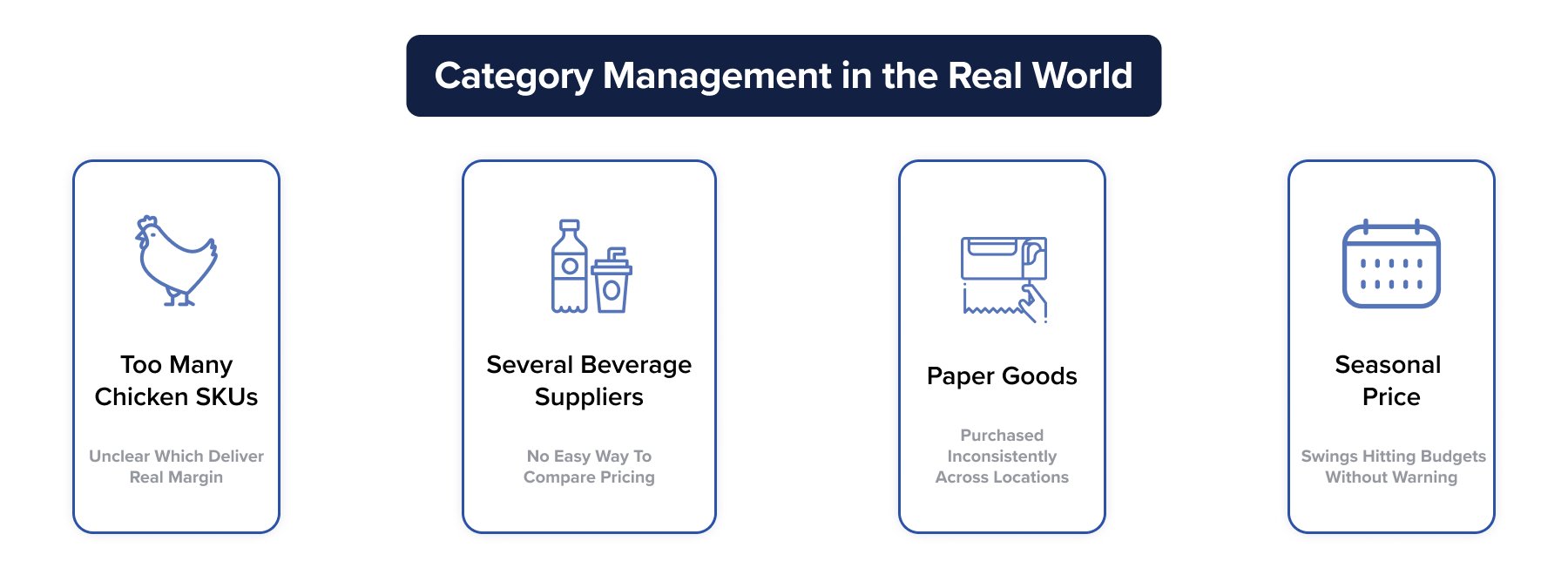
In foodservice, Category Management isn’t some boardroom exercise. It shows up in real, everyday decisions:
- Should you carry five variations of frozen chicken tenders or three?
- Is one beverage supplier outperforming the others on pricing or reliability?
- Are paper goods being ordered consistently across locations, or is purchasing being done ad hoc?
- Which categories see the biggest price swings during seasonality?
When operators step back and assess categories instead of individual products, these decisions become clearer and smarter.
Common Challenges Without a Category Strategy
Most operators don’t ignore Category Management on purpose. They just don’t have time to do it manually.
Spreadsheets grow outdated faster than they can be updated. Invoices arrive from multiple distributors each week. Usage patterns change before anyone can identify the cause.
Without technology support, operators are often left with partial visibility which means decisions rely more on gut instinct than real insight.
Over time, this leads to slow margin erosion. Nothing catastrophic. Just small losses stacking up: unchecked price creep here, wasted overstock there, missed consolidation opportunities everywhere.
Best Practices for Strategic Category Management
While every operation is different, strong category programs tend to share a few habits.
- Visibility comes before action. Spend data must be centralized and categorized correctly before any meaningful analysis can happen.
- SKU discipline matters. More options don’t mean better performance. Fewer, higher-performing SKUs usually deliver stronger pricing, easier inventory control, and cleaner menus.
- Supplier accountability stays consistent. Data backs up negotiations instead of assumptions driving them.
- Monitoring happens continuously, not quarterly. Issues caught early cost far less than problems discovered late.
How Technology Supports Category Management
This is where technology changes the game.
Instead of wrestling with messy distributor spreadsheets, operators can use platforms that pull all their purchasing data into one place, organize it by category, and make trends easy to spot. Pricing variances become obvious instead of hidden. Demand patterns show up faster. Inventory forecasts become more reliable.
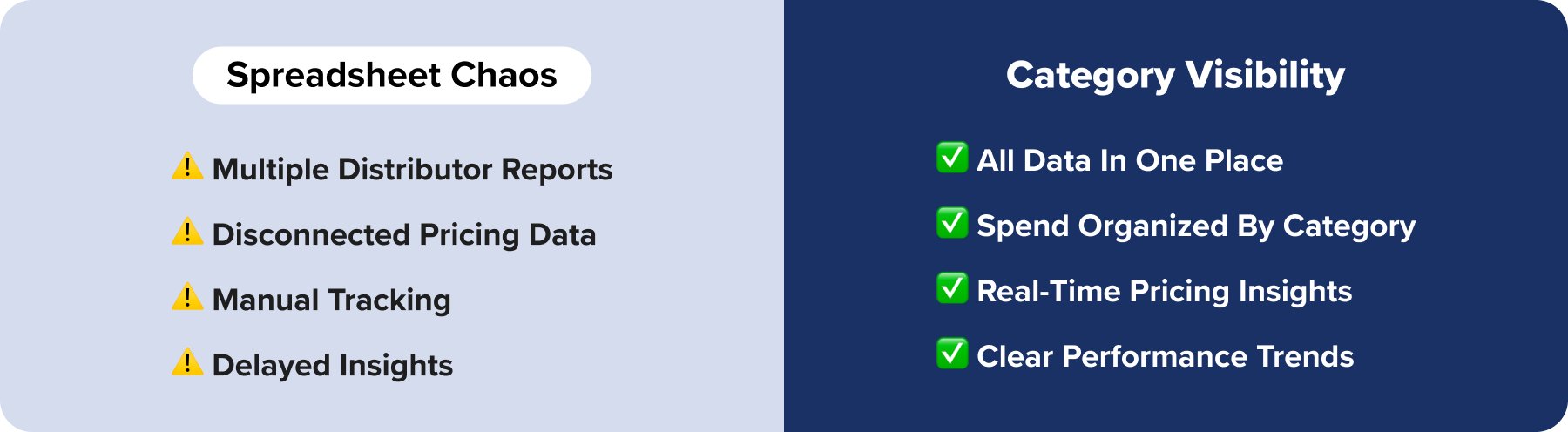
Technology shifts category management from something operators “mean to get to” into something that runs quietly in the background — always measuring, comparing, and spotting issues before they grow.
Category Management With InsideTrack
InsideTrack supports category management by giving operators clean visibility into how categories perform across all locations and suppliers without drowning them in reports.
Purchasing data is centralized and categorized so teams can easily:
- Compare category pricing across suppliers
- Monitor contract compliance
- Identify underperforming SKUs
- Track usage shifts by location or season
- Spot cost-saving opportunities rooted in real behavior
The focus isn’t on learning another system; it’s on making category insights usable. Clear dashboards replace guesswork, allowing operators to make faster, better decisions without losing hours to spreadsheets.
The Bigger Picture
Category Management is no longer a “nice-to-have.” It’s a practical response to the complexity of modern foodservice operations.
For operators focused on protecting margins, improving consistency, and strengthening supplier relationships, category strategy offers something invaluable: clarity.
And in an industry moving this quickly, visibility isn’t just useful — it’s essential.
Start Managing Categories With Confidence
With the right tools and the right data, Category Management becomes less about chasing costs and more about controlling them.
InsideTrack helps operators turn purchasing complexity into category-level clarity — making it easier to see what’s working, what needs adjustment, and where opportunities to improve profitability exist across the business.