
Keeping a foodservice operation profitable isn’t easy. You’re constantly trying to stretch budgets, maintain quality, and keep your suppliers on track , all while the market shifts under your feet. The truth is, success doesn’t just come from good prices or solid vendor relationships anymore. It comes from having food procurement strategies that help you stay one step ahead.
Every order, every contract, every shipment adds up. If you don’t have visibility into what’s really happening, from pricing trends to supplier performance, it’s easy for small inefficiencies to turn into big losses. The operators who win today are the ones who treat procurement like a strategy, not a task.
Because at the end of the day, buying food isn’t the hard part. Building a supply chain that bends without breaking? That’s where the real work (and reward) begins.
Food Procurement and Its Importance
Let’s be honest — food procurement is about way more than calling up vendors and placing an order. It’s the heartbeat of how a kitchen runs. When the process works, everything clicks: deliveries show up on time, ingredients stay consistent, and costs stay in check. When it doesn’t, you feel it fast — missing inventory, surprise charges, and way too much time spent chasing down credits.
The operators who stay ahead are the ones who treat procurement as a strategy, not an afterthought. Having food procurement strategies in place helps them:
- Lock in dependable pricing and quality with suppliers they can trust
- Smooth out the chaos when markets get unpredictable
- Keep everyone — from purchasing to culinary to accounting — on the same page
- Catch contract or rebate issues before they become real problems
At the end of the day, smart procurement isn’t about paperwork. It’s about keeping the operation moving smoothly and making sure every dollar you spend actually works for you.
Core Challenges in Food Procurement
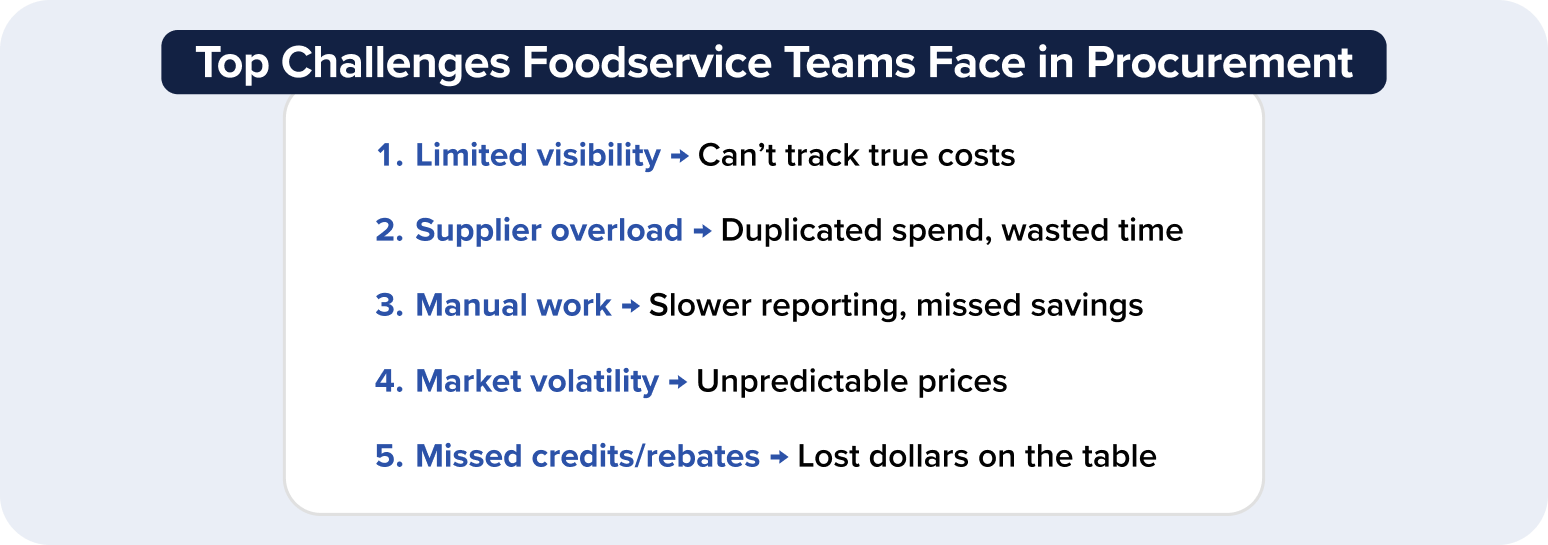
Even the best procurement teams hit roadblocks. Some come from the way their organization is set up, others just from how fast this industry moves. Things rarely stay steady for long — and that’s what makes procurement both challenging and crucial.
Here are a few pain points that operators run into all the time:
- Limited visibility: Too many teams still rely on old reports that don’t tell the full story. You can’t fix what you can’t see.
- Supplier overload: Managing a dozen different vendors without one clear system can get messy fast — duplicate orders, pricing errors, and wasted time.
- Manual everything: Spreadsheets might feel comfortable, but they eat up hours that could be spent on strategy.
- Market whiplash: Prices jump, freight shifts, and supply tightens overnight. Planning ahead can feel impossible.
- Missed credits and rebates: Without regular audits, money owed to you can easily slip through the cracks.
The upside? None of these problems are permanent. With the right data tools and smarter food procurement strategies, you can turn those pain points into opportunities to tighten control, gain clarity, and actually get ahead.
6 Innovative Food Procurement Strategies
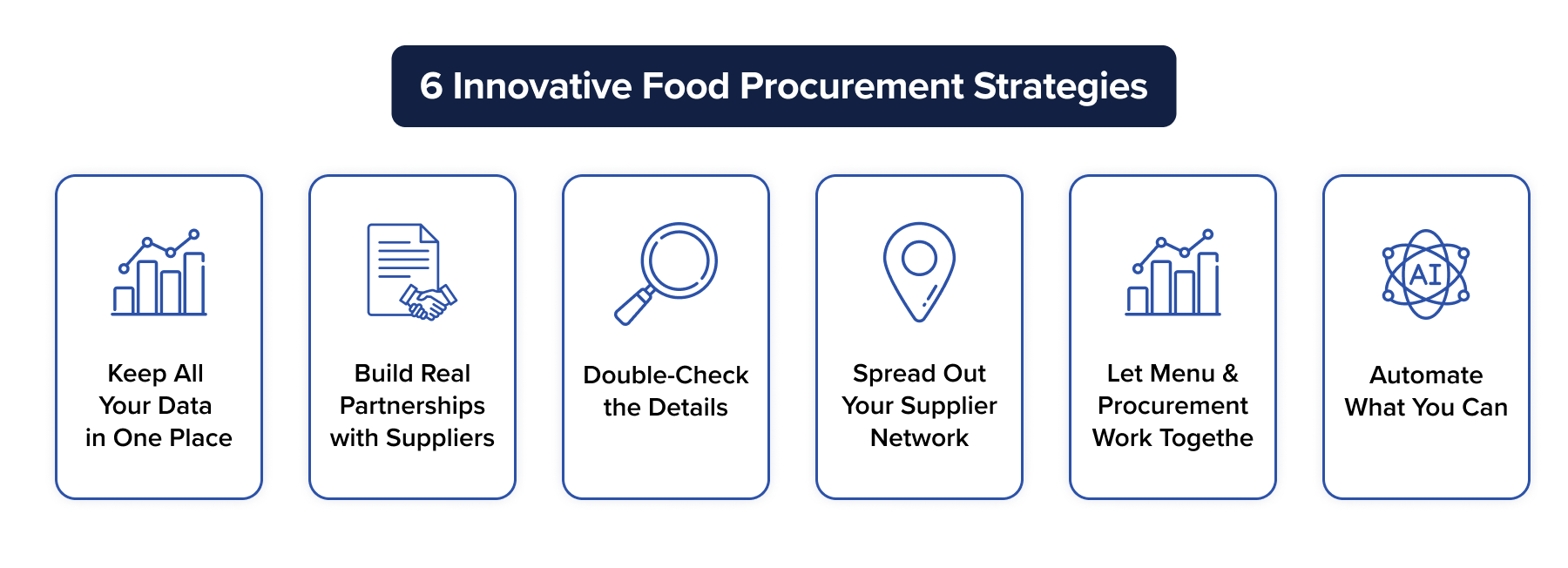
The most effective food procurement strategies don’t just cut costs, they create smarter systems that help teams make decisions with confidence.
1. Keep All Your Data in One Place
If your spend data is scattered across emails, invoices, and random folders, you’re basically flying blind. Once everything lives in one spot, patterns start to jump out — where the money’s going, which suppliers are really pulling their weight, and where costs could be tightened up. Visibility is the first step toward control.
2. Build Real Partnerships with Suppliers
A good supplier isn’t just a name on a contract. They’re a partner who helps you hit goals, stay consistent, and adapt when things change. Keep tabs on their fill rates and accuracy, and talk about performance openly. Collaboration beats confrontation every time.
3. Double-Check the Details
Negotiating great pricing is one thing — making sure you’re actually getting it is another. Regular audits or automated price checks can catch mistakes early and make sure you’re getting every rebate, credit, or discount you’ve earned. It’s basically your insurance policy against overpaying.
4. Spread Out Your Supplier Network
Putting all your eggs in one basket is risky business. If one vendor runs into a shortage or a strike, your operation feels it instantly. Keep a healthy mix of regional, national, and specialty suppliers so you’ve always got a backup plan — and some leverage when it’s time to negotiate.
5. Let the Menu and Procurement Work Together
Your menu drives what you buy, so the two should talk to each other. When you connect purchasing data with recipe costs, you can make smarter calls — like swapping ingredients when prices spike or trimming low-margin dishes. That’s where real savings come from.
6. Automate What You Can
Nobody gets into foodservice to stare at spreadsheets. Let tech handle the repetitive stuff like invoice matching or price verification. It frees up your team to focus on planning, relationships, and the big-picture moves that actually grow profit.
Sustainability in Food Procurement
Sustainability is no longer optional; it’s a responsibility. More operators are weaving environmental and ethical standards into their food procurement strategies. The shift isn’t just about image — it’s about long-term efficiency and consumer trust.
Sustainable procurement can include:
- Sourcing from local or regional suppliers to reduce emissions
- Using data to forecast more accurately and limit food waste
- Partnering with vendors who uphold ethical labor and sourcing practices
- Choosing packaging that’s recyclable or compostable
The most sustainable operations often find they’re more efficient, too — fewer miles traveled, less waste, and better inventory control all translate to savings.
Leveraging Technology for Smarter Procurement
Technology has completely changed the game for procurement teams. A few years ago, most operators were just reacting to problems after they happened — a late delivery, a price jump, an invoice that didn’t match the contract. Now, with the right systems in place, those same teams can spot issues before they snowball and make adjustments in real time.
When you bring technology into your food procurement strategies, the whole process shifts from firefighting to forecasting. Here’s what that looks like in practice:
- Catching price changes early so you’re not surprised at the end of the month
- Automatic compliance checks that flag when a charge doesn’t match your contract
- Simple dashboards that show exactly where your money’s going and which suppliers are performing best
- One place for all your reporting, so you’re not hunting through ten different spreadsheets
- Smarter forecasting tools that learn from real market trends and past data
These tools don’t just pile up numbers. They give your team a clear picture — one that helps you make decisions faster, with fewer surprises and a lot more confidence.
How InsideTrack Transforms Food Procurement
InsideTrack pulls everything together so operators don’t have to juggle five different systems or chase down reports from every location. It’s built for teams that want less guessing and more knowing — the kind of clarity that makes decision-making faster and a whole lot easier.
Instead of spending hours sorting invoices or double-checking prices, the platform does that work in the background. It catches price discrepancies before they become a problem, keeps rebate and credit info organized, and turns all that purchasing data into something you can actually use.
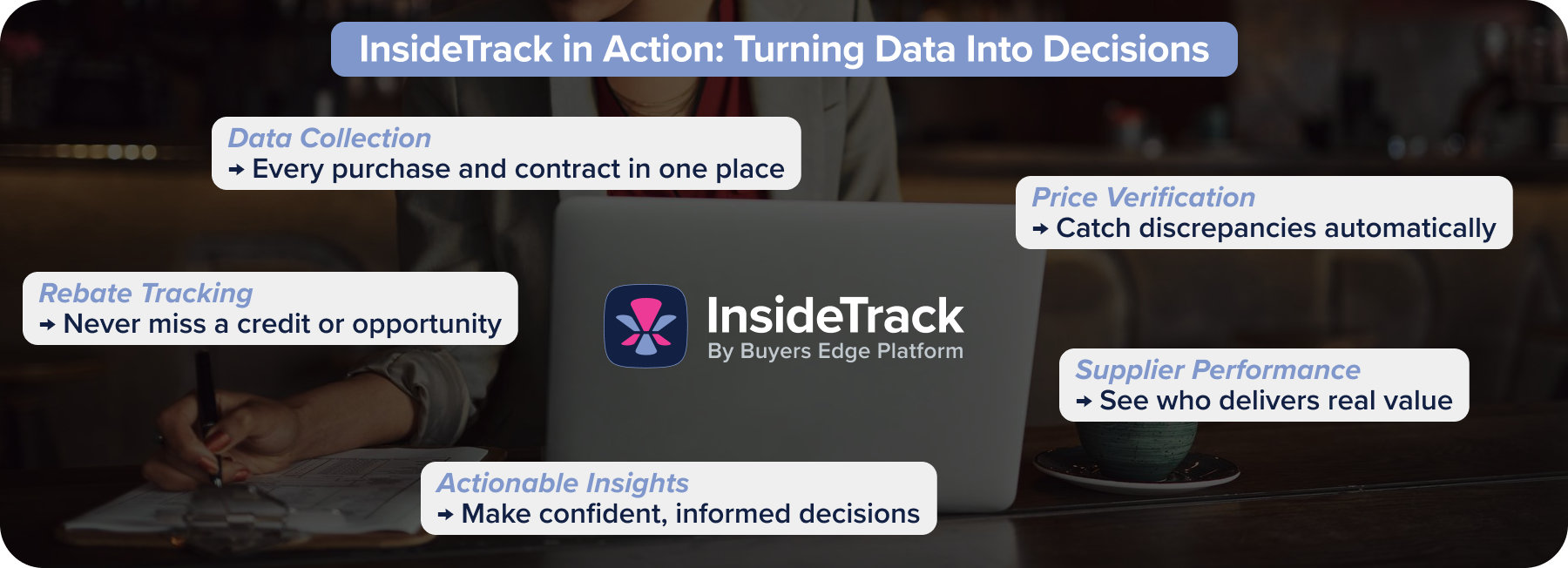
Here’s what operators say makes the biggest difference:
- Having every purchase, contract, and supplier show up in one place
- Automated price checks that flag overcharges right away
- Rebate tracking that makes sure nothing slips through the cracks
- Clear supplier scorecards that show who’s delivering real value
- Dashboards that make complex data feel simple and actionable
At the end of the day, InsideTrack doesn’t replace your team — it makes them sharper. It cuts through the noise, gives you confidence in your numbers, and turns procurement into a real strategic advantage.
Why Smart Procurement Wins Every Time
When it comes down to it, the goal isn’t just to score better pricing or chase a quick win. The best food procurement strategies help you run the whole operation smarter. It’s about seeing what’s really happening, holding people accountable, and using the right tools to make good decisions faster.
When you’ve got real visibility into your spend and a system that keeps everything organized, procurement starts working for you instead of against you. It’s no longer just an expense you have to manage — it becomes part of how you grow, protect your margins, and stay steady when the market swings.
That’s where InsideTrack fits in. It gives operators a clearer picture of what’s going on behind the numbers, helps them spot issues before they get expensive, and makes it easier to negotiate from a place of confidence.
In an industry where costs can shift overnight, that kind of clarity is everything. It’s what keeps good operations stable — and great ones thriving.
Click here to explore how InsideTrack can elevate your food procurement strategy.