

Few industries feel supply disruptions as quickly or painfully as foodservice. When a manufacturing line goes down in retail, products back up in warehouses. When a distributor shorts an order on fresh produce, chicken cutlets, or dairy, a restaurant kitchen is forced to rewrite its menu before the dinner rush starts.
Building true supply chain resilience isn’t just about holding more inventory in your walk-in cooler or paying top dollar for rush shipments. It requires clear spend visibility, dynamic supplier relationships, and operational flexibility that protects both your food costs and your guest experience.
Supply chain resilience in foodservice is an operator’s ability to anticipate, absorb, and quickly recover from supply chain disruptions without running out of core menu items or destroying profit margins. Whether you’re running a single café or managing a regional chain, disruptions hit hard when you’re not ready.
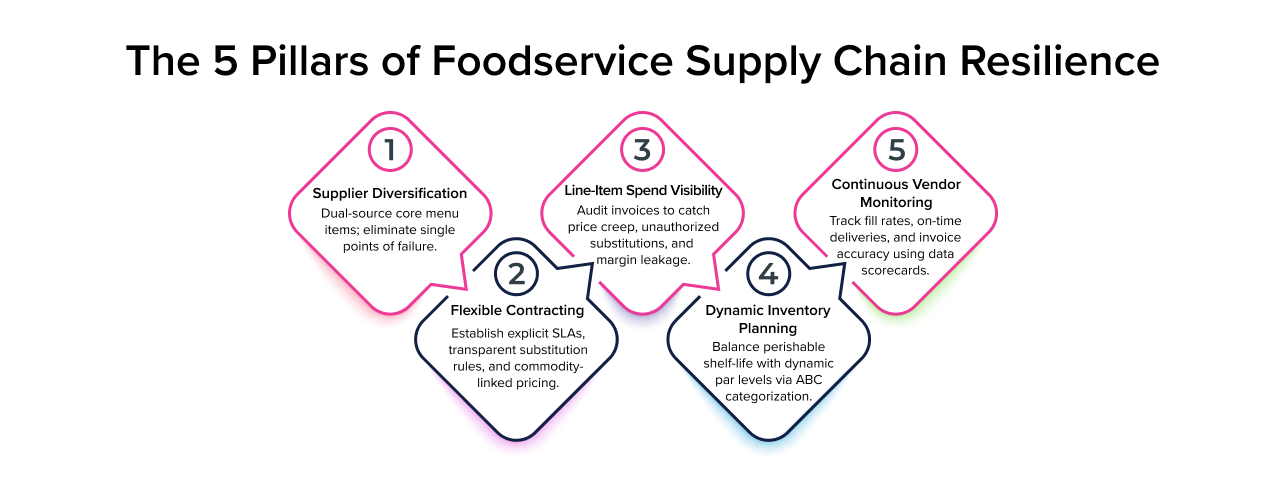
To build resilience across multi-unit or growing foodservice operations, leadership teams must focus on practical, proven pillars:
- Supplier diversification to eliminate single points of failure.
- Flexible contracting to avoid rigid minimums and uncompetitive lock-ins.
- Line-item spend visibility to catch price spikes, rogue substitutions, and margin leaks early.
- Demand-driven inventory planning that balances shelf life with safety stock.
- Continuous vendor performance tracking using data rather than gut instinct.
Before putting these strategies into practice, it’s important to understand why foodservice supply chains are uniquely vulnerable to disruption in the first place.
Why Foodservice Supply Chains Are More Challenging to Manage
Foodservice logistics operate on tighter timelines, narrower margins, and stricter quality standards than almost any other sector. Unlike manufacturing or retail, you’re dealing with products that spoil, menus that change hourly, and customers who notice—and complain—if their favorite dish is missing. Let’s break down why this sector faces unique pressures.
Managing Perishable Inventory
Fresh produce, dairy, meat—these aren’t widgets you can store for months. They breathe, ripen, and go bad fast. Holding too much means waste and lost money. Holding too little means an 86’d special and disappointed guests. Balancing this tightrope requires real-time visibility and agile ordering, ensuring your inventory strategy protects both availability and margins.
The Challenges of Just-in-Time Purchasing
Just-in-Time (JIT) delivery models helped restaurant and hospitality groups run lean, freeing up working capital. However, JIT leaves zero margin for error. A missed delivery truck, a regional crop freeze, or a processing plant shutdown immediately cascades down to unit-level kitchens. Without built-in safety buffers or alternate distributor routes, lean purchasing can quickly turn into operational paralysis.
The Risks of Relying on a Single Supplier
Consolidating purchasing with one broadline distributor often feels convenient and can unlock tiered freight discounts on paper. However, single-sourcing your most critical menu ingredients leaves you completely exposed. If that single vendor experiences labor shortages, logistics failures, or regional allocations, your units have no backup supply line ready to step in. Rebuilding a vendor relationship during an active shortage always costs more than having secondary accounts active from the start.
How Price Volatility Affects Purchasing Decisions
Commodity swings in beef, eggs, cooking oil, and packaging create unpredictable budget swings. When prices jump unexpectedly, operators without contract protections or cross-market price visibility often make reactive purchasing decisions—such as accepting unauthorized substitutions at higher price points or compromising on pack size and quality just to keep food on the line.
Why Supplier Diversification Is Essential for Supply Chain Resilience
Working with one primary distributor can make purchasing easier. But when that distributor can’t deliver a critical item, convenience can quickly become a problem.
That doesn’t mean operators need multiple vendors for every product they buy. The goal is to know where the biggest risks are and have another option ready for the items that matter most. A primary broadline distributor might still handle most purchases, while a regional supplier, specialty distributor, or secondary broadliner provides backup for certain categories.
For operators, that extra coverage can make a difference in a few key areas:
- Protect Core Menu Items: Start with the products you can’t easily replace or remove from the menu. Having an approved secondary source or substitute SKU already identified can help teams respond quickly when an item is unavailable.
- Keep Pricing Competitive: A second source also gives procurement teams another point of comparison. If pricing changes or service begins to slip, you have a clearer picture of what other options are available.
- Support Different Markets: Distributor performance can vary by region. For multi-unit operators, a supplier that performs well in one market may not offer the same availability or service levels somewhere else. A more flexible supplier network can help fill those gaps.
How Flexible Supplier Contracts Help Reduce Supply Chain Risk
Supplier agreements shouldn’t make it harder to respond when conditions change. While contracts are important for establishing pricing and service expectations, operators also need enough flexibility to handle shortages, substitutions, and other issues that come up along the way.
When reviewing supplier agreements, pay particular attention to:
- Service Level Agreements (SLAs): Clearly document expectations for fill rates, delivery windows, order accuracy, and communication when products are unavailable.
- Substitution Rules: Decide ahead of time which substitutions are acceptable and how pricing will be handled. This helps prevent a shortage from turning into an unexpected cost increase.
- Price Adjustments: For categories affected by commodity volatility, contracts can spell out how and when prices may change and which market benchmarks will be used.
- Exclusivity Requirements: Understand whether an agreement limits your ability to buy from another supplier. For critical products especially, operators should know what options they have when their primary supplier can’t fulfill an order.
The contract should give both sides clear expectations without leaving the operator with nowhere to turn when supply conditions change.
How Spend Visibility Helps Identify Supply Chain Risks Earlier
Supply problems don’t always begin with an empty shelf. Sometimes the first sign is a higher case price, an unexpected substitute, or more spend shifting toward a single supplier.
That’s why purchasing visibility matters. Looking at line-item spend across locations and vendors can help procurement teams catch changes while there’s still time to do something about them.
Track Pricing Across Multiple Distributors
If you purchase the same or comparable products from more than one distributor, compare those costs regularly. A noticeable increase from one supplier may be tied to the broader market, but it could also point to a contract issue, inconsistent pricing, or a substitution that needs a closer look.
Seeing those differences gives your team a reason to investigate instead of simply absorbing the added cost.
Benchmark Market Pricing
Your invoice tells you what you paid. It doesn’t necessarily tell you whether you paid a competitive price.
Market benchmarks add that missing context. If beef, poultry, dairy, or another category is moving across the market, procurement teams can compare those trends against what they’re seeing on invoices. That makes it easier to separate a legitimate market increase from a supplier-specific pricing issue and gives teams better information for conversations with vendors.
Identify High-Risk Categories Before Disruptions Occur
Spend data can also show where your operation is especially dependent on a particular product, supplier, or market.
Look at where you’re spending the most, which products have limited approved alternatives, and which categories regularly experience price or availability swings. Seafood, specialty ingredients, imported products, and certain proteins may deserve more attention depending on your menu.
Once those areas are identified, teams can start working through the practical questions: Do we have another supplier? Is there an approved substitute? How quickly could we switch if we needed to?
Answering those questions before a disruption is a lot easier than answering them while restaurants are waiting on product.
How Better Inventory Planning Strengthens Supply Chain Resilience
Resilient inventory management does not mean overstuffing storerooms; it means having the right stuff, at the right time, in the right amount.
Calculate Dynamic Par Levels
Adjust par levels seasonally, accounting for supplier lead times, weather risks, and holiday volume spikes rather than relying on static ordering sheets.
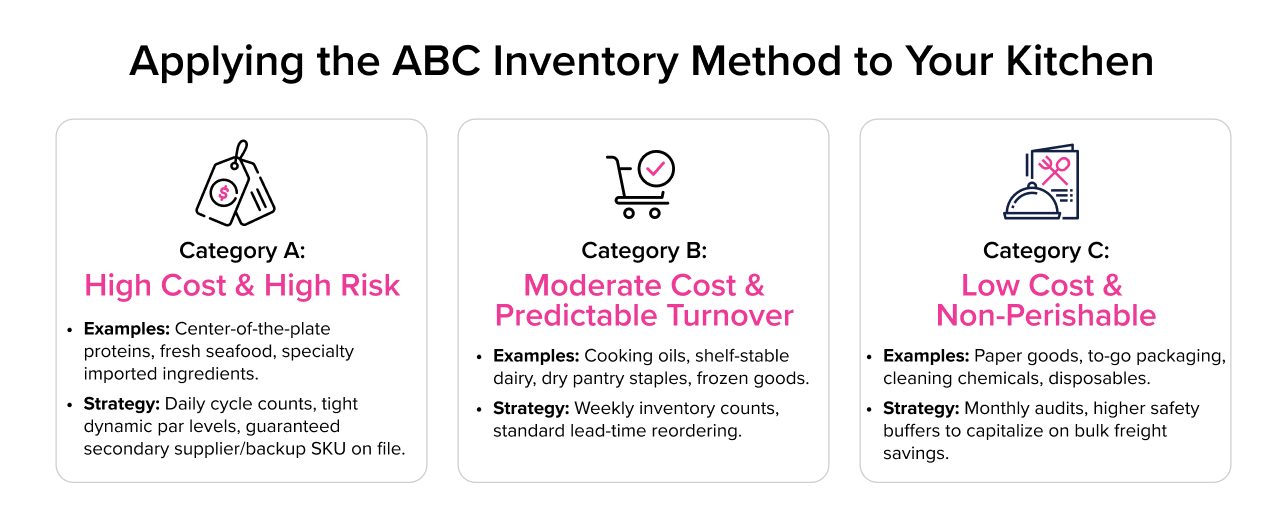
Prioritize ABC Category Control
- A Items: High-value, critical center-of-the-plate ingredients requiring daily tracking and guaranteed secondary supply lines.
- B Items: Moderate-cost, stable goods that can be reviewed weekly.
- C Items: Low-cost, non-perishable goods (napkins, cleaning supplies) where carrying small safety buffers creates minimal holding cost.
Conduct Regular Waste and Yield Audits
Track prep waste and spoilage rates across units. Accurate yield data ensures that ordering reflects actual consumption rather than compensating for kitchen prep errors.
How Continuous Supplier Monitoring Prevents Future Disruptions
Supplier management is not a set-it-and-forget-it project. Even long-term vendor partnerships require ongoing oversight to ensure consistency, safety, and contract compliance. Regular check-ins—quarterly reviews, performance scorecards, even casual conversations—help you spot early warning signs: delayed deliveries, quality inconsistencies, or communication gaps.
Track these core metrics on a regular basis:
- Order Fill Rate: Are you receiving 100% of ordered quantities, or are items routinely cut from invoices?
- On-Time Delivery Rate: Do trucks arrive inside agreed drop windows, or are deliveries disrupting kitchen prep schedules?
- Contract Compliance: Are line-item prices matching your negotiated master price agreements and rebate allowances?
- Product Quality and Damage Rates: How frequently are units rejecting damaged cases, compromised cold-chain items, or mislabeled pack sizes?
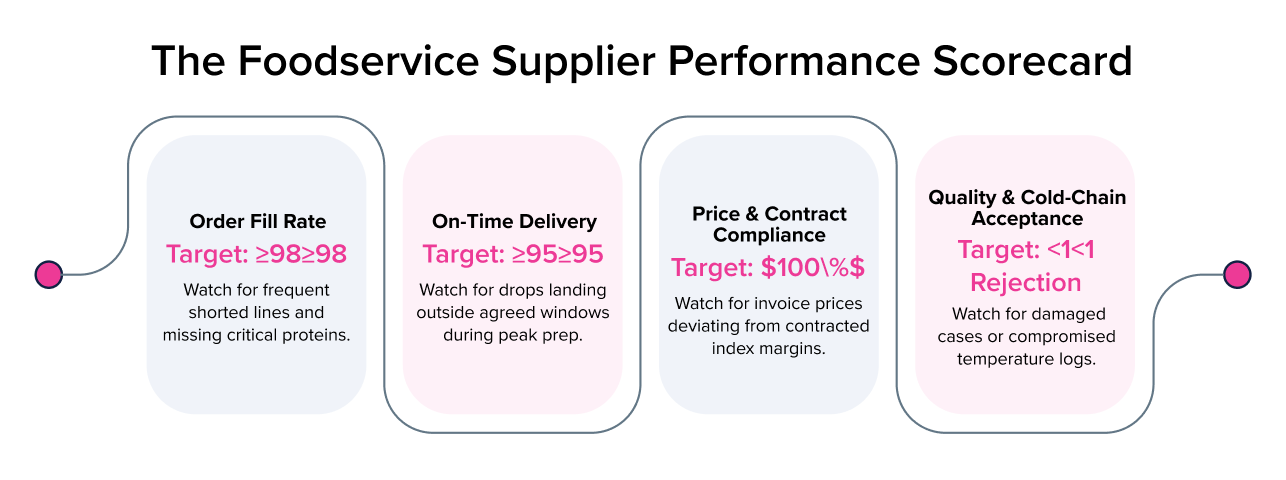
By monitoring suppliers continuously, you turn potential surprises into manageable conversations, keeping fragile supply chains from failing when it counts.
A Practical Supply Chain Resilience Checklist for Foodservice Operators
Here is what you can start doing this week:
- Dual-Source Critical Ingredients: Every top revenue-driving menu ingredient has an approved secondary vendor and SKU on file.
- Active Secondary Broadline Accounts: Backup distributor accounts are established and active, with credit terms and ordering profiles ready to use.
- Digital Invoice & Line-Item Tracking: Invoices are captured and digitized automatically to track real-time spend by location, category, and vendor.
- Audited Contract Pricing: Billed prices are routinely matched against negotiated supplier contracts and agreed index margins.
- Clear Substitution Rules: Kitchen managers know exactly which substitute products are approved when primary items are cut from delivery trucks.
- Vendor Performance Scorecards: Distributor fill rates, accuracy, and delivery times are reviewed on a structured schedule.
- Routine Strategy Reviews: Procurement leadership audits category risks, supplier exposure, and freight routes at least twice per year.
Final Thoughts
Supply chain disruptions in the food and beverage industry are inevitable, but operational failure is not. Building long-term supply chain resilience gives foodservice operators the visibility, supplier flexibility, and cost control needed to withstand market shocks while competitors struggle to keep tables served.
By replacing guesswork with clean spend data, securing flexible vendor contracts, and diversifying your critical supply lines, you turn procurement into a reliable engine for sustainable growth. Start small. Stay consistent. And remember: resilience isn’t a project. It’s a practice.
Click here to contact InsideTrack and learn how better spend visibility can help you build a more resilient foodservice operation.
FAQs
What Is Supply Chain Resilience?
Supply chain resilience is how prepared your operation is when something interrupts the normal flow of products. Maybe a delivery is late, an item is unavailable, or the cost of a key ingredient suddenly jumps. The more prepared you are to adjust, the less likely that disruption is to affect your menu, your costs, or your guests.
What are the biggest risks to a foodservice supply chain?
Foodservice operators deal with a mix of risks, including product shortages, transportation delays, rising commodity costs, labor challenges, and supplier issues. Perishable products add another layer. When fresh ingredients are delayed or unavailable, there often isn’t much time to find another option before it affects restaurant operations.
What’s the difference between resilience and efficiency?
Efficiency focuses on keeping purchasing and operations running with as little waste and unnecessary cost as possible. Resilience is about being prepared for the times when that normal process gets interrupted. Operators need both. Running lean can save money, but running so lean that one missed delivery creates a major problem can introduce more risk than it removes.
How can smaller operators improve supply chain resilience?
Start with the products your operation depends on most. Know which items would be difficult to replace, ask your distributor what alternatives are available, and keep a close eye on changes in pricing and availability. You don’t need a large procurement department to do this. Even keeping better records of what you buy, what you pay, and how consistently your suppliers deliver can help you make better decisions when something changes.
How does spend visibility strengthen supply chain resilience?
Spend visibility helps you see purchasing changes that might otherwise be easy to miss. You may notice that more of your purchases are moving to one supplier, that the price of a frequently ordered item keeps increasing, or that locations are buying unexpected substitutes. Seeing those changes sooner gives your team more time to investigate and decide what to do next.
How many suppliers should you have for critical products?
There isn’t one number that works for every product. For an ingredient your menu depends on, having a qualified backup supplier or an approved substitute can be worth the extra planning. A readily available, lower-risk product may not need the same level of backup. The better question is: if this product isn’t available tomorrow, do we already know what we’ll do?
What is a supplier scorecard?
It’s a simple, structured quantitative tool to track supplier performance across key areas: order fill rates, on-time delivery, quality, responsiveness, and pricing consistency. Reviewing it regularly helps you reward strong partners and address issues before they escalate.
How often should a supply chain strategy be reviewed?
At a minimum, twice a year—ideally quarterly. Markets change, menus evolve, and new risks emerge. Treat your supply chain strategy like a living document, not a set-it-and-forget-it file.