
If you run restaurants inside hotels, casinos, or large foodservice portfolios, you’ve felt it: food costs, wages, rent and freight don’t behave the way they used to. That steady creep of expense pressure, restaurant inflation, shows up on P&Ls, in distracted guests, and in constant pricing decisions. Below is a practical, operator-first guide that explains why costs keep rising and, more importantly, what you can do about it.
Understanding Restaurant Inflation
Restaurant inflation refers to the sustained rise in the costs needed to produce and sell meals, everything from raw ingredients and labor to rent, utilities, and the trucks that deliver your produce. For several years menu prices (food away from home) have grown faster than grocery prices and overall inflation, which creates an “inflation gap” that erodes traffic and reshapes guest behavior.
Quick takeaway: restaurant inflation doesn’t come from one place. It’s the combined effect of commodity swings, labor pressure, operating costs, and logistics, and it tends to stick around rather than correct itself quickly.
Key Cost Drivers Fueling Restaurant Inflation
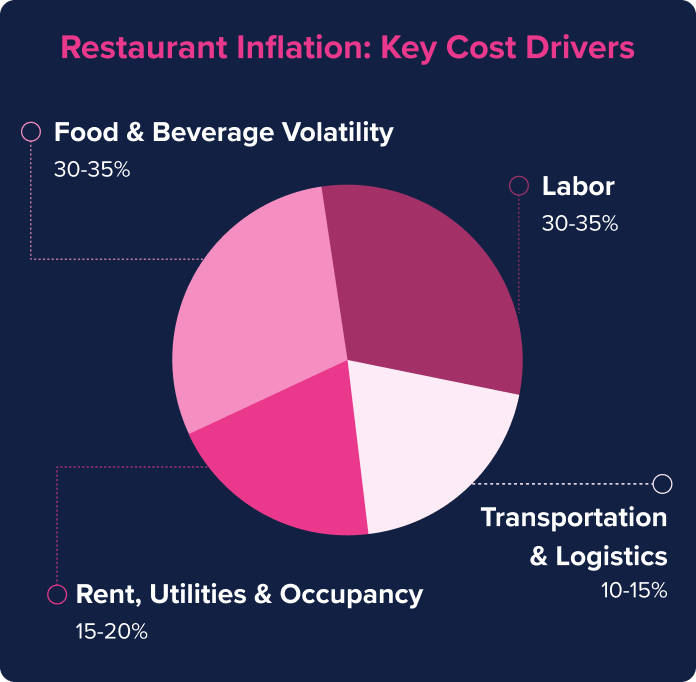
Food and Beverage Price Volatility
Commodities jump and fall (think eggs, beef, dairy, seafood, produce), and shocks — disease outbreaks, weather, global trade disruptions — can amplify prices quickly. That volatility forces frequent price and menu work, and often forces operators to absorb short-term margin hits while they test guest tolerance for price changes. For operators, that often means making margin decisions before the market settles, not after.
Labor Cost Inflation and Wage Pressure
The foodservice sector has seen sustained wage growth over the last several years. Higher average hourly earnings and tight labor markets have pushed cost-of-labor up, and for many operators labor is the single largest controllable expense. That pressure shows up in hiring decisions, scheduling trade-offs, and even how service is delivered day to day.
Rent, Utilities, and Occupancy Costs
Long-term lease expenses, higher property taxes in some markets, and rising costs for utilities and insurance all add to fixed operating expenses. For restaurants operating inside hotels and casinos, base rent plus common-area charges can be especially sensitive to broader commercial real-estate cycles.
Transportation, Fuel, and Supply Chain Expenses
The cost to move product — trucking, fuel, freight surcharges — is another lever that pushes up delivered food costs. Even if commodity prices soften, transportation and processing inputs can sustain higher retail and menu costs. Energy forecasts suggest downward pressure on diesel and gasoline in 2026 compared with 2024–25, but near-term volatility still matters for planning.
How Restaurant Inflation Impacts Profitability
- Shrinking margins: higher COGS + higher labor = smaller bottom line if prices don’t keep pace.
- Pricing dilution: frequent menu price changes can confuse guests and lower perceived value.
- Traffic risk: when menu inflation outpaces household budgets, visits and check sizes drop.
- Complexity: multi-unit operators (hotels, casinos, multi-brand groups) face uneven impact by channel and geography.
Consumer Behavior Shifts During Restaurant Inflation
What operators tend to notice first:
- Guests become more value-conscious.
- Traffic patterns shift (peak dining off-peak, takeout vs. dine-in mix changes).
- Value platforms and promotions win short-term traffic but can erode margin if used incorrectly.
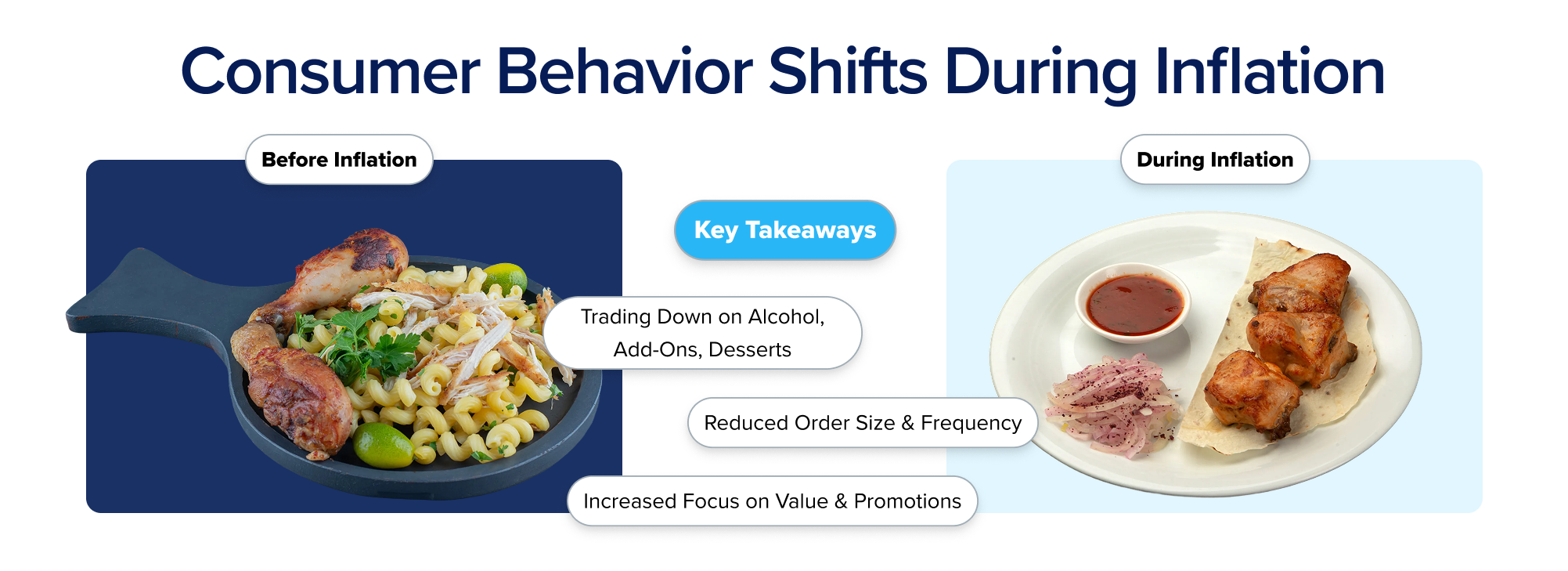
Reduced Dining Frequency and Order Size
Some guests trade down from dining out to cooking at home, or visit less often; when they do dine out they may order fewer courses.
Trading Down on Alcohol, Add-Ons, and Desserts
Alcohol, premium add-ons, and desserts are often the first items guests skip or downgrade when they’re watching a budget.
Increased Sensitivity to Value and Promotions
Promotions and perceived value become central to retaining frequency, but poorly targeted promotions can accelerate margin erosion.
Inflation Data and Trends Restaurants Should Watch
Not every data point deserves equal attention. These are the signals that tend to matter most at the unit level.
- Menu prices vs. grocery prices (the “menu gap”) — if meals away from home are rising faster than food at home, your traffic risk increases. USDA and BLS tracking of food-away-from-home is the canonical data set here.
- Wage trends in food services and local labor availability.
- Freight and fuel forecasts that affect delivered cost.
- Supplier lead times and substitution risk (seasonal produce, proteins).
Operational Areas Most Affected by Inflation
Purchasing and Supplier Cost Variability
Price volatility at the supplier level demands tighter contracts, more frequent bids, and a closer read on substitutions.
Inventory Carrying Costs and Waste Exposure
Higher per-unit costs increase the dollar impact of shrink and spoilage. Inventory turns and expiry management matter more than ever.
Staffing Models and Scheduling Efficiency
Labor optimization, cross-training, and position consolidation (without degrading service) become essential levers.
Unit-Level Cost Control Challenges
Localized rent, utility, and labor differences make a one-size approach ineffective; unit-level visibility is crucial.
Practical Strategies to Manage Restaurant Inflation
Before raising menu prices, most operators are better served by tightening what they can already control. The following are pragmatic and proven for large-scale operators, including in-hotel and casino outlets.
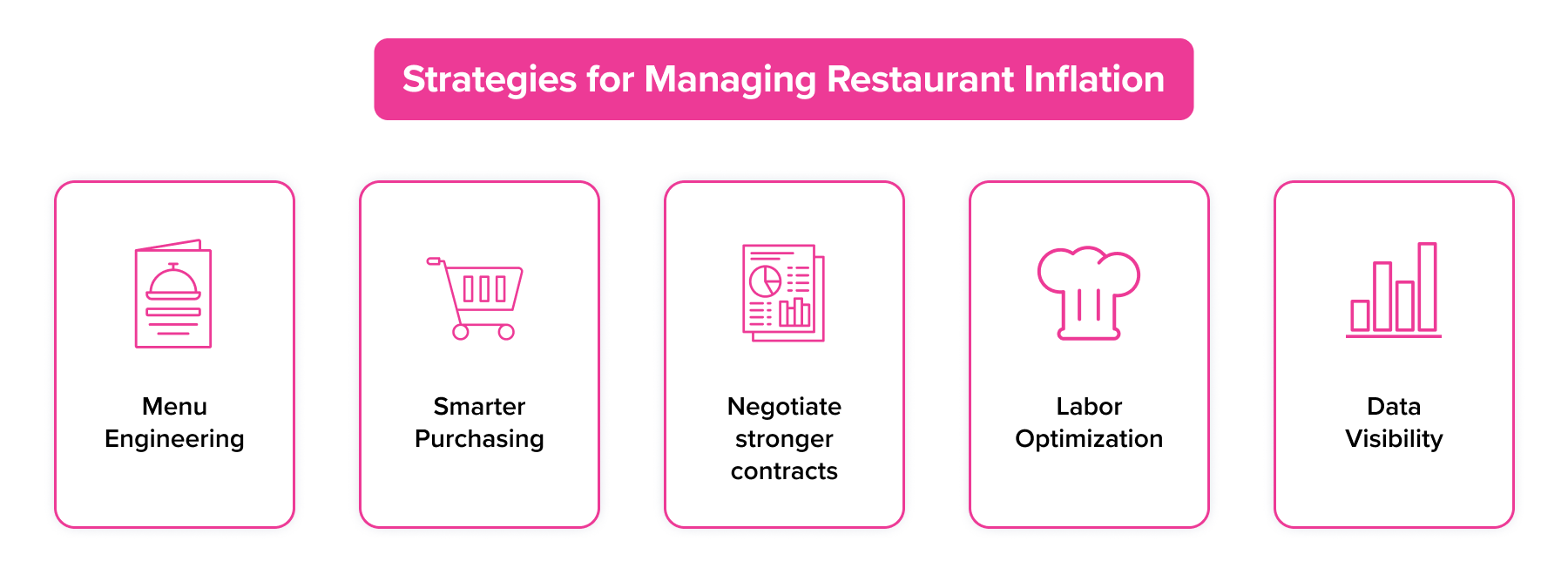
Menu Engineering for Inflationary Environments
- Rethink portioning, introduce cost-stable core items, tier prices strategically, and highlight value bundles.
- Use menu psychology to preserve perceived value (item placement, framing).
Smarter Purchasing and Supplier Negotiation
- Consolidate spend where you have leverage; use multi-supplier sourcing for critical items; negotiate index-based clauses for volatile commodities.
- Consider strategic inventory buys when you have bulk capacity and cash flow.
Tightening Inventory and Waste Controls
- Increase inventory counts frequency, implement tighter par controls, and use expiration-first stock rotation to protect margin.
Labor Optimization Without Service Degradation
- Cross-train staff, adopt flexible schedules, invest in productivity tools (order accuracy, prep batching), and align labor to traffic patterns.
Data-Driven Cost Visibility Across Locations
- Give managers real-time sales, COGS, labor and inventory data by unit. Visibility enables faster corrective action and more confident pricing choices.
Using Data to Navigate Ongoing Inflation
For many operators, inflation-related surprises don’t always come from the market itself. They show up as pricing inconsistencies, outdated agreements, or items quietly drifting higher than expected over time. Without clear visibility into what you should be paying versus what you’re actually charged, those gaps compound fast—especially across multiple locations. Pair that with limited insight into how your pricing compares to the broader market, and it becomes difficult to tell whether rising costs are driven by inflation or by avoidable operational blind spots.
Tracking Cost Trends Beyond Menu Prices
Track delivered cost per plate type, freight surcharges, and vendor invoice-level detail to know where inflation is actually landing.
Identifying Inflation-Driven Variance vs Operational Issues
Build dashboards that flag when cost rises correlate with market indices (commodity, fuel, wage) versus when variances are isolated to a unit (theft, waste, recipe drift).
Scenario Planning for Price and Cost Changes
Model traffic elasticity for price increases, and run scenarios for commodity spikes and wage floors. Having pre-approved playbooks makes faster, less emotional decisions possible.
Improving Decision-Making With Real Spend Data
Use spend data to negotiate better terms, route purchase flows, and evaluate vendor performance. Real spend data beats anecdote.
Common Mistakes Restaurants Make During Inflation
Avoid these traps:
Relying Only on Menu Price Increases
- Guests push back quickly; many are already pulling back.
Ignoring Small Cost Leaks That Compound Over Time
- Portion creeps, energy waste. Many of these small leaks start quietly. A line item priced slightly higher than agreed, a contract that hasn’t been revisited, or a SKU that no longer reflects current market conditions can all slip through when teams are stretched thin. When operators don’t have a clear way to catch invoice discrepancies or understand how their pricing stacks up against the broader market, those minor issues compound month after month—often without anyone noticing until margins are already under pressure.
Cutting Costs That Hurt Guest Experience
- Skimp on training? Turnover skyrockets.
Reacting Too Late to Cost Trend Signals
- Weekly reviews, not monthly.
What the Future Holds for Restaurant Inflation
Prices may be going down from their highest levels in 2022–2023, but inflationary pressures are likely to stay, though at a lower level. Most forecasts suggest the cost of eating out will continue rising by roughly 3% to 4% per year over the next few years. This means that even though the immediate crisis may be over, long-term success will still depend on staying alert and managing costs wisely. Operators should expect food and labor costs to stay unstable, which means they need to be flexible and make decisions based on data.
Where Foodservice Operators Go From Here
Restaurant inflation isn’t one clean problem with one clean solution. It shows up across food invoices, payroll, utilities, and the small operating costs that tend to fly under the radar until they add up. The operators handling it best aren’t chasing quick fixes. They’re paying attention to what’s actually driving their costs and adjusting as conditions change.
That starts with fundamentals done well. Menus built with margin in mind. Operations that don’t leak labor or product. Purchasing decisions that are intentional instead of reactive. None of this is flashy, but it’s what keeps costs from drifting when prices move week to week.
For operators inside hotels and casinos, the picture is more complex. Lease structures, shared services, utilities, and common-area costs can quietly erode profitability if they aren’t monitored closely. Managing outlets together, supported by centralized data and procurement, makes it easier to spot issues early, apply leverage, and keep surprises off the P&L.
The goal isn’t to eliminate inflation pressure—it’s to stay ahead of it, with fewer surprises and more control.
FAQs
Why is restaurant inflation higher than general inflation?
Restaurant inflation often runs higher because operators face a unique mix of costs beyond food alone—labor, rent, utilities, transportation, and service-related expenses. Menu prices reflect the full cost of operating a restaurant, not just ingredients, which makes inflation feel heavier than what consumers see at the grocery store.
How much have restaurant prices increased since 2020?
Menu prices have risen roughly 27–33% since early 2020, depending on segment and data source. Full-service restaurants have generally seen higher increases, driven by sustained labor pressure and higher operating costs.
Can restaurants remain profitable during inflation?
Yes, but profitability requires a proactive approach. Operators who focus on menu engineering, smarter purchasing, tighter inventory and waste controls, and labor optimization are better positioned to protect margins without over-relying on price increases.
What costs should operators focus on controlling first?
Start with high-impact, controllable areas: food cost by menu item, labor productivity and scheduling accuracy, inventory shrink and waste, and supplier pricing and freight. Small improvements in these areas compound quickly.
How can data help restaurants manage inflation better?
Data helps operators understand where costs are truly rising versus where inefficiencies exist. Real spend and invoice detail highlight pricing issues, unit-level margin reporting prioritizes action, and scenario modeling supports smarter pricing and purchasing decisions.