What if the right foodservice RFP could uncover opportunities to improve your operation that you didn’t even know you were missing?
Choosing a new foodservice supplier isn’t something most operators do every day. When it happens, though, it’s usually a pretty big decision.
Maybe your contract is coming up for renewal. Maybe service levels have slipped. And maybe you’re expanding into new locations or adding technology that your current supplier can’t support. Whatever the reason, changing vendors affects more than pricing. It can impact daily operations, inventory, reporting, labor, and even the guest experience.
That’s why many operators don’t rely on conversations alone. They run a foodservice RFP.
A well-planned Request for Proposal gives every vendor the same opportunity to explain how they would support your business. Instead of comparing sales pitches, you’re comparing solutions using the same requirements, timeline, and evaluation criteria.
The process takes some planning, but it’s worth it. A thoughtful RFP can uncover better pricing, stronger service, and opportunities you may not have considered otherwise.
In this guide, we’ll walk through each stage of the foodservice RFP process, from preparing your organization and writing the RFP to evaluating proposals and selecting the right partner.
What Is a Foodservice RFP?
At its core, a foodservice RFP is simply a way to make a better purchasing decision.
Instead of asking vendors, “What can you offer us?” you’re telling them exactly what your organization needs and asking them to explain how they’d deliver it.
An RFP, or Request for Proposal, is a formal document that outlines your goals, operational requirements, service expectations, timeline, and evaluation criteria. Vendors then submit detailed proposals showing how they would meet those requirements.
For foodservice organizations, RFPs are commonly used when selecting:
- Broadline distributors
- Food and beverage suppliers
- Procurement software
- Inventory management systems
- Kitchen equipment providers
- Group purchasing organizations
- Supply chain partners
The biggest advantage? Everyone is working from the same playbook.
Every supplier receives the same information. Every proposal answers the same questions. That makes comparing vendors much more objective because you’re evaluating the same criteria instead of piecing together different presentations and pricing sheets.
If your organization manages multiple sourcing events throughout the year, keeping everything organized can become just as challenging as evaluating the proposals themselves. That’s where software like InsideTrack can help. It centralizes RFP responses, keeps sourcing events organized on one calendar, and lets teams compare vendor pricing side by side instead of sorting through dozens of spreadsheets and email attachments.
RFP vs. RFI vs. RFQ
| Document | Purpose |
Best Used When |
|
RFI (Request for Information) |
Gather general information about vendors and available solutions. | You’re still researching the market and defining your options. |
|
RFQ (Request for Quote) |
Obtain pricing for clearly defined products or services. | Requirements are straightforward and price is the primary deciding factor. |
|
RFP (Request for Proposal) |
Evaluate complete solutions, pricing, service levels, implementation plans, and vendor capabilities. | Multiple evaluation criteria will determine the final vendor selection. |
Why Running a Foodservice RFP Is Worth the Effort
If you’ve never managed a foodservice RFP before, it can feel like a lot of work. There’s planning involved, multiple stakeholders to coordinate, documents to review, and plenty of questions to answer along the way.
So why not just ask a few suppliers for pricing and make a decision?
Because the cheapest option isn’t always the best fit for your operation.
A well-run RFP helps you look beyond the numbers. It gives you a chance to evaluate how each vendor will support your business over the life of the contract, not just on day one. That means considering everything from customer service and delivery performance to reporting capabilities, implementation support, and long-term value.
Running an RFP also creates a fair process for everyone involved. Every vendor responds to the same requirements, works from the same timeline, and is evaluated using the same criteria. That makes it much easier to compare proposals objectively instead of trying to piece together information from different sales presentations or pricing sheets.
Just as important, an RFP often uncovers opportunities you didn’t know existed. One supplier may offer stronger reporting. Another may recommend a different purchasing strategy. A technology provider might introduce automation that saves your team hours every week. Those kinds of insights rarely come from simply requesting a quote.
For organizations that manage multiple sourcing events throughout the year, keeping everything organized can become just as challenging as evaluating the proposals themselves. InsideTrack simplifies that process by keeping RFP responses in one centralized location, allowing procurement teams to compare vendor pricing side by side and manage sourcing events through a single calendar instead of juggling spreadsheets, email chains, and disconnected documents.
At the end of the day, an RFP isn’t just about finding a new supplier. It’s about making a confident decision backed by data, consistency, and a clear understanding of which solution will best support your operation over the long term.
How to Prepare Before Launching a Foodservice RFP
Before you send an RFP to vendors, take a step back and make sure your team is ready. Spending a little time upfront can save a lot of back-and-forth later, and it gives vendors the information they need to submit stronger, more relevant proposals.
Review Your Current Purchasing and Distributor Spend
Start with your current operation. Look at what you’re buying, who you’re buying it from, and where the biggest opportunities are to improve. Maybe you’re dealing with inconsistent service. Maybe costs have crept up over time. Or maybe you’re simply approaching the end of a contract and want to see what’s available in the market.
Having that information in one place makes it much easier to build an RFP around real business needs instead of assumptions. InsideTrack helps teams organize purchasing data and RFP activity so they’re starting with a clear picture of where they stand.
Define Your Budget, Business Goals, and Scope
Every RFP should have a clear purpose. Are you trying to lower costs? Improve reporting? Find a supplier that can support future growth?
Once those goals are established, define exactly what’s included in the RFP, whether that’s specific locations, product categories, or services. Clear expectations lead to better proposals.
Identify the Stakeholders Who Should Be Involved
Don’t wait until proposals arrive to involve the rest of the team.
Operations, finance, procurement, culinary leadership, and executives may all have a different perspective on what matters most. Bringing everyone into the conversation early helps avoid surprises later and makes the final decision much easier.
How to Run a Successful Foodservice RFP from Start to Finish
No two RFPs look exactly alike. A restaurant group sourcing a new distributor isn’t asking the same questions as a healthcare system evaluating procurement software. Even so, the process tends to follow the same path. Taking the time to work through each stage carefully usually leads to stronger proposals and, ultimately, a better decision.
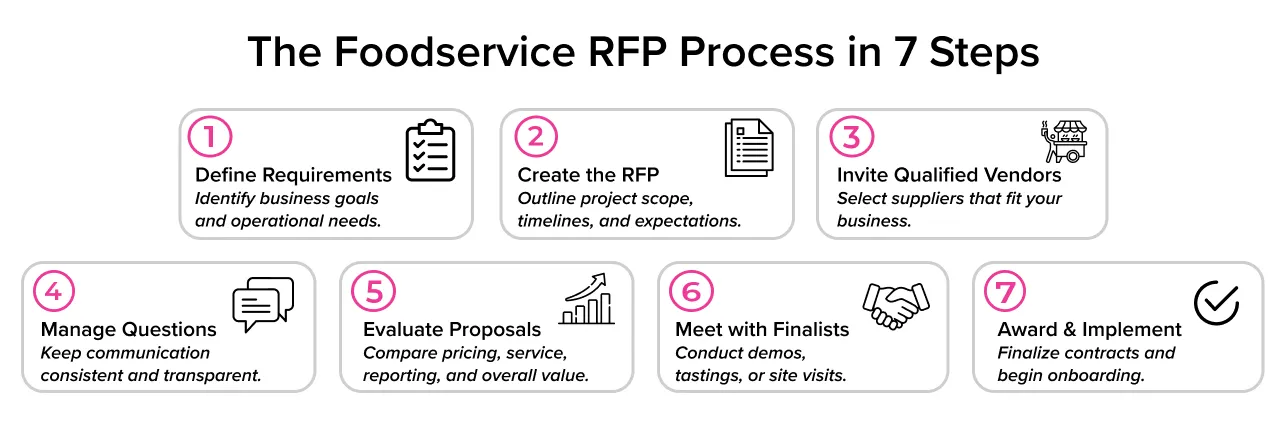
Step 1: Define Requirements and Specifications
One of the biggest mistakes organizations make is jumping straight into vendor conversations before they’ve agreed on what they’re actually looking for.
Start by identifying the problems you’re trying to solve. Maybe it’s inconsistent service. Maybe reporting isn’t giving you the visibility you need. Or maybe your current contract simply isn’t meeting the needs of the business anymore. Once those priorities are clear, they’re much easier to turn into requirements vendors can actually respond to.
Step 2: Create the RFP Document
This doesn’t have to be a hundred-page document.
In fact, the clearest RFPs are often the easiest for vendors to respond to. Explain your operation, outline the scope of the project, include important deadlines, and be upfront about how proposals will be evaluated. The goal is to eliminate guesswork before it starts.
Step 3: Select Vendors to Participate
Casting the widest net isn’t always the best approach.
Instead, focus on suppliers that have the experience, geographic coverage, and capabilities to support your operation. Inviting a manageable number of qualified vendors usually leads to a more thoughtful evaluation than reviewing dozens of proposals that were never a good fit to begin with.
Step 4: Set the Timeline and Manage Vendor Questions
Questions are part of every RFP. That’s a good thing.
Giving vendors a chance to ask for clarification often results in stronger proposals because everyone has a better understanding of what’s expected. Just make sure the answers are shared with every participant so the process stays consistent and transparent.
Step 5: Evaluate and Score Proposals
By the time proposals arrive, your evaluation criteria should already be established.
Otherwise, it’s easy to get distracted by a lower price or an impressive presentation. Looking at every proposal through the same lens keeps the process fair and makes it easier to identify which solution offers the best overall value.
If your team is comparing multiple vendors, having everything organized in one place can save a surprising amount of time. InsideTrack centralizes RFP responses and allows procurement teams to compare vendor pricing side by side instead of piecing information together from spreadsheets and email threads.
Step 6: Conduct Presentations, Site Visits, and Tastings
The proposal tells you what a vendor says they can do. Meeting with finalists helps you see how they’ll actually work with your team.
Whether it’s a software demonstration, a facility tour, or a product tasting, these conversations often answer the questions you didn’t know to ask when the RFP was first written.
Step 7: Negotiate Terms and Award the Contract
Once you’ve selected a preferred vendor, don’t rush to sign.
Review pricing, service expectations, implementation timelines, and contract language carefully so both sides understand what’s expected from day one. A little extra time here can prevent a lot of frustration later.
Everything to Include in a Foodservice RFP
The quality of your proposals often comes down to the quality of your RFP. If important details are missing, vendors are left making assumptions, and that usually leads to proposals that are difficult to compare.
Think of your RFP as the roadmap for the entire sourcing process. The more clearly you explain what you’re looking for, the easier it becomes for vendors to respond with solutions that actually fit your operation.
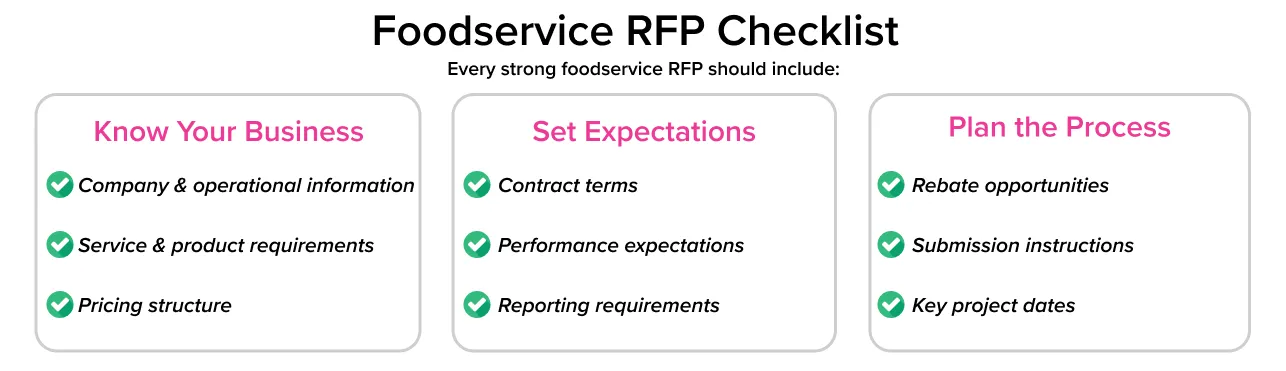
Company and Operational Information
Before vendors can recommend a solution, they need to understand who they’re working with. A few details about your operation provide valuable context and help suppliers build a proposal that reflects your actual business instead of relying on assumptions.
There’s no need to overcomplicate this section. Focus on the information that will influence a vendor’s response, including:
- Type of operation
- Number of locations
- Geographic footprint
- Annual purchasing volume (if applicable)
- Current suppliers or distribution model
- Project goals
Service and Product Requirements
This section usually generates the most questions, so clarity matters.
List the products or services you’re sourcing, then outline any expectations that could affect a supplier’s response. That could include delivery schedules, technology integrations, service levels, implementation timelines, or support requirements. If something is non-negotiable, say so. Vendors would rather know upfront than discover it halfway through the process.
Pricing, Contract Terms, and Rebates
Price tells part of the story, but rarely all of it.
Ask vendors to explain how their pricing works, what the proposed contract includes, and whether rebates, incentives, or volume discounts are available. It’s also worth asking about renewal terms, cancellation policies, and any fees that could affect the total cost over time.
Putting every supplier on the same playing field makes it much easier to compare proposals once they start coming in.
Performance Metrics and Reporting Expectations
What happens after the contract is signed should be part of the conversation long before a vendor is selected.
If your team expects regular reporting, purchasing insights, or service-level metrics, spell that out in the RFP. Clear expectations from the beginning leave less room for misunderstandings later.
For organizations running multiple sourcing events each year, keeping responses organized can quickly become a project of its own. InsideTrack gives procurement teams one place to manage RFP responses, compare vendor pricing, and review proposals without digging through spreadsheets or email folders.
How to Evaluate Foodservice RFP Responses Fairly
Once proposals start coming in, it’s tempting to focus on price first. Try not to.
A lower price doesn’t always translate to better value over the life of a contract. Instead, compare each proposal against the same criteria you established before the RFP was released. That keeps the process consistent and makes it easier to identify the supplier that best supports your operational goals.
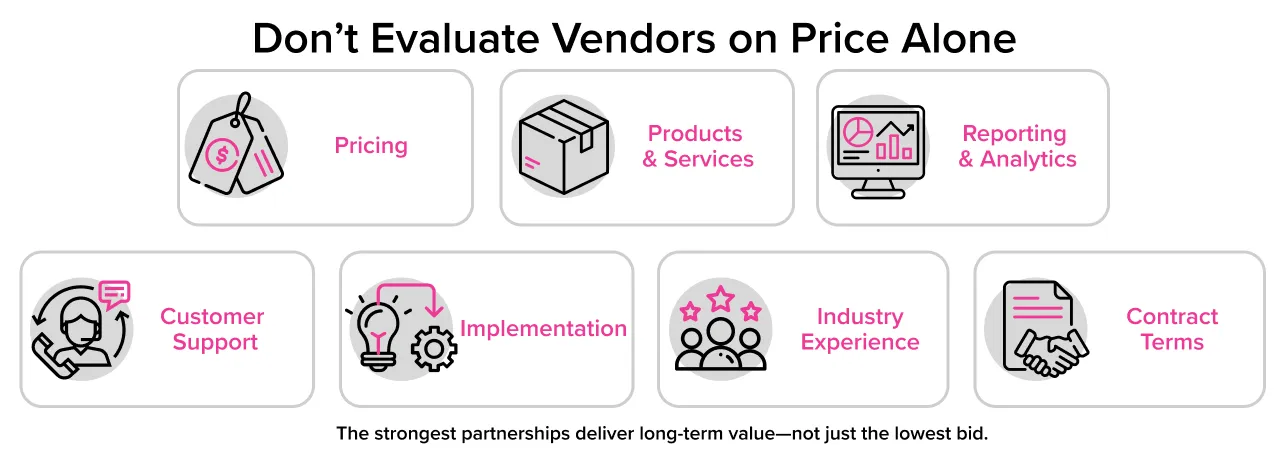
Many organizations use a simple scoring matrix that considers factors such as:
- Pricing
- Product and service offerings
- Industry experience
- Reporting capabilities
- Customer support
- Implementation plan
- Contract terms
If you’re reviewing several proposals at once, organization becomes just as important as evaluation. InsideTrack centralizes RFP responses in one place, allowing teams to compare vendor pricing and proposal details without sorting through multiple spreadsheets or email threads.
What a Typical Foodservice RFP Timeline Looks Like
Every sourcing project is a little different, but most foodservice RFPs follow a similar timeline.
A typical process includes:
- Define project goals and requirements
- Develop and issue the RFP
- Respond to vendor questions
- Receive and review proposals
- Interview finalists or schedule demonstrations
- Negotiate contract terms
- Award the contract and begin implementation
Building enough time into each phase helps vendors submit stronger proposals and gives your team the opportunity to make a more informed decision.
Common Foodservice RFP Mistakes That Can Delay the Process
Most RFP delays don’t happen because vendors miss deadlines. They happen because expectations weren’t clearly defined from the beginning.
Some of the most common issues include:
- Vague project requirements
- Unrealistic timelines
- Too many decision-makers without clear roles
- Changing the scope after the RFP has been released
- Evaluating proposals without predetermined criteria
A little preparation upfront usually prevents these challenges and keeps the project moving forward.
What Happens After Awarding a Foodservice RFP
Selecting a vendor is an important milestone, but it isn’t the finish line.
The next step is working together to finalize the contract, establish an implementation plan, and communicate expectations on both sides. It’s also a good time to decide how performance will be measured moving forward so there are no surprises after the partnership begins.
For organizations managing ongoing sourcing events, keeping contracts, proposals, and supplier information organized in one place can make future RFPs much easier to manage.
Conclusion
A well-run foodservice RFP does more than help you compare vendors. It creates a structured process for making purchasing decisions with greater confidence, transparency, and consistency.
Whether you’re sourcing a new distributor, evaluating procurement technology, or reviewing existing supplier relationships, taking the time to plan your RFP can lead to stronger partnerships and better long-term results.
Ready to simplify your next foodservice RFP? Click here to contact the InsideTrack team to learn how centralized RFP management can help you compare vendors, organize sourcing events, and make more confident purchasing decisions.
FAQs
How long does a foodservice RFP take?
Most foodservice RFPs take 6 to 12 weeks, depending on the size of the project, the number of vendors involved, and your internal review process.
How many vendors should you invite to bid?
There’s no set number, but three to six qualified vendors is often enough to encourage competition while keeping the evaluation process manageable.
What’s the difference between an RFP and a bid?
An RFP evaluates the overall solution, including service, experience, and pricing. A bid typically focuses on meeting defined requirements at the best price.
How often should you re-bid a foodservice contract?
Many organizations review major foodservice contracts every three to five years, or sooner if business needs, pricing, or service levels change.
Who should be involved in evaluating proposals?
Include stakeholders who will use or manage the solution, such as procurement, operations, finance, IT, and executive leadership.
Should you include your budget in an RFP?
It depends. Sharing a budget can help vendors recommend the right solution, but many organizations choose to keep that information private until later in the process.
Can you run an RFP if you’re satisfied with your current supplier?
Yes. Running an RFP gives you a chance to benchmark pricing, evaluate new solutions, and confirm you’re still getting the best value for your business.