
Food procurement has never been a simple numbers game. Operators are dealing with more variables than ever before because of changing guest demand, unstable commodity prices, supplier problems, and very small profit margins. Artificial intelligence (AI) is coming in to make things clearer when they are too complicated. AI in food procurement doesn’t replace professionals; instead, it helps them by processing huge amounts of data in real time and turning it into insights that teams can use.
AI is changing how foodservice companies plan, buy, and protect their profits by predicting menu demand, keeping an eye on price integrity, and supplier risk. This leads to a more proactive, data-driven way of buying that helps operators move faster, waste less, and make better choices all along the supply chain.
What is the Role of AI in Food Procurement?
Anyone who’s worked in procurement knows how quickly the information stacks up. Invoices pile in. Contract pricing updates roll through. Sales reports refresh by the day. Inventory counts change by the hour. Add in distributor programs and supplier performance tracking, and suddenly you’re swimming in data — with very little time to make sense of it all.
AI doesn’t replace the people doing the work. It simply gives teams a cleaner way to see what’s happening without living inside spreadsheets all day. Instead of reacting after the fact, procurement teams get a clearer picture of what needs attention while there’s still time to do something about it.
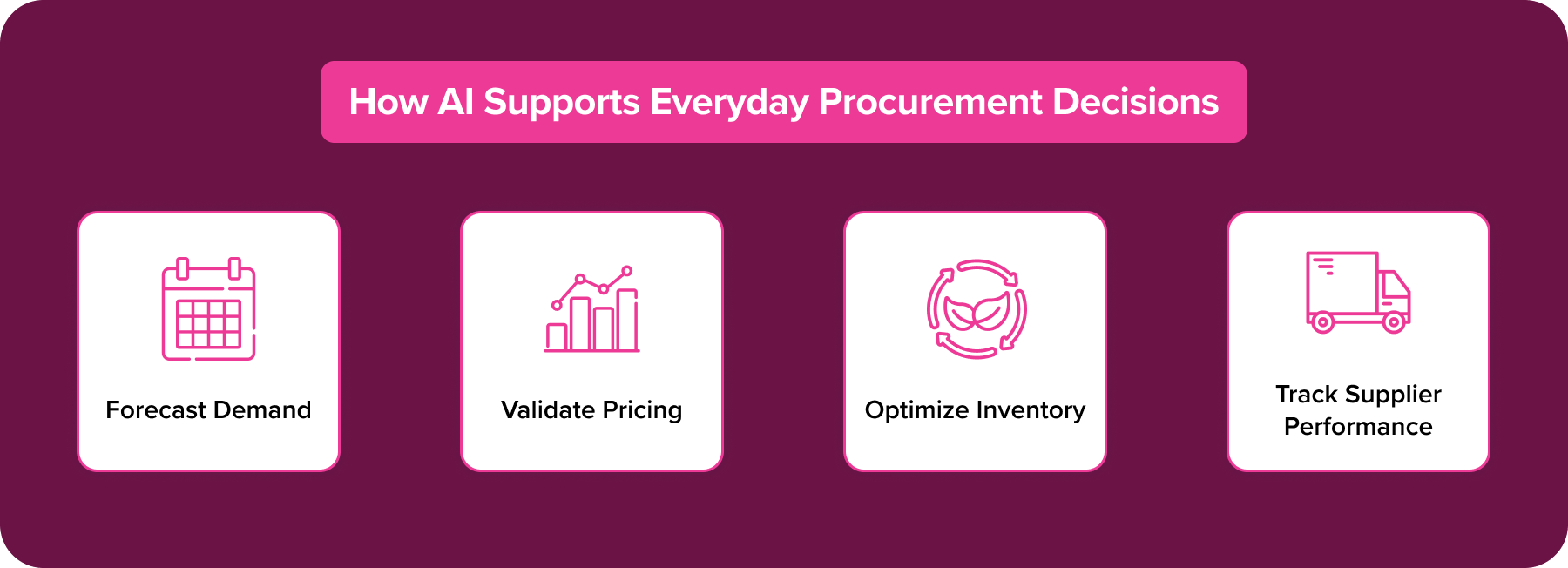
Here’s where AI shows up most in the real world:
Demand planning feels less like a guessing game
Sales trends, menu changes, and seasonal swings all come together in one place, helping teams order based on what guests are actually buying — not just last week’s instincts. That cuts back on the constant whiplash between running short and staring at excess inventory.
Pricing stays honest
AI checks incoming invoices against contract rates automatically, flagging anything that doesn’t line up. Those tiny overcharges that used to slip by unnoticed? They get caught before they quietly chip away at margins.
Inventory lands closer to “just right.”
By watching how quickly products move and how long they stay usable, AI suggests reorder points that make more sense for real kitchens — reducing waste without raising the risk of empty shelves during busy shifts.
Supplier performance becomes easier to see clearly
Delivery reliability, pricing consistency, and service responsiveness are tracked over time. Instead of relying on gut feelings or half-remembered issues, teams can manage vendor relationships with real, hard data in hand.
Where AI really changes things is speed. Procurement teams don’t have to wait for month-end reports to explain what already went wrong. Issues show up in real time — giving teams the chance to course-correct quickly, stay ahead of disruptions, and keep procurement focused on strategy instead of nonstop problem-solving.
AI Applications in the Food Supply Chain
AI is already being used at every stage of buying food, from predicting how much food will be needed to checking that prices are correct, keeping an eye on supplier performance, making sure that inventory levels are just right, and keeping companies safe from fraud or expensive compliance mistakes.
Predictive Demand Forecasting and Planning
AI doesn’t just guess what next month will be like; it looks at past sales, seasonal changes, promotions, and menu changes to find real demand patterns. It helps procurement teams order things that are closer to what they will actually use instead of what they think is safe to buy. That means fewer freezer pileups, less product expiring on shelves, and better protection against running out of high-volume items when guest traffic suddenly surges.
Supplier Scoring and Risk Evaluation
AI tracks how suppliers perform day in and day out. This includes checking how quickly they deliver, how accurate their orders are, how consistent their prices are, and how quickly they fix problems. All of that information over time gives you a better idea of who you can trust and who you can’t. That means fewer surprises for procurement teams, better decisions about where to get things, and stronger partnerships with suppliers who always do what they say they will.
Dynamic Pricing and Procurement Negotiation
Have you ever stared at a price on an invoice and wondered how it got there? AI helps answer that question by checking market trends and invoice charges as they come in. If something doesn’t line up, teams spot it early — before mistakes start stacking up. With real data in hand, negotiations shift from “feels wrong” to “here’s what we’re seeing.” That makes it much easier to keep contract pricing consistent across locations and avoid quiet margin losses.
Inventory Level Optimization
AI helps teams land on inventory levels that actually make sense by looking at how fast items sell, how long they last, how much storage space is available, and how often deliveries show up. That balance helps avoid running out of key products while cutting back on waste from spoilage or over-ordering — keeping cash more flexible and storage areas from being packed with product that isn’t moving.
Procurement Fraud Detection
AI flags strange invoice activity, duplicate charges, unexpected markups, or unauthorized substitutions that can slowly eat away at profits over time. Automated monitoring makes it much easier for teams to spot possible fraud or billing mistakes early on. This protects revenue and improves overall financial governance.
How AI Enhances Decision-Making for Procurement Teams
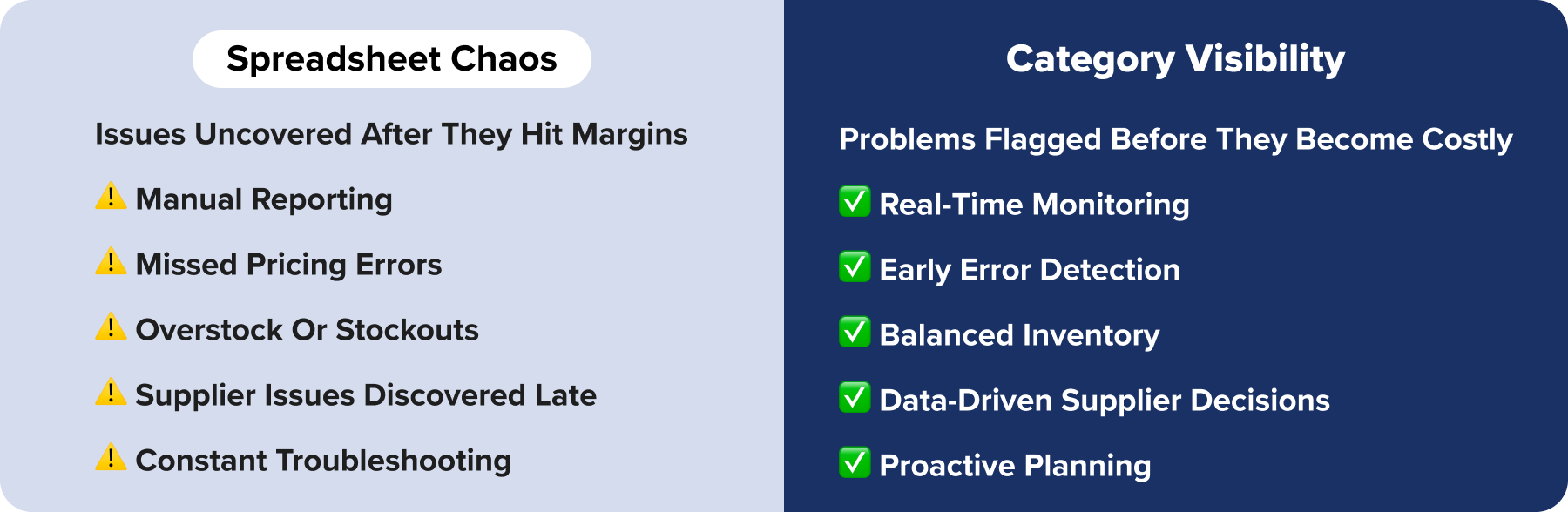
AI doesn’t just automate tasks, it changes how procurement teams think and work day to day. Faster insights mean issues surface sooner, potential risks don’t stay hidden, and conversations with suppliers become more direct and productive. With clearer visibility across purchasing and performance, teams can move out of reactive, manual oversight and into a more proactive, strategic role guiding the business forward.
Turn Data into Actionable Insights
Using AI in food procurement turns complicated datasets into visual dashboards and alerts that make it easy to see trends in purchases, price changes, and performance metrics. Instead of having to go through spreadsheets, procurement teams now get prioritized insights that help them make better buying decisions, find ways to cut costs, and improve vendor strategies across all locations.
Risk Mitigation and Predictive Planning
AI helps teams plan for problems before they get worse, instead of just reacting to supply problems after they happen. Predictive models show when a supplier is unstable, the weather is bad, or the price of a commodity changes, which gives procurement leaders time to change their sourcing plans and keep the supply going.
Improved Collaboration with Suppliers
Shared performance data and transparent dashboards foster more productive supplier relationships. AI allows procurement teams and suppliers to work from the same data sets, enabling fairer negotiations, quicker issue resolution, and collaborative planning that benefits pricing stability, forecasting accuracy, and service levels.
Proactive Issue Resolution
Have you ever wanted to be able to see supply chain problems before they become big problems? AI keeps an eye on daily activities and alerts you to pricing problems, unexpected inventory, or delivery delays as they happen, not weeks later when you report them. That real-time visibility lets teams jump in quickly, keep kitchens running, and stop small problems from turning into big supply chain problems that cost a lot of money.
Enhanced Transparency and Traceability
AI-powered systems track purchases from the store to the plate in great detail across locations and suppliers. This makes it easier to track food safety compliance, helps with being ready for an audit, and makes sure that all procurement decisions are backed up by verifiable data all the way through the supply chain.
AI is redefining food procurement by turning complex data into clear, confident decisions. From demand forecasting and inventory optimization to supplier risk management and fraud detection, intelligent systems give procurement teams tools to operate with greater speed, accuracy, and transparency. Rather than replacing human expertise, AI amplifies it — freeing teams to focus on strategic planning, supplier collaboration, and profitability growth.
Ready to see what this looks like in action? Explore how InsideTrack supports smarter, faster food procurement.