

Running a food business today means keeping a lot of moving pieces in sync. Costs change faster than anyone would like, suppliers sub items without warning, and inventory has a shelf life whether you’re ready for it or not.
At some point, most teams hit a wall where spreadsheets and disconnected systems stop cutting it. That’s usually when ERP enters the conversation.
The challenge is that not every ERP is built for food. Some handle general business functions just fine, but struggle once you introduce perishability, traceability, and real-world supply chain issues.
This guide walks through what food and beverage ERP actually looks like in practice, where it helps, and how it fits into the broader tech stack most operators are already working with.
What Is Food and Beverage ERP?
At a basic level, a food and beverage ERP system connects the operational side of the business with the financial side so they’re not telling two different stories.
Instead of tracking purchasing in one place, inventory somewhere else, and financials in a separate system, ERP pulls that together so changes in one area show up everywhere else.
That matters more in food than in most industries. When ingredient costs shift or suppliers change what’s being delivered, those updates need to flow through quickly. Otherwise, decisions get made off outdated information.
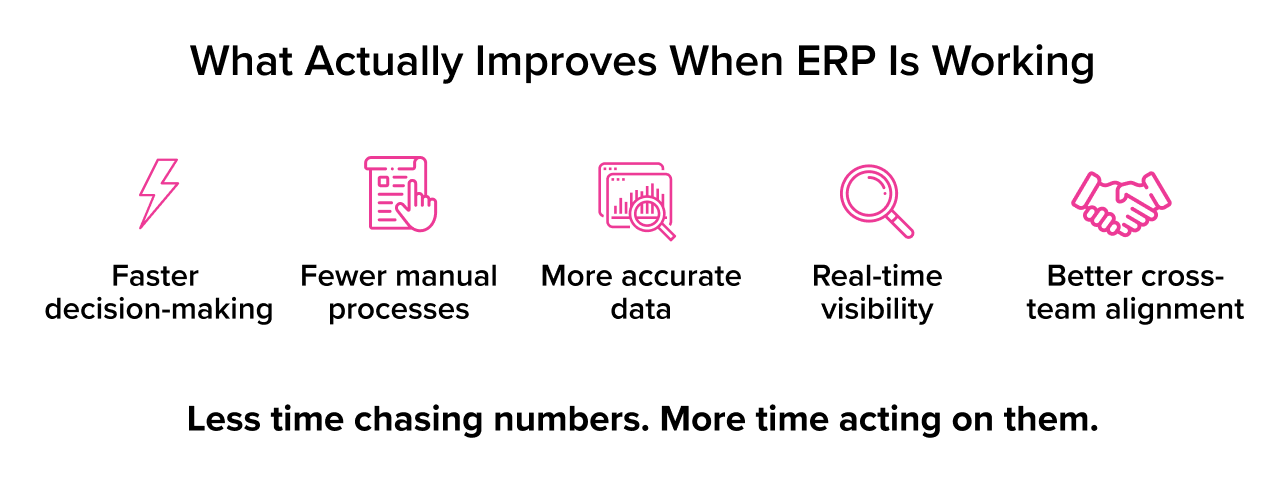
ERP doesn’t eliminate complexity, but it does make it easier to see what’s actually going on.
Core Functions of a Food-Specific ERP Platform
Food-specific ERP platforms are built around the reality that nothing stays static for long.
Most include inventory tracking that goes beyond simple counts, often down to the lot or batch level. That becomes important when you’re dealing with recalls, quality issues, or just trying to understand where the product came from.
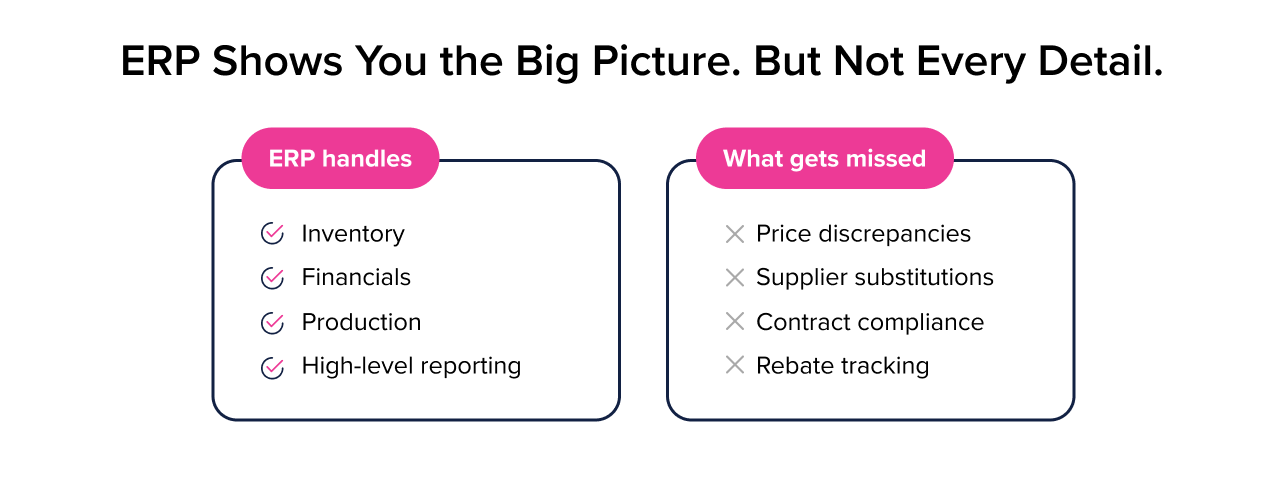
Procurement and supplier management are usually tied in as well, so pricing changes or substitutions don’t get lost between systems.
On the production side, recipe or formula management connects ingredients to output, which helps tie usage back to cost. And that’s where things start to get more useful, when operational activity and financial impact are actually connected.
The common thread across all of it is visibility. Not just data for the sake of having it, but data that lines up.
ERP vs POS vs CRM
These systems tend to get lumped together, but they serve very different roles.
A POS system captures what’s happening at the register. It tells you what sold, when, and for how much.
A CRM focuses on the customer side. Marketing, loyalty, communication. It’s about driving demand and keeping people coming back.
ERP sits behind all of that. It connects what you’re selling to what it costs to produce, how it was sourced, and what it means financially.
In most operations, all three are in play. The value comes from how well they work together.
Key Challenges Food Businesses Face Without ERP
Most operations don’t start out disorganized. It usually builds over time.
A new system gets added here. A spreadsheet fills a gap there. Eventually, nothing really lines up.
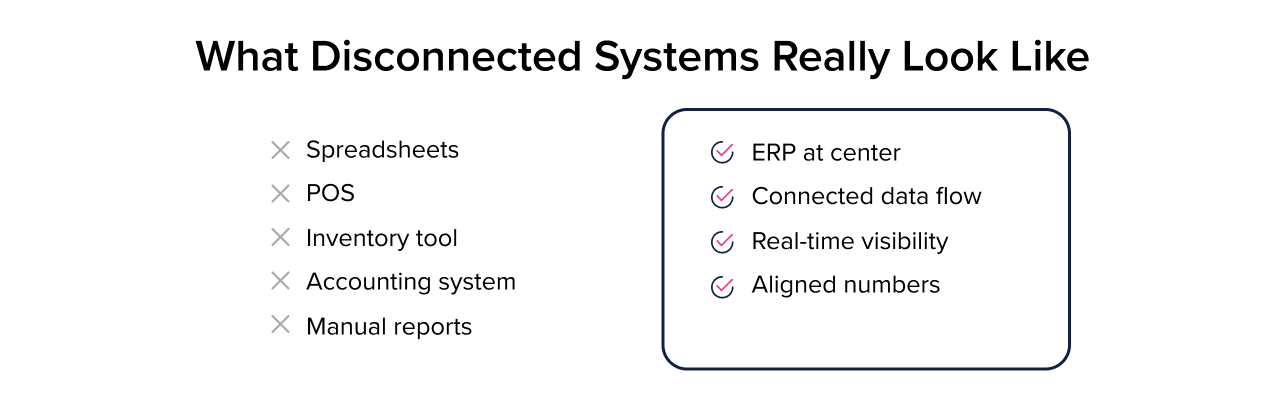
Disconnected Systems and Data Silos
When systems don’t communicate, teams end up piecing information together manually. That’s where inconsistencies start to creep in.
Limited Real-Time Visibility
By the time reports are compiled, the numbers have already shifted. That delay makes it harder to react to cost changes or supply issues.
Manual Compliance Processes
Tracking compliance manually tends to work until it doesn’t. Audits become stressful, and pulling documentation takes longer than it should.
Inventory Waste and Shrinkage
Without a clear view of what’s on hand and how quickly it’s moving, waste becomes harder to control.
Poor Cost and Margin Control
If purchasing, usage, and pricing aren’t connected, it’s tough to understand where margins are actually landing.
Essential Features to Look for in Food and Beverage ERP
Feature lists can get long quickly, but a few areas tend to matter more than others.
When you start digging into ERP options, every platform looks stacked. Long feature lists, big promises, all of it.
The reality is, not every feature matters the same way once you’re actually using the system. A few tend to carry most of the weight, especially in food operations.
Inventory and Warehouse Management
This is usually where things either work… or don’t.
It’s not just about knowing you have 200 cases of something. It’s knowing where it’s sitting, how quickly it’s moving, If that part is off, everything downstream gets messy.
Recipe and Formula Management
On paper, recipes are simple. In practice, costs shift constantly.
When ingredient pricing changes, you want that reflected automatically, not something you have to recalculate every time. Otherwise, margins start slipping and it’s hard to see why.
Procurement and Supplier Management
Suppliers don’t always stay consistent. Pricing changes, items get subbed, availability fluctuates.
Having a way to track that over time helps you spot patterns instead of reacting to surprises.
Quality Assurance and Compliance Tracking
Nobody thinks about this until they have to.
When audits or food safety checks come up, you don’t want to be digging through emails or spreadsheets trying to piece things together. Systems that keep that documentation organized save a lot of stress later.
Financial Management and Cost Accounting
This is where everything should come together.
If your financials don’t reflect what’s actually happening in your operation, it’s tough to make confident decisions. The connection between purchasing, usage, and cost needs to be clear.
Reporting and Business Intelligence
Reports are easy to generate. Useful ones are harder to find.
The goal here isn’t just seeing numbers, it’s understanding what’s changing and why. Otherwise, you’re just looking at snapshots without context.
Integration Capabilities
Most teams aren’t starting from scratch. There’s already a POS, accounting tools, maybe a few other systems in place.
ERP needs to fit into that, not replace everything overnight. If it doesn’t connect well, you’re right back to juggling disconnected data.
Who Should Use Food and Beverage ERP?
ERP systems show up across different parts of the industry, not just one segment. What ties these businesses together isn’t what they produce or sell, it’s the level of complexity they’re managing behind the scenes.
Food Manufacturers
Production planning, ingredient sourcing, and batch tracking all need to stay aligned. ERP helps connect what’s being produced with what it actually costs and how it moves through the supply chain.
Beverage Producers
Similar challenges show up here, especially around lot tracking, compliance, and fluctuating input costs. When formulations or sourcing shift, those changes need to flow through quickly.
Food Distributors
Margins are often tight, and volume is high. ERP helps track inventory across locations, manage supplier relationships, and keep purchasing and financials in sync.
Restaurant Chains and Food Service Operators
Multi-unit operations deal with constant movement across locations. ERP can help standardize purchasing, connect inventory to usage, and bring more visibility into where costs are drifting.
Importers and Exporters
Cross-border logistics, regulatory requirements, and supplier coordination add another layer of complexity. ERP helps keep documentation, inventory, and financial tracking aligned across regions.
At the end of the day, it’s less about the type of business and more about how it operates.
If you’re managing high product volume, multiple suppliers, perishable inventory, and financial performance across locations, ERP tends to become less of a “nice to have” and more of a necessity.
How to Choose the Right Food and Beverage ERP System
Choosing a system isn’t just about checking boxes on a feature list.
Define Your Operational Requirements
Start with how your business actually runs day to day. That usually tells you more than any product demo.
Evaluate Industry-Specific Capabilities
Food-specific challenges should be reflected in the system. If they’re not, that tends to show up later.
Assess Scalability and Growth Support
The system should be able to grow with the business, not limit it.
Review Integration and Customization Options
Most teams already have tools in place. The question is how well everything connects.
Compare Total Cost of Ownership
Costs go beyond the initial price. Implementation, training, and ongoing support all factor in.
Assess Vendor Support and Training
What happens after implementation matters just as much as the setup itself.
Implementation Roadmap for Food and Beverage ERP
Implementation tends to be more of a process than a single event.
Business Process Assessment
Understanding current workflows before making changes.
Data Migration Strategy
Cleaning and organizing data so it’s usable in the new system.
Staff Training and Change Management
Helping teams adjust to new processes without slowing everything down.
Testing and Go-Live
Making sure the system works as expected before rolling it out fully.
Post-Implementation Optimization
Refining how the system is used once it’s part of daily operations.
Cost of Implementing Food and Beverage ERP
Costs can vary quite a bit depending on the size of the operation and how complex things are.
Licensing or Subscription Costs
Usually based on users, locations, or system modules.
Customization and Integration Expenses
Additional costs tied to tailoring the system to fit specific workflows.
Training and Onboarding Costs
Time and resources needed to get teams comfortable using it.
Ongoing Maintenance and Support
Keeping the system updated and supported over time.
Calculating Return on Investment
ROI often shows up in smaller ways first. Less waste, fewer manual processes, better visibility into costs. Over time, those add up.
Red Flags That Signal You Need Food and Beverage ERP
Sometimes the signs are already there.
Frequent Inventory Discrepancies
Counts don’t match what’s actually on hand.
Compliance and Audit Challenges
Pulling documentation feels harder than it should.
Production Delays
Breakdowns in planning or product availability.
Lack of Financial Visibility
Not having a clear picture of where money is going.
Growth Without Operational Control
Expanding operations without systems to support it.
Emerging Trends in Food and Beverage ERP
ERP systems are evolving along with the industry.
AI-Driven Forecasting
Using historical data and current trends to anticipate demand more accurately.
Advanced Analytics and Real-Time Reporting
Moving away from static reports toward live data.
Automation in Compliance Management
Reducing the amount of manual tracking required.
Cloud-Native ERP Adoption
More systems are shifting to cloud-based models for flexibility and scalability.
Ready to Upgrade Your Food Business with the Right ERP Software?
For a lot of teams, the conversation eventually shifts from “Do we need another system?” to “Why don’t our systems connect?”
ERP is one part of that answer. But it usually works alongside other tools that focus on specific areas like purchasing data, supplier activity, and price accuracy.
That’s where visibility tends to improve, not just from having more systems, but from having systems that actually align.
Click here to contact InsideTrack and book a demo and see how real-time visibility can change the way you manage purchasing, inventory, and cost.
FAQs
Is cloud-based food ERP better than on-premise?
It depends on what the operation needs. Cloud systems are easier to update and access, especially across locations. On-premise setups give more control, but usually require more internal support to maintain.
What challenges arise during ERP implementation?
A lot of it happens before the system even goes live. Cleaning up data, aligning processes, and getting teams comfortable with a new way of working tends to take the most time.
How does ERP reduce food waste?
It’s not magic, it’s visibility. When you can actually see what’s sitting in inventory and how fast it’s moving, it’s easier to use product before it turns into shrink.
Which compliance standards does food ERP support?
That varies by system, but many are built to support common frameworks like HACCP or FDA-related requirements. It usually depends on the region and the type of operation.
How do you measure ERP ROI?
It’s rarely one big number. You start to see it in smaller ways, fewer inventory surprises, less manual work, and clearer cost tracking. Over time, those things start to add up.