

For large-scale foodservice operators, a food service contract is more than a legal document. It’s a blueprint for how your business buys, prices, staffs, and serves food every single day. Whether you operate multiple restaurants, manage food programs inside hotels, or oversee dining operations at casinos, the right food service contract can protect margins, reduce risk, and create long-term stability. The wrong one can quietly drain profits for years.
Understanding what to look for and what to question is critical.
What Is a Food Service Contract?
A food service contract is a written agreement between a restaurant or food service operator and a vendor, management company, or service provider that spells out how food, supplies, labor, and services will be delivered. These contracts spell out the prices, service expectations, compliance requirements, and financial terms that have a direct impact on how the business runs every day.
A food service contract often covers thousands of SKUs, many locations, and millions of dollars in annual spending for large operations. Because of that size, clarity and openness are not up for discussion.
Why Food Service Contracts Matter for Restaurants
Food service contracts shape far more than purchasing. They influence labor planning, menu consistency, guest experience, and financial predictability.
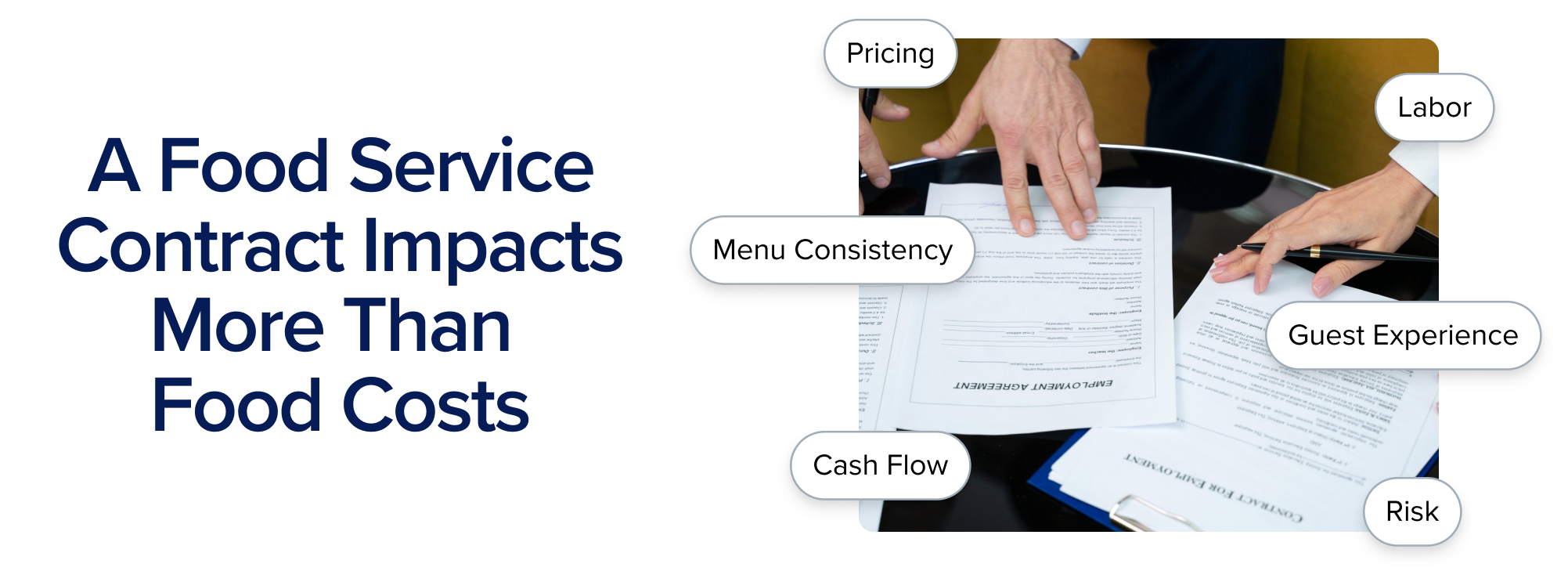
For multi-unit operators, hotels, and casinos, contracts often determine:
- How pricing changes are handled
- Whether invoices are accurate and auditable
- How rebates or credits are tracked
- What happens when service levels slip
- How quickly can you exit if the partnership stops working
A poorly structured food service contract can lock operators into inflated pricing, unclear billing, or limited visibility long after the ink dries.
Common Types of Food Service Contracts
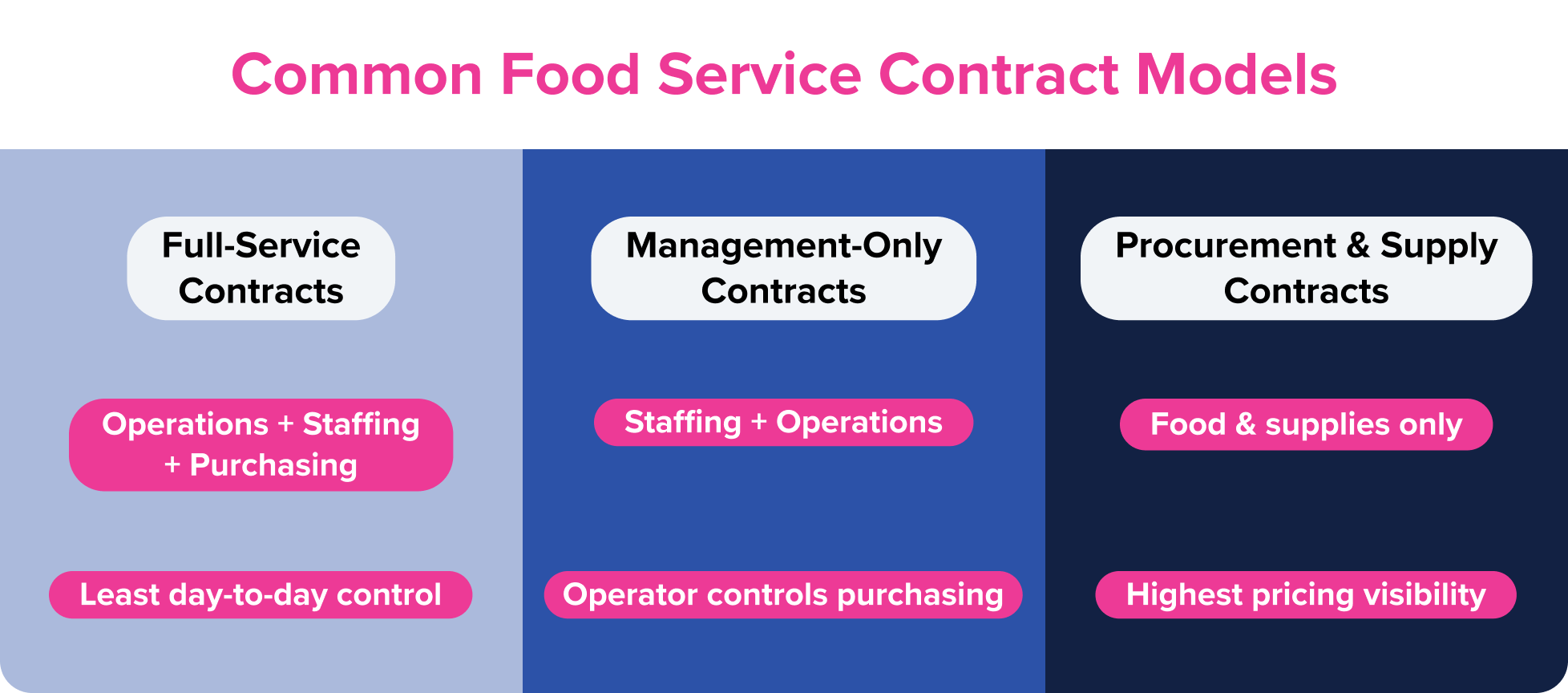
Full-Service Foodservice Contracts
These contracts make one provider responsible for almost everything, from hiring staff to buying food and running the business. In healthcare, education, and some hospitality settings, operators often use them when they want one person to be in charge of everything.
- Best for: Operators who want to get rid of most of the foodservice work.
- Risk to watch: prices are harder to see, and there are fewer decisions to make every day.
Management-Only Foodservice Contracts
With management-only contracts, the provider runs the business and manages the staff, but the operator is still in charge of buying things and dealing with suppliers.
- Best for: Hotels and casinos that want to run their businesses without losing control of their purchases.
- Risk to watch: unclear lines of responsibility between managers and suppliers.
Procurement and Supply Contracts
These contracts are only about getting food, supplies, and services. They don’t include staffing or daily operations, and they are often used by more than one location or distributor.
- Best for: Big restaurant chains and casinos that want to keep costs down.
- Watch out for this risk: Without close monitoring, savings can be missed.
Key Components Every Food Service Contract Should Include
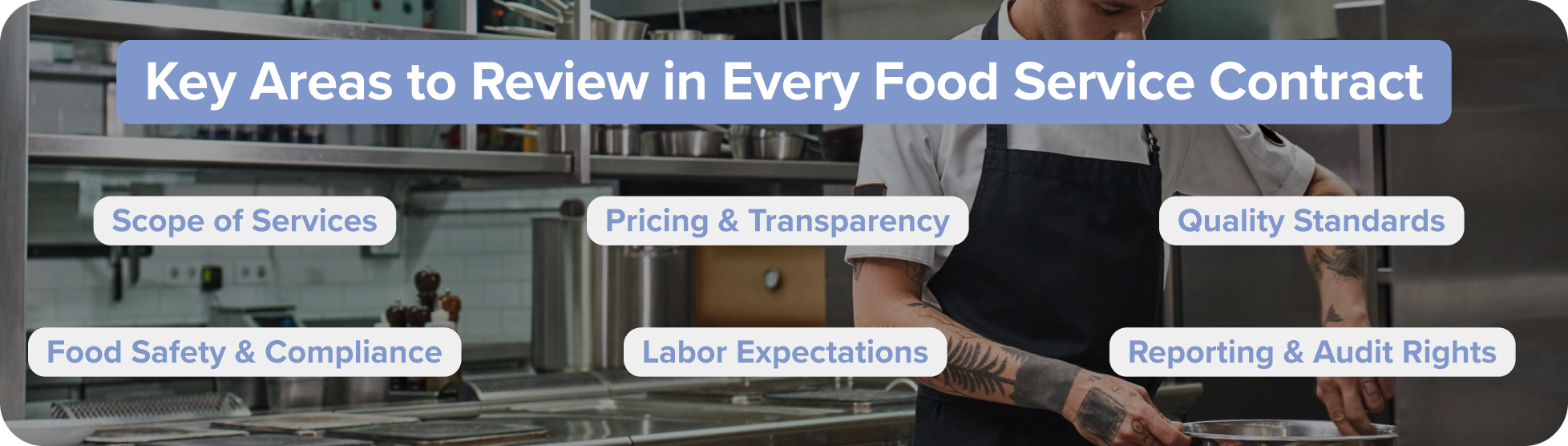
Scope of Services and Responsibilities
A strong food service contract makes it clear who is in charge of what. When you use vague language, it leaves holes that show up later as service problems or extra costs.
Look for clear ownership when it comes to ordering, keeping track of inventory, making substitutions, and solving problems.
Pricing Structure and Cost Transparency
Pricing language should explain how prices are set, changed, and checked. Operators are at risk when contracts use vague terms like “market-based pricing” without any proof.
Menu, Product, and Quality Standards
At a large scale, consistency is important. To protect brand standards, your food service contract should spell out which products are allowed, how substitutions work, and what quality you expect.
Staffing, Labor, and Service Expectations
For contracts involving labor, staffing levels, training requirements, and service standards should be spelled out. Ambiguity here often leads to underperformance.
Food Safety, Health, and Regulatory Requirements
It should be clear who is in charge of food safety compliance, audit readiness, and regulatory duties. This is very important in hotels and casinos.
Reporting, Audits, and Performance Metrics
You can’t manage something if you can’t measure it. A modern food service contract should have rules about reporting, the right to audit, and performance standards.
Financial Terms Restaurants Should Review Carefully
Invoicing, Payment Terms, and Billing Accuracy
Mistakes happen when you bill a lot of people. Contracts should make it clear that you can review invoices, dispute charges, and check prices against agreed-upon terms.
Rebates, Credits, and Incentive Structures
A lot of contracts talk about rebates or incentives, but don’t go into detail. Operators need to know exactly how those dollars are tracked, reported, and sent back.
Cost Escalation Clauses and Price Adjustments
Pay close attention to when and why prices can change. Automatic increases without backup documentation can slowly eat into margins.
Hidden Fees and Pass-Through Costs
There should be clear explanations of delivery fees, admin charges, and pass-through costs. If you can’t clearly explain a fee, it probably shouldn’t be there.
Contract Length, Renewal, and Exit Clauses
This is the part of a food service contract most operators skim the first time and regret later. Contract length and exit terms rarely cause problems on day one. They show up years down the line, when pricing no longer makes sense, service slips, or the business changes faster than the contract allows.
Contract Duration and Renewal Triggers
Long contracts aren’t automatically a bad thing. They can make sense at scale. The problem is when renewal happens by default instead of by decision. If there’s no formal review built in, the contract can keep going long after it stops working for the operation.
Auto-Renewal Risks to Watch For
Auto-renewals catch a lot of operators off guard. The notice window is usually small, easy to miss, and buried in the fine print. Miss it, and you’re in for another year or two, whether pricing or service still makes sense or not.
Termination Rights and Notice Periods
Every contract should spell out how to walk away if needed. That includes ongoing service issues, billing problems that don’t get fixed, or compliance concerns. If the notice period feels unrealistic for a busy operation, that’s worth questioning.
Penalties and Exit Costs
Some exit fees are reasonable. Others feel more like a warning label. If the cost to leave seems disconnected from actual transition work, it may be there to discourage exit, not cover real expenses.
Red Flags to Watch for in Food Service Contracts
Most food service contracts don’t come with obvious warning labels. The issues usually sound small at first and only turn into real problems once the contract is already in motion.
Vague Service Definitions
If a contract talks about “support,” “service,” or “management” without explaining what that actually looks like day to day, that’s a problem. When expectations aren’t clear, accountability disappears fast, especially across multiple locations.
Limited Pricing Visibility
Any food service contract that limits access to pricing detail, invoice backup, or audit rights deserves a second look. When operators can’t see how prices are built or verified, cost creep tends to follow.
One-Sided Termination Clauses
If one party can exit easily and the other can’t, the contract isn’t balanced. One-sided termination language often leaves operators stuck working through issues they should be able to walk away from.
Lack of Audit or Performance Rights
Contracts without audit language rely heavily on trust. At scale, trust without verification usually leads to missed credits, pricing errors, and unresolved disputes that add up quietly over time.
Best Practices for Evaluating Food Service Contracts
Most operators don’t have time to overanalyze every line of a food service contract. The problem is that small assumptions up front tend to turn into big frustrations later. The goal isn’t perfection. It’s knowing where things usually break down.
Comparing Contracts Beyond Price
Price is the first thing everyone looks at. That’s normal. But it’s also where people stop too early. A slightly cheaper contract doesn’t mean much if invoices are messy, service is inconsistent, or no one can explain why pricing keeps changing.
Aligning Contracts With Operational Goals
This gets overlooked a lot. A food service contract might make sense today, but feel tight a year from now. New locations, menu changes, staffing shifts — those things happen whether the contract planned for them or not. The closer the contract matches how the operation actually runs, the fewer workarounds show up later.
Involving Finance, Operations, and Legal Early
Procurement shouldn’t be the only voice in the room. Finance tends to spot billing risks. Operations sees service gaps. Legal catches language that sounds fine until something goes wrong. Getting those perspectives early saves uncomfortable conversations down the road.
Using Data to Validate Contract Performance
Most contracts sound good when they’re signed. What matters is what shows up on invoices months later. Having access to pricing detail and usage data makes it easier to tell whether the food service contract is working or just quietly drifting off course.
How Food Service Contracts Impact Long-Term Profitability
Most food service contracts don’t hurt profitability all at once. It’s usually a slow leak.
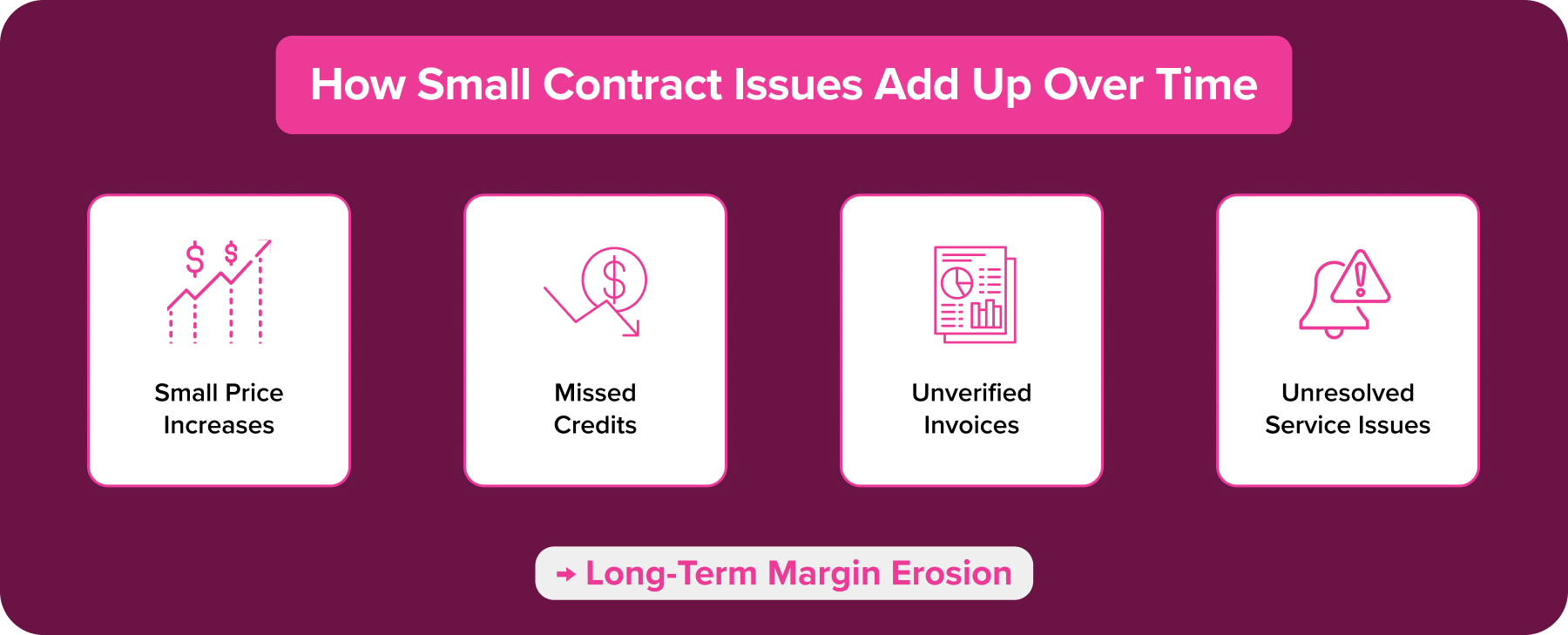
A small price increase here. A missed credit there. A service issue that never quite gets fixed but also never gets escalated. On their own, those things don’t feel urgent. Over time, especially across multiple locations, they add up.
For large restaurant groups, hotels, and casinos, contracts shape how predictable costs really are. When pricing is clear and performance is measurable, forecasting gets easier. When it isn’t, operators end up reacting instead of planning. The contracts that protect long-term profitability are the ones that stay visible, not the ones that get filed away after signing.
What to Take Away
A food service contract should never feel like something you’re stuck with. It should feel like a tool that supports how your operation actually runs.
The best contracts are clear, flexible, and built for real-world conditions, not best-case scenarios. They leave room for growth, allow for accountability, and make it easier to spot issues early instead of years later. When contracts are treated as living agreements, not one-time decisions, operators stay in control instead of playing catch-up.
Food Service Contract FAQs
What is typically included in a food service contract?
Most food service contracts cover pricing, service scope, billing processes, quality standards, compliance requirements, and performance expectations. The details matter more than the length. Clear language upfront usually prevents bigger issues later.
How long should a restaurant’s food service contract last?
There’s no universal answer. Some operations benefit from longer terms; others don’t. What matters most is having review points built in and exit options that make sense if the business or market changes.
Can restaurants renegotiate food service contracts?
Yes, and many do. Renegotiation often happens when pricing shifts, service levels fall short, or the operation grows. Regular reviews make those conversations more practical and less reactive.
What are common mistakes restaurants make with contracts?
Skipping the fine print, overlooking auto-renewals, and assuming pricing will “work itself out” are common missteps. Another big one is not checking contract performance once operations are underway.
How can restaurants ensure pricing transparency in contracts?
Pricing transparency comes from clear contract language, access to invoice detail, and the ability to review and validate charges over time. When operators can see what they’re paying and why, surprises tend to disappear.