

It’s not just about cutting costs to keep food cost down; it’s also about running a smarter, more sustainable business. If you run one restaurant or a lot of them for a growing brand, keeping food cost down can mean the difference between low profits and healthy profits.
But it’s not simple. Prices go up and down, supply chains change, and problems you didn’t see coming, like bad weather or a lack of workers, can quickly eat into your profits. Operators need a mix of strategy, data, and technology to make smart choices and stop waste before it happens.
To control food cost effectively, we need to first understand what causes them and then look at some practical ways to do so.
Understanding Food Cost in the Supply Chain
Managing food cost starts long before the ingredients get to your kitchen. It starts with knowing how decisions about prices and purchases move through the supply chain, from growers and manufacturers to distributors and finally to your plate.
Every hand that touches a product adds value, but it also costs more. This means that the more open your supply chain is, the easier it is to find problems, get better deals, and make better sourcing choices.
A lot of operators only think about how much they pay for things, but that’s not the whole story. The real cost of goods sold (COGS) includes things like shipping costs, supplier fees, changes in demand over the seasons, and even how many items you order. If you know where your money is going and how it’s changing over time, you can make changes before they happen instead of after they happen when your margins are getting smaller.
Operators can use AI and modern analytics tools like InsideTrack to get real-time data from all of their purchasing networks. This helps them understand exactly where their food dollars are going and why.
Key Factors That Impact Food Cost
The first step to controlling your food cost is to know what makes them go up. Here are four big things that affect how much you spend on food and how they relate to your business.
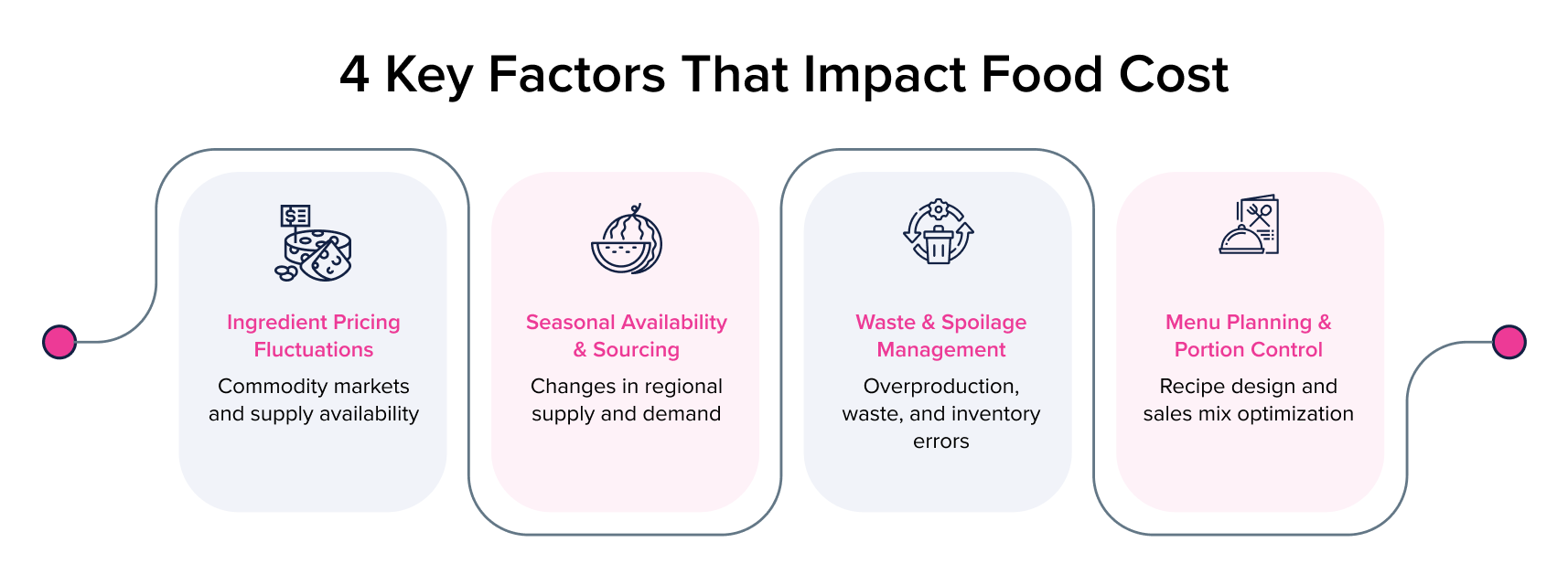
Ingredient Pricing Fluctuations
Prices for ingredients go up and down depending on how much of them is available around the world. For instance, droughts can make it harder to get fresh fruits and vegetables, and bans on exports or high fuel prices can make protein more expensive.
It’s easy to pay too much or be surprised when prices go up if you can’t see these market changes. Operators who use market intelligence tools or work with data-driven procurement platforms can spot trends early, lock in prices when it makes sense, and make menu changes based on commodities that change a lot.
Seasonal Availability and Sourcing
Every operator has been angry when the price of a basic item doubles because it’s not in season. If your menu has a lot of fruits and vegetables, the price of food can change a lot depending on the season.
By balancing your sourcing strategy with seasonal planning—like using produce that is available in your area or changing menu items to include ingredients that are in season—you can keep your spending stable and keep the quality and prices consistent.
InsideTrack‘s produce reporting tools help operators plan for these changes in the seasons and make better buying decisions ahead of time, which cuts down on last-minute cost surprises.
Waste and Spoilage Management
Even if you get the best prices and sources, uncontrolled waste can eat into your profits. Spoilage, making too much, and not keeping track of inventory correctly are some of the most common and expensive problems in the back of the house.
It’s not enough to just throw away less food; you also need to know where and why waste happens. Setting up systems that keep track of inventory in real time, making sure that portion sizes are the same, and rotating stock correctly can all help you save money over time.
Menu Planning and Portion Control
One of the best ways to keep your food cost down is to use your menu. When portion sizes change or low-margin dishes make up most of sales, profits can quickly go down.
It’s important to look at how well the menu is doing and figure out which items are bringing in the most money and which ones are costing more than they’re worth. You can keep your guests happy and protect your bottom line by strategically designing your menu. This means optimizing recipes, changing portion sizes, and highlighting high-margin dishes.
8 Practical Strategies to Control Food Cost
Once you know what makes your costs go up, you can make plans to keep them under control. These eight strategies can help operators take real control of how much they spend on food.
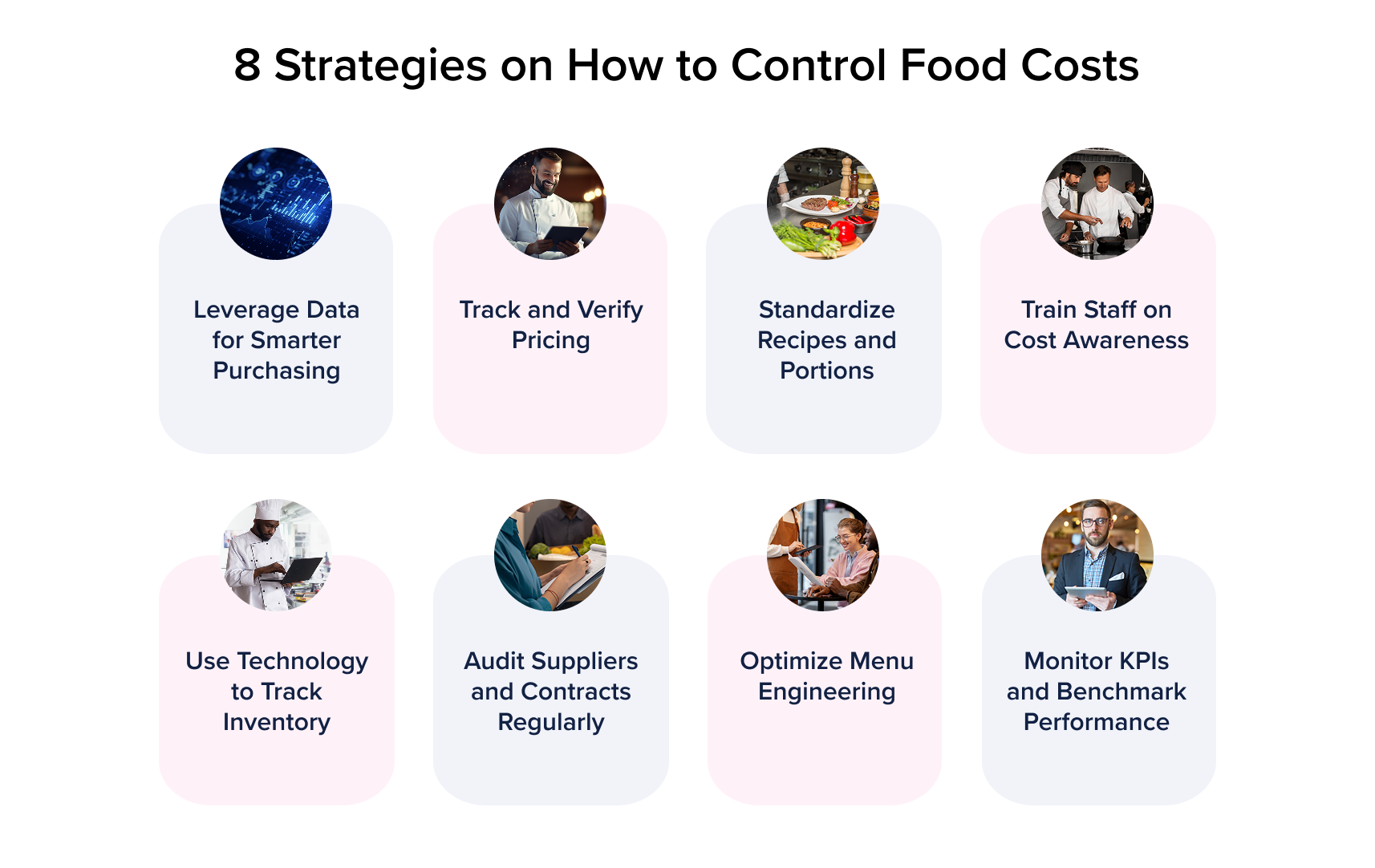
1. Leverage Data for Smarter Purchasing
- Instead of going with your gut, use data to see how prices change over time. Platforms like InsideTrack bring together purchase history, supplier pricing, and market data so that operators can make better buying decisions and get better deals.
2. Track and Verify Pricing
- It’s easy to make mistakes, and even small price differences can add up to thousands of dollars in extra costs. Automated price verification tools make sure you’re always paying the right contracted rates. This helps protect your margins without adding any extra work.
3. Standardize Recipes and Portions
- To keep food cost down, you need to be consistent. Standard recipes and portion sizes make sure that each plate costs what it should, getting rid of differences that can slowly raise costs.
4. Train Staff on Cost Awareness
- Your team is a big part of keeping costs down. Teaching back-of-house staff to reduce waste, follow prep procedures, and respect portion sizes creates a culture of responsibility and discipline in the workplace.
5. Use Technology to Track Inventory in Real Time
- Spreadsheets can’t keep up with how fast things move these days. Real-time inventory tools help operators keep track of how much is being used, flag shrinkage, and find reorder points. This stops both overstocking and stockouts.
6. Audit Your Suppliers and Contracts Regularly
- Your supplier agreements should change as the market does. Checking your contracts on a regular basis can help you make sure you’re still getting the best deal. Audits based on data can also help you negotiate better.
7. Optimize Menu Engineering
- Look at sales mix reports and ingredient costs to find dishes with low profit margins. Change your menu to highlight items that make a lot of money, and think about replacing expensive ingredients with cheaper ones that still taste good.
8. Monitor KPIs and Benchmark Performance
- You can see what’s working by keeping track of performance over time. Operators can quickly get back on track and stay on track with their financial goals by regularly reviewing cost-related KPIs.
KPIs for Food Cost Management
If you track the right key performance indicators (KPIs), you’ll know how far you’ve come, not just how much you’ve done. Here are some of the most useful ways to keep track of food cost:
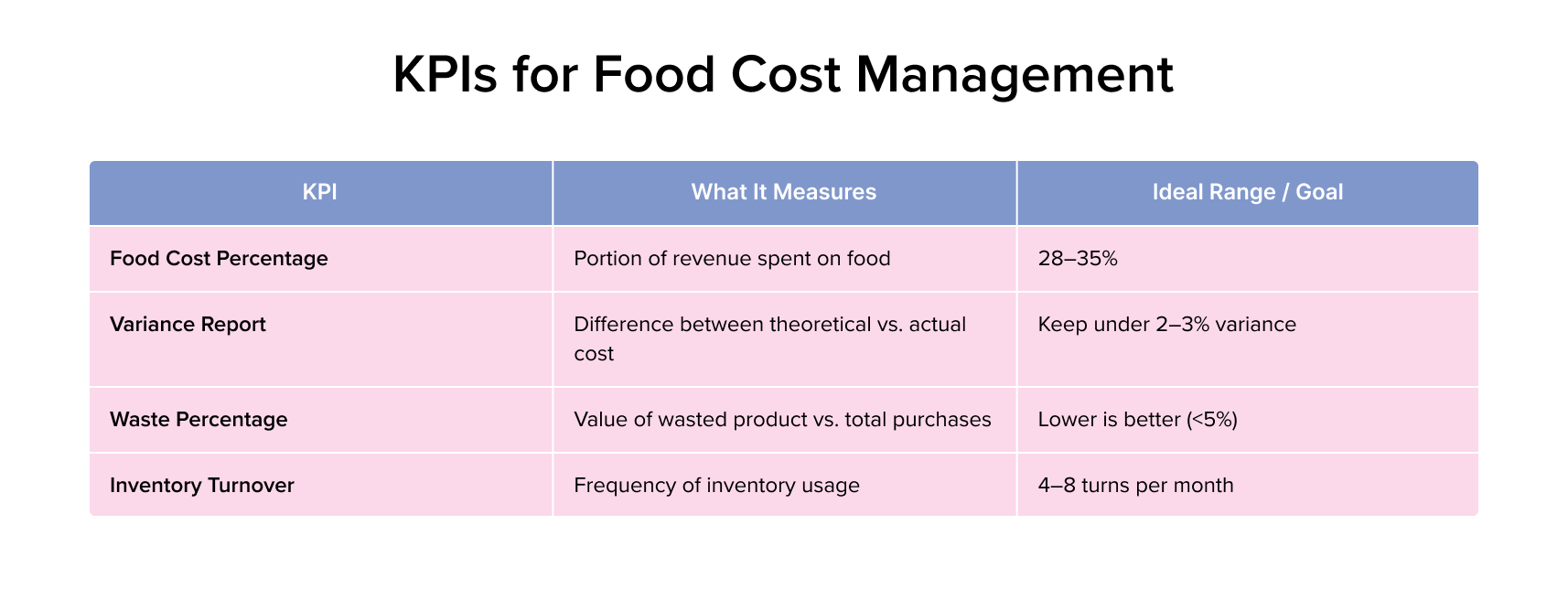
- Food Cost Percentage (Cost of Goods Sold ÷ Food Sales) × 100: This KPI tells you how much of your income goes toward food. Depending on the concept and the food, most operators aim for 28–35%.
- Variance Report: The difference between the theoretical cost (what you should have spent) and the actual cost (what you did spend). Big differences often mean that things are being wasted, stolen, or not measured correctly.
- Waste Percentage (Value of Waste ÷ Total Food Purchases) × 100: Waste measurement helps find areas where operations aren’t running as smoothly as they could be and where employees could use more training.
- Inventory Turnover (Cost of Goods Sold ÷ Average Inventory): A high turnover rate means that you are using your stock well and reducing the chance of it going bad.
Operators can see how well things are going by regularly looking at these KPIs and make decisions before costs get out of hand.
How InsideTrack Helps Control Food Cost
InsideTrack was made to help foodservice businesses buy smarter, not just by looking back but also by giving them real-time, useful data.
Our platform links operators to a huge network of supplier and pricing information, so they can see where every dollar goes. InsideTrack turns complicated procurement data into clear, decision-ready insights by giving you tools for checking prices, analyzing spending, managing contracts, and tracking rebates.
This is how InsideTrack helps keep costs down:
- Automated Price Verification: Makes sure you always pay the agreed-upon prices.
- Data Visualization Dashboards: Find trends, outliers, and ways to save money across all categories.
- Rebate and Contract Management: Make the most of every incentive and don’t let any chances slip by.
- Market Intelligence: Get the latest information and predictions about commodities so you can make smart buying choices.
InsideTrack helps operators take charge of their food costs and their future profits in a market where every penny counts.
Bottom line: You can’t just do this once to keep food costs down. It’s a process that never ends and includes visibility, optimization, and strategic management. You can protect your margins and set your business up for long-term success by using smart sourcing, running your business consistently, and choosing the right technology partner.
Want to take charge of how to control your food cost? Get in touch with InsideTrack today and learn how data-driven insights can help you make better, more profitable choices.