
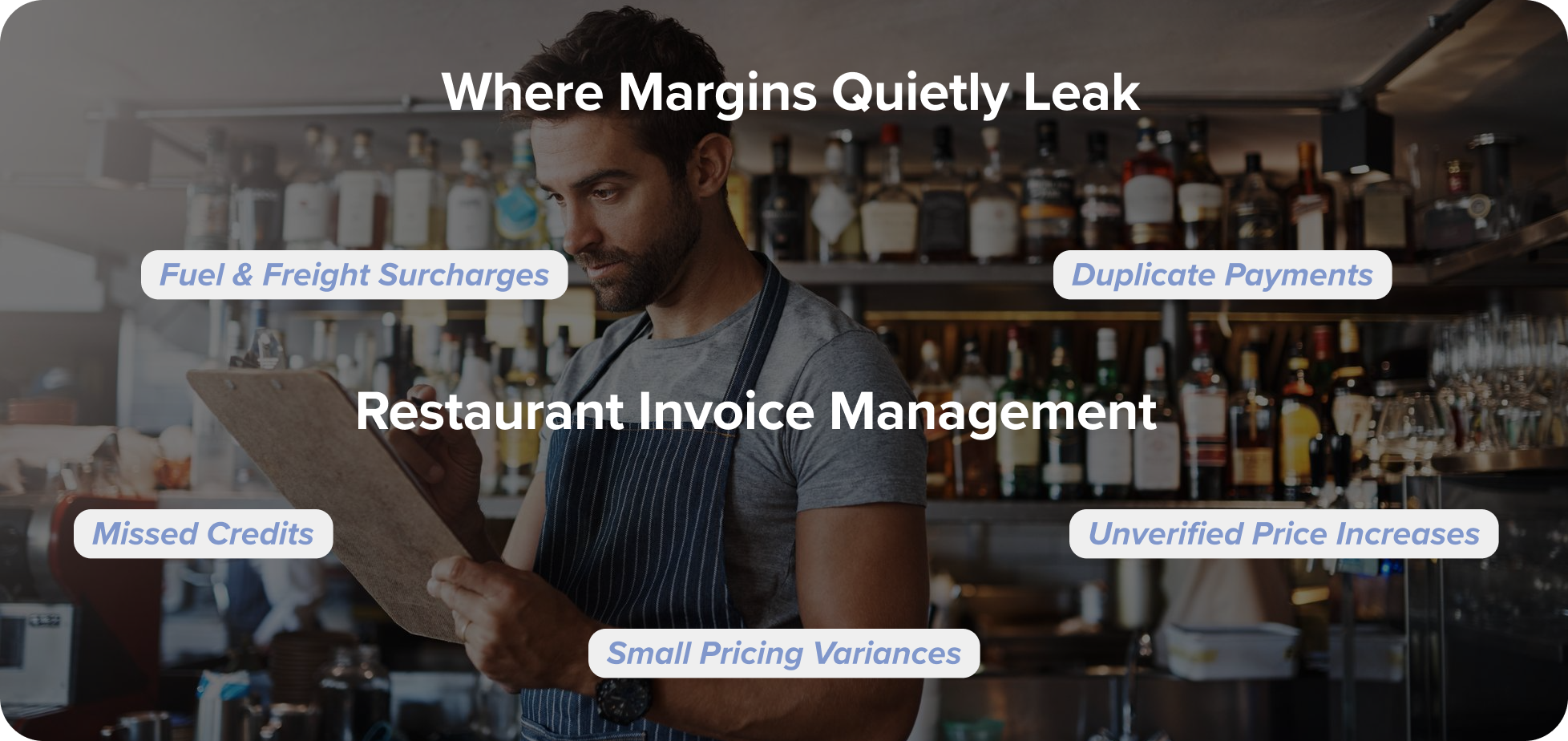
Margins in the food service industry don’t just go away. They leak. A few cents for chicken. A fuel surcharge that goes up without anyone noticing. A second invoice that gets through during a busy week.
Restaurant invoice management is where you find and fix those leaks. When operators look at invoices strategically instead of just reacting to them, they can keep food costs in check, protect cash flow, and stop paying too much.
For groups with more than one unit and operators who do a lot of business, managing invoices is more than just keeping track of money. It is discipline in the workplace.
What is a Restaurant Invoice?
A restaurant invoice is a paper that a supplier or service provider sends to a customer that lists the goods or services that were provided and the amount that is owed.
Most of the time, invoices have:
- Descriptions and amounts of products
- Price per unit
- Longer totals
- Extra charges for freight or fuel
- Taxes Payment terms
Every time you get a delivery of produce, protein, linens, pest control, or a utility bill, you get an invoice. Each one is a cost and a piece of information.
When you manage restaurant invoices well, you make sure that what was charged matches what was ordered, delivered, and agreed upon.
Why Invoice Management is Needed for Restaurants?
Restaurants don’t make a lot of money. Small differences in price add up quickly when you have dozens or hundreds of invoices each week.
Prevent Billing Errors and Duplicate Payments
When you do things by hand, you are more likely to pay the same bill twice or miss small differences. People often don’t notice duplicate payments until the end of the month, when it’s harder to get the money back.
A structured process for managing restaurant invoices catches these mistakes before payment is made.
Maintain Accurate Food and Operating Costs
Mistakes on invoices make it hard to report food costs. Operators can’t trust their cost percentages if the prices are wrong or the items are in the wrong category.
Checking invoices carefully makes sure that financial reports show the truth, not guesses.
Protect Cash Flow
Unverified bills can waste money. Paying early without checking, missing credits, or accepting price increases without question all lower working capital.
Invoice discipline keeps cash flow steady and helps you choose the best time to pay.
Strengthen Vendor Relationships
Clear, written communication about differences in prices makes people more responsible. Vendors like structured processes because they make things clearer and cut down on disagreements.
Better supplier relationships come from better invoice management.
Common Types of Invoices Restaurants Handle
Restaurants handle a lot of bills besides food deliveries.
Food and Beverage Supplier Invoices
Protein, dairy, produce, dry goods, drinks, and special ingredients usually have the most invoices and the most price changes.
Equipment and Supply Invoices
Smallwares, disposables, packaging, uniforms, and kitchen equipment all send out invoices on a regular basis or only once that affect operating budgets.
Utility and Service Provider Invoices
You need to check the rates and make sure you’re following the terms of your contracts for electricity, water, gas, trash removal, internet, and payment processing fees on a regular basis.
Maintenance, Repair, and Miscellaneous Expense Invoices
Invoices for emergency repairs, cleaning services, pest control, and facility maintenance are often hard to predict and need to be looked at carefully.
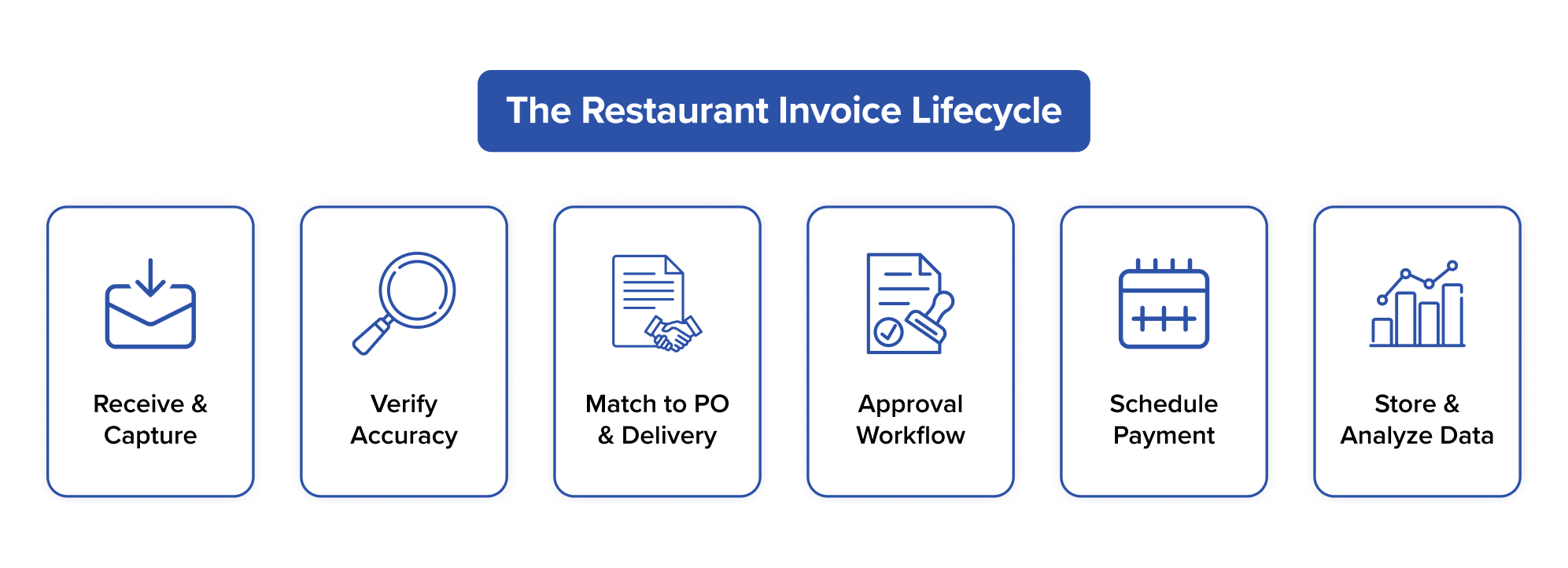
The Restaurant Invoice Lifecycle
Operators can build better controls by knowing the whole life cycle of an invoice.
Receiving and Capturing Invoices
You can get invoices by email, EDI, downloading them from a portal, or getting them in the mail with your deliveries. Centralized capture makes sure that documents don’t get lost or delayed.
Reviewing and Verifying Invoice Accuracy
You need to check that the line items, quantities, unit prices, and surcharges are all what you expected. This is where most extra charges are found.
Matching Invoices to Purchase Orders and Deliveries
Three-way matching looks at:
- Order of purchase
- Receipt for delivery
- Invoice from the supplier
The invoice is approved if all three of these things are true. If not, differences are marked.
Approval Workflows and Authorization
Approval processes that are clearly defined make sure that the right managers look over invoices before payment is scheduled.
Scheduling Payments and Record Retention
Invoices are paid according to their terms once they have been approved. Organized retention makes audits and financial reporting easier.
Common Invoice Management Errors That Cost Restaurants Money
Invoices can be a problem for even the best-run businesses.
Manual Data Entry and Paper-Based Processes
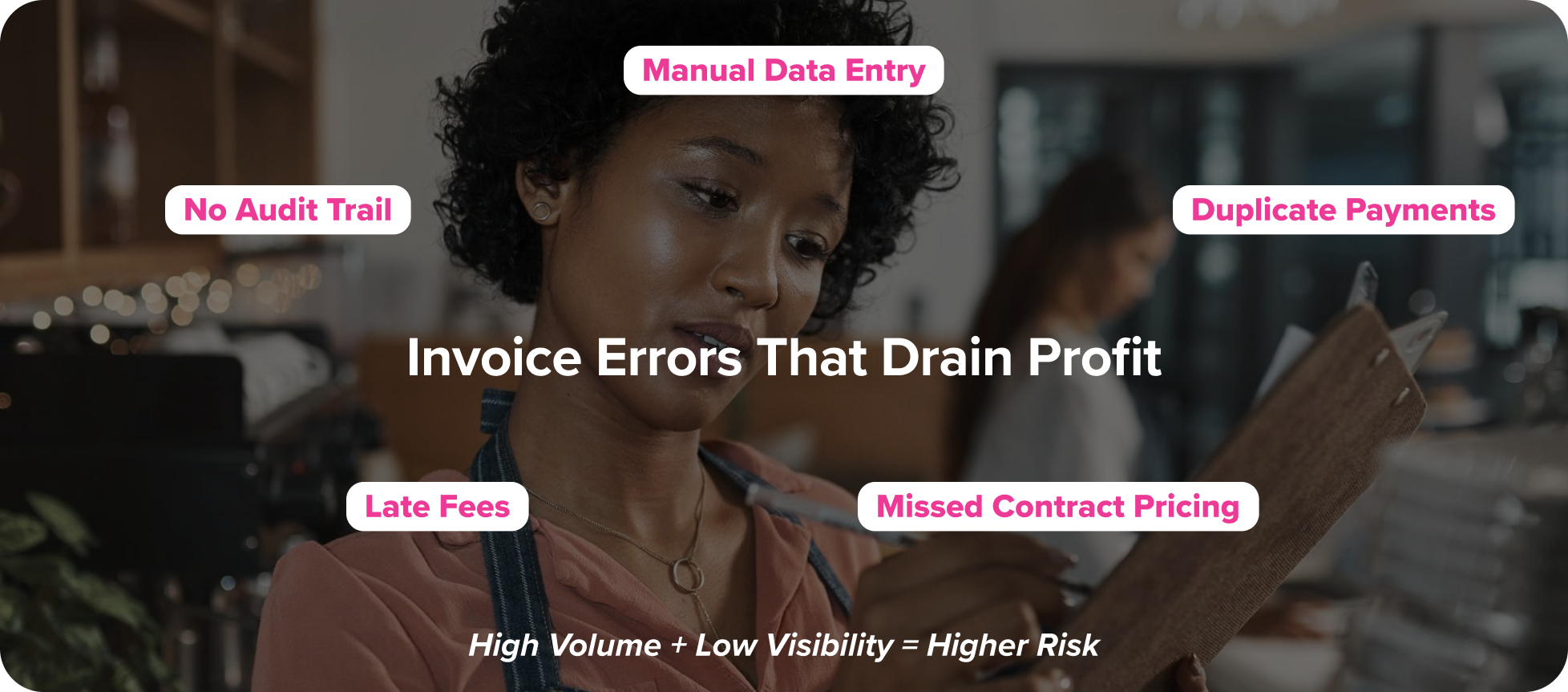
Entering invoice data into spreadsheets increases the chance of errors and slows down processing. It’s hard to see things in different places when you store them on paper.
Duplicate and Overpayments
When there are a lot of bills and accounting is done in different places, the chance of paying the same bill twice goes up.
Missed Price Changes and Vendor Overcharges
Temporary changes in the market can lead to permanent price increases if you don’t check your invoices against the prices you agreed to.
Delayed Processing and Late Fees
If invoices sit in inboxes or at the store level, they could get late fees.
Lack of Audit Trails and Visibility
Leaders can’t tell who approved what and when without a clear audit trail. That gap makes things riskier and less responsible.
Best Practices for Effective Restaurant Invoice Management
Successful operators see managing invoices as a system, not a job.
Centralize Invoice Collection and Storage
There should be one digital place for all invoices to go. Centralization makes it easier to keep track of things and stops documents from getting lost.
Automate Invoice Capture and Data Extraction
Optical character recognition and automated data extraction cut down on manual entry and make it more accurate.
Match Invoices Against Contracts, POs, and Receipts
Systematic matching stops unauthorized price changes and makes sure that negotiated agreements are followed.
Standardize Approval and Payment Processes
Clear approval hierarchies speed things up and make sure that oversight is always the same.
Review Vendor Spend and Price Variances Regularly
Ongoing analysis finds trends before they become problems with margins.
Using Invoice Data to Reduce Overpayments and Control Costs
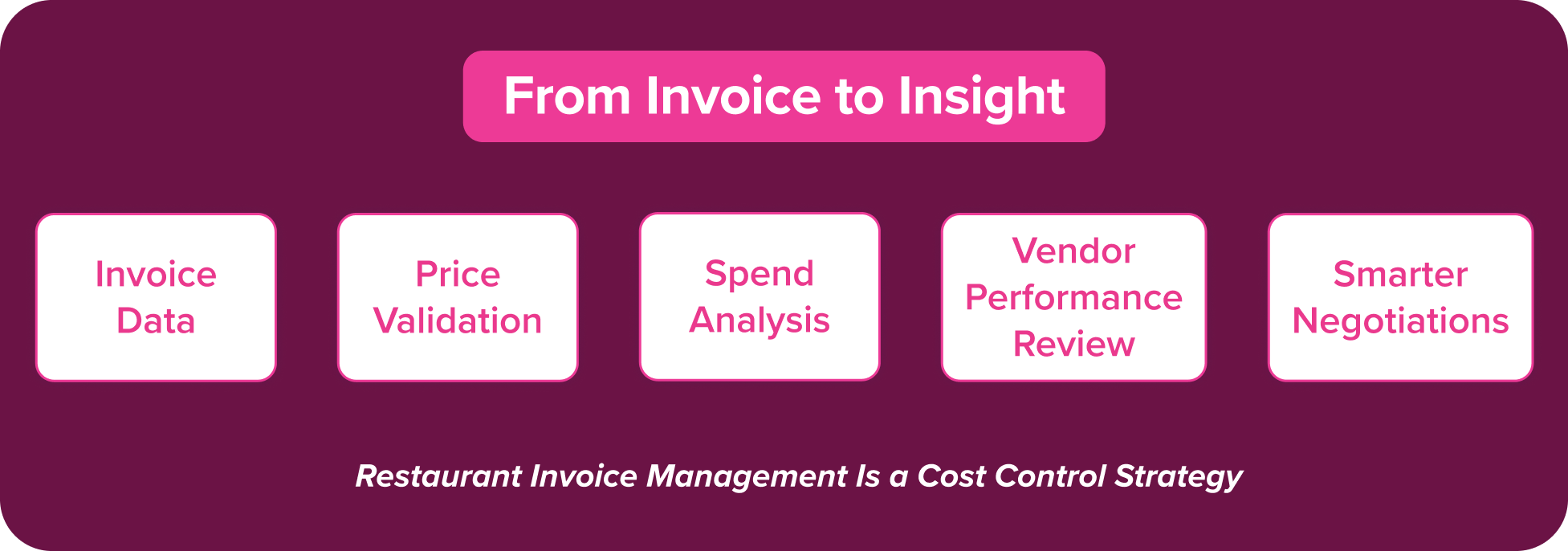
Invoice data is more than just paperwork. It’s smart.
Identify Pricing Errors and Contract Mismatches
When you compare the prices on an invoice to the terms of a contract, you can quickly see where they don’t match up.
Track Vendor Price Fluctuations Over Time
Historical invoice data shows how prices change over time, which helps operators predict and react to changes in the market.
Analyze Spend by Category, Location, and Supplier
By breaking down invoice data by category and unit, you can better control costs.
Support Smarter Negotiations and Vendor Decisions
When data is clean, operators base their negotiations on facts, not guesses.
Challenges of Invoice Management at Scale
As restaurants get bigger, they get more complicated.
Managing High Invoice Volumes Across Locations
Operators with multiple units may handle thousands of invoices each month. Reviewing becomes less reliable without automation.
Inconsistent Vendor Formats and Pricing Structures
Different distributors use different layouts for their invoices, which makes it hard to compare them by hand.
Limited Visibility Across Distributors and Suppliers
Leaders can’t see how much money the whole company spends because the systems are broken up.
Balancing Control with Operational Speed
Restaurants need to pay their suppliers on time and make sure the information is correct. To find that balance, you need structured workflows.
Final Thoughts
Taking care of restaurant bills isn’t just about paying them. It has to do with making sure the numbers are right, keeping the margin safe, and getting a clear picture of how much is being spent.
Operators who think of invoices as data instead of paper have a clear edge. It’s easier to find mistakes. The amount of money paid back is less. Vendors are held more accountable.
Restaurants stop reacting to unexpected costs and start controlling them when they take care of their bills ahead of time.
FAQs
What causes most invoice errors in restaurants?
Most mistakes happen because people enter data by hand, the processes for checking things aren’t always the same, prices change a lot, and there isn’t a three-way match between purchase orders, deliveries, and invoices.
How can restaurants prevent duplicate payments?
Centralized invoice tracking systems, automated duplicate detection, and structured approval workflows all help a lot to lower the risk of paying the same bill twice.
Should invoices be matched to purchase orders?
Yes, matching invoices to purchase orders and delivery receipts is an important control step that keeps prices from going up and overcharging.
How does automation improve invoice accuracy?
Automation makes it easier to keep track of things by providing audit trails, cuts down on mistakes made by hand, standardizes workflows, and flags differences.
How often should restaurants review vendor invoice data?
Every week, businesses that deal with a lot of money should check their invoices for mistakes. Every month, they should also look more closely at their spending to see how prices are changing and how well their vendors are doing.