

Margins don’t usually disappear all at once. They slip. A few cents on an invoice here, a missed credit there, a supplier charging just a little outside of contract. Nothing dramatic enough to trigger alarms. But over time, those small gaps add up—and suddenly your numbers don’t look the way they should.
That’s where restaurant risk management comes in. Not as a reactive fix, but as a way to stay ahead of the issues that quietly chip away at profitability, consistency, and control.
Let’s break down where risk actually shows up in restaurant operations, how to spot it early, and what to do about it.
Why Risk Management is Critical for Modern Restaurants
Running a restaurant today means dealing with more moving parts than ever. Pricing changes faster. Supply chains shift. Labor is unpredictable.
The challenge isn’t just managing operations. It’s managing uncertainty.
Restaurant risk management gives operators a way to bring structure to that uncertainty. When you have clear processes, visibility into your data, and accountability across vendors and teams, you’re not guessing. You’re making decisions with context.
Without that structure, even strong operators end up reacting instead of controlling the outcome. And in this industry, reaction mode is expensive.
Most Overlooked Risks in Restaurant Operations
Not all risks are obvious. In fact, the ones that hurt the most are usually the ones no one is actively watching.
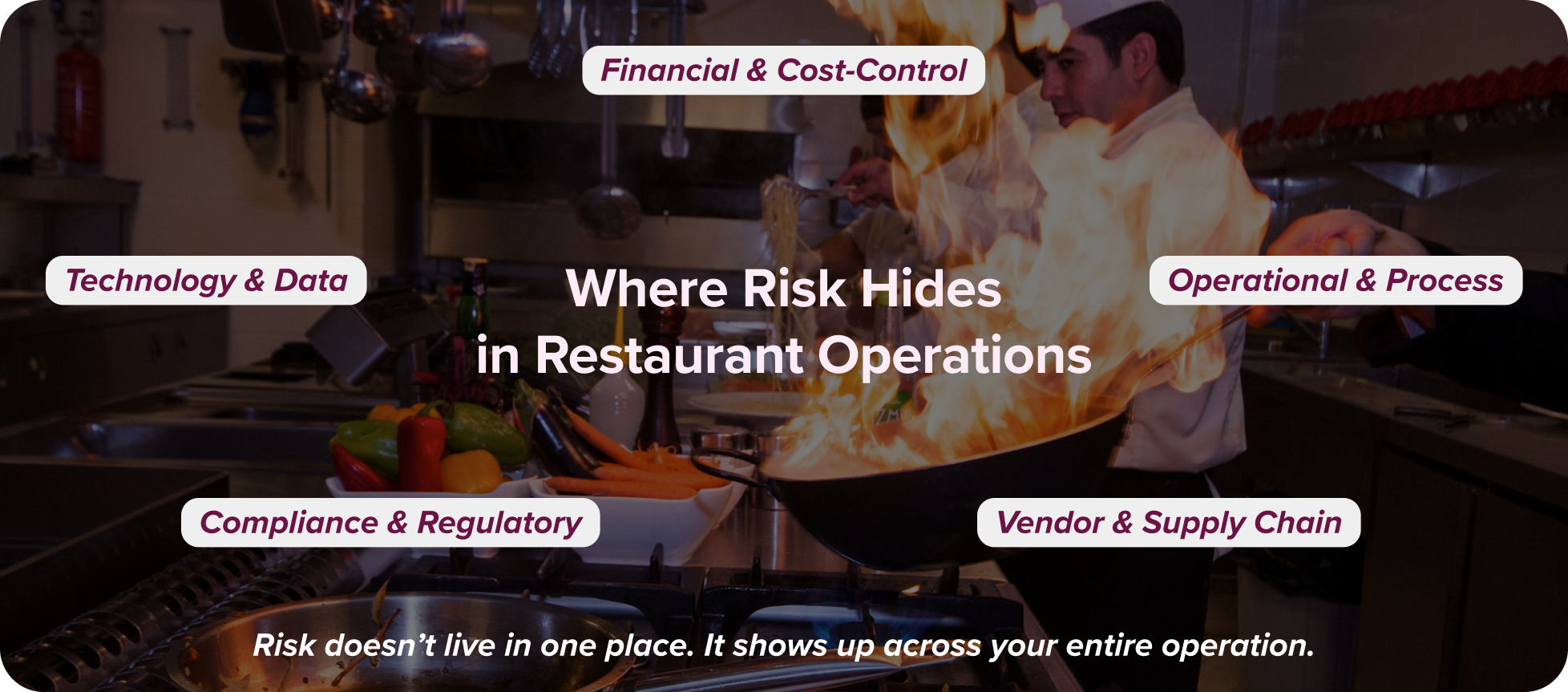
Financial and Cost-Control Risks
This is where most operators think they’re covered. Food cost is tracked. Labor is reviewed. Reports are pulled.
But gaps still happen. Price increases slip through. Credits don’t get issued. Invoice details don’t always match what was agreed to.
It’s not about big mistakes. It’s about small inconsistencies that never get corrected.
Operational and Process Risks
When processes vary from shift to shift or location to location, risk creeps in fast.
One manager checks deliveries closely. Another signs off without looking. One location tracks waste. Another doesn’t.
Without consistency, you lose control. And without control, you lose visibility into what’s actually happening.
Compliance and Regulatory Risks
Health codes, labor laws, food safety standards—there’s no shortage of requirements.
Most operators take compliance seriously, but gaps can still show up in documentation, training, or execution. And when they do, the cost isn’t just financial. It’s reputational.
Vendor and Supply Chain Risks
Suppliers play a bigger role in your operation than most people realize.
If pricing isn’t aligned with contracts, if substitutions aren’t tracked, or if deliveries aren’t consistent, your entire operation feels it.
Strong vendor relationships matter. But so does verification.
Technology and Data Risks
Technology is supposed to make things easier. But disconnected systems can create blind spots instead.
If your purchasing data, inventory, and invoices aren’t aligned, you’re left piecing together the story manually. And that’s where things get missed.
Hidden Threats That Quietly Drain Restaurant Margins
Some risks don’t look like risks at all. They just show up as “part of doing business.”
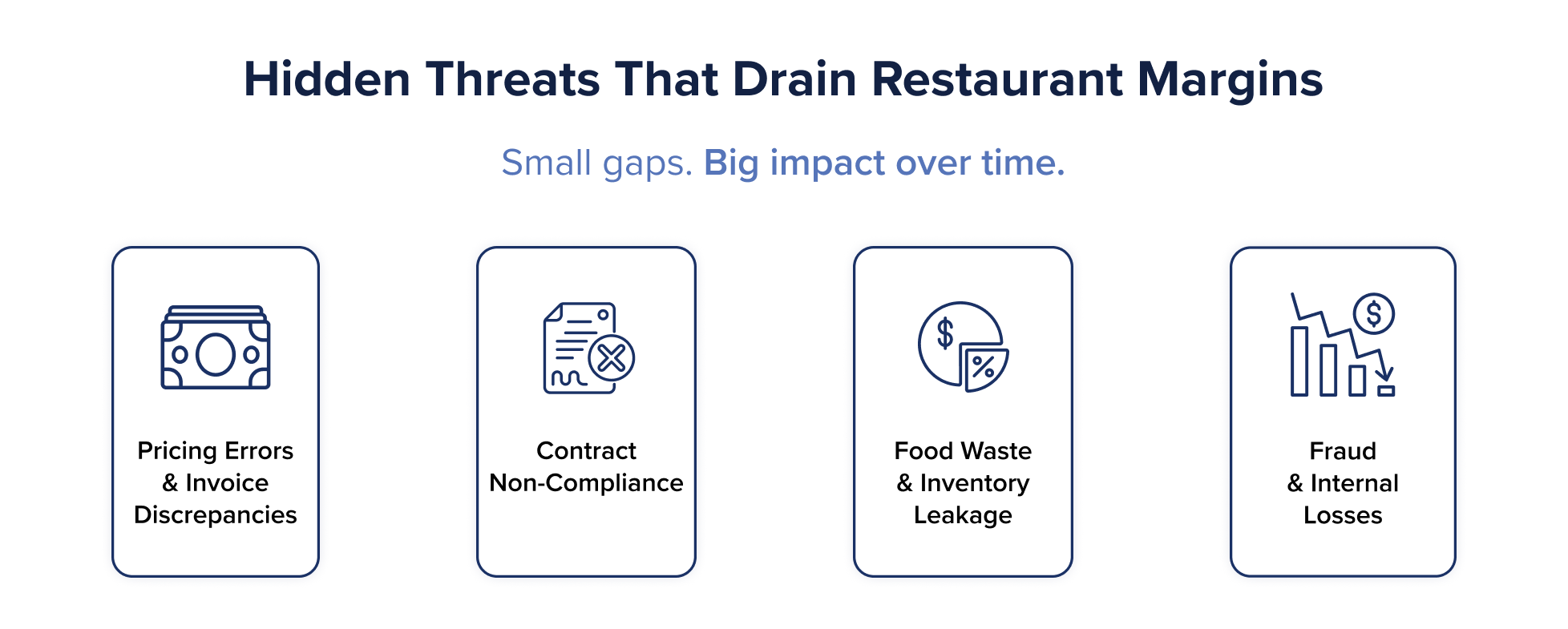
Pricing Errors and Invoice Discrepancies
A case comes in a little higher than expected. Another line item doesn’t match the agreed price.
Individually, it’s easy to overlook. Over time, it’s real money.
Contract Non-Compliance
You negotiate pricing for a reason. But if those agreements aren’t consistently enforced, they lose their value.
Suppliers don’t always catch it. And neither do operators—unless someone is actively checking.
Food Waste and Inventory Leakage
Waste doesn’t always show up as a big spike. It’s often gradual.
Over-ordering. Poor rotation. Items expiring just before they’re used.
It’s not dramatic, but it’s steady. And it adds up fast.
Fraud and Internal Losses
This one is uncomfortable, but it’s real.
Unauthorized discounts. Missing inventory. Small cash discrepancies.
Most teams are trustworthy. But without controls in place, it’s hard to spot when something’s off.
Signs Your Restaurant Has Unmanaged Risk
You don’t need a formal audit to know something’s off. The signs usually show up in everyday operations.
Unexpected Cost Fluctuations
Your numbers change, but there’s no clear reason why.
Frequent Pricing Discrepancies
Invoices don’t quite match what you expected to pay. And it happens more than once.
Recurring Compliance Issues
The same problems keep coming up in audits or inspections.
High Waste or Shrinkage
Inventory disappears faster than it should. Or waste feels higher than normal.
Vendor Billing Irregularities
Credits are inconsistent. Charges vary. Details are unclear.
If any of these feel familiar, it’s worth taking a closer look.
How to Perform a Restaurant Risk Assessment
You don’t need to make a lot of changes to get going. A simple, organized method can do a lot.
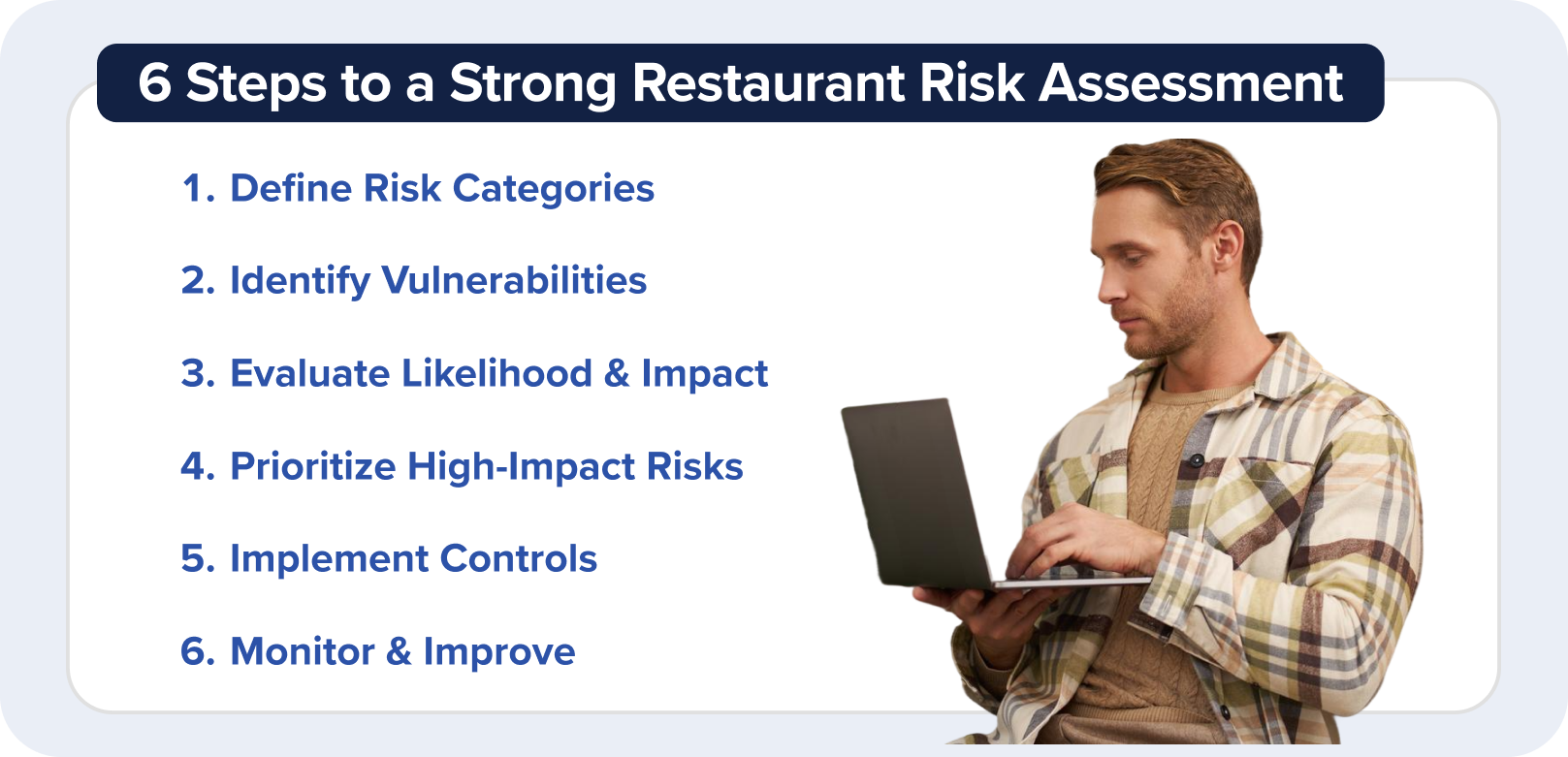
Step 1: Define Risk Categories
Start by grouping risks into areas like financial, operational, compliance, vendor, and technology.
Step 2: Identify Vulnerabilities
Look at where things tend to slip. Pricing checks. receiving processes. inventory tracking.
Step 3: Evaluate Likelihood and Impact
Not all risks are equally important. Pay attention to what happens a lot and what costs the most.
Step 4: Prioritize High-Impact Risks
Focus on the problems that have the biggest effect on your finances or operations.
Step 5: Implement Control Measures
Set up guardrails. That could mean more thorough checks of invoices, standardized ways of receiving goods, or better reporting.
Step 6: Monitor and Continuously Improve
Risk management isn’t one-and-done. It’s ongoing. Review, adjust, repeat.
Risk Mitigation Strategies That Actually Work
This is where restaurant risk management turns into action.
Strengthening Cost Controls
Regular invoice checks. Clear pricing benchmarks. Consistent review processes.
Simple habits that prevent small issues from becoming big ones.
Improving Vendor Accountability
Set expectations. Track performance. Address discrepancies early.
Strong partnerships are built on transparency, not assumptions.
Standardizing Operational Procedures
Every location, every shift, same process.
Consistency is what keeps risk from slipping through the cracks.
Enhancing Staff Training and Awareness
Your team is your first line of defense.
If they know what to look for, they can catch issues before they escalate.
Leveraging Data and Analytics Tools
This is where things get easier.
When you can see pricing trends, invoice mismatches, and purchasing patterns in one place, you’re not guessing. You’re managing proactively.
Role of Spend & Procurement Data in Risk Reduction
Data changes the game.
Instead of relying on spot checks or manual reviews, you can see patterns across your entire operation.
Where pricing is drifting.
Where contracts aren’t being followed.
Also, where certain locations are consistently off track.
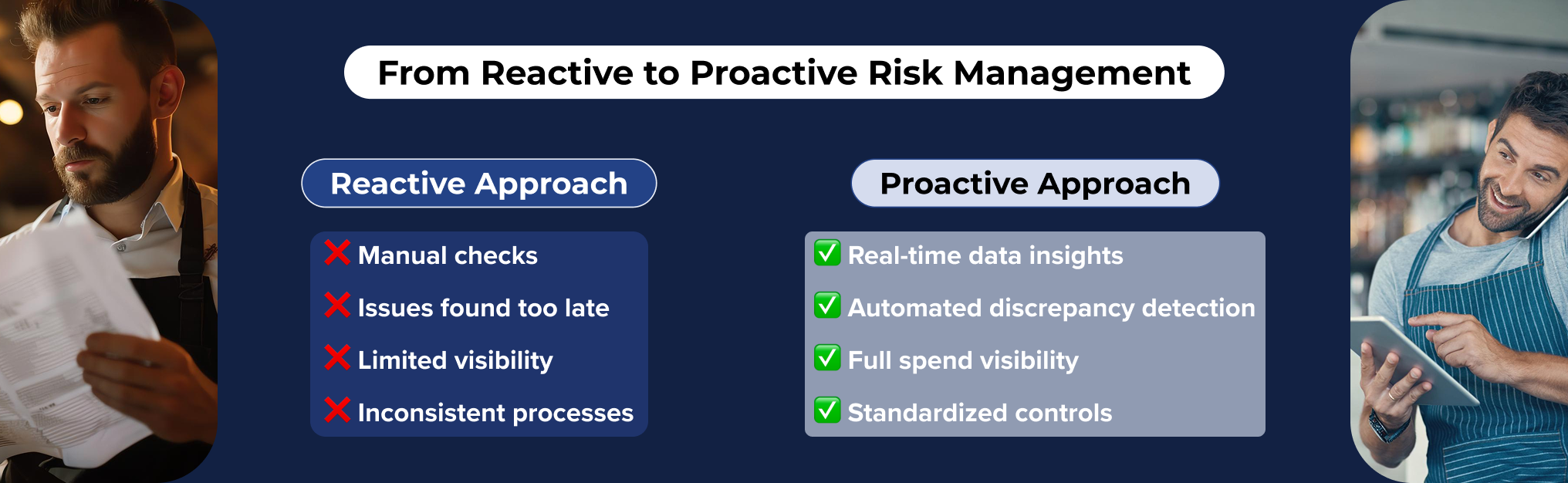
That level of visibility turns restaurant risk management from reactive to proactive. You’re not chasing problems. You’re preventing them.
Common Risk Management Mistakes Restaurant Operators Make
Most operators don’t ignore risk. They just don’t always approach it the right way.
Relying on manual checks instead of consistent systems.
Assuming vendors are always aligned with contracts.
Focusing only on big issues while smaller ones go unchecked.
Treating risk management as a one-time project instead of an ongoing process.
It’s not about working harder. It’s about building smarter systems.
Final Thoughts
Restaurant risk management isn’t about eliminating every possible issue. That’s not realistic.
It’s about knowing where risk lives in your operation, putting the right controls in place, and staying one step ahead of the problems that quietly impact your margins.
Because in this business, it’s rarely the big, obvious issues that hurt the most. It’s the small ones that go unnoticed for too long.
Restaurant Risk Management FAQs
What are the biggest risks restaurants face today?
Pricing inconsistencies, supply chain disruptions, labor challenges, compliance gaps, and lack of visibility into purchasing data are some of the most common risks.
How often should a restaurant perform a risk assessment?
At a minimum, quarterly. High-volume or multi-unit operations may benefit from more frequent reviews.
How can restaurants prevent invoice and billing errors?
By regularly comparing invoices to contracted pricing and purchase orders, and using tools that flag discrepancies automatically.
What role does compliance play in risk management?
Compliance helps protect against legal, financial, and reputational risk. It ensures operations meet required standards consistently.
How can multi-unit restaurants manage risk more effectively?
Standardized processes, centralized data, and consistent reporting across locations make it easier to identify and control risk at scale.
What tools help with restaurant risk management?
Procurement and spend analytics platforms, inventory management systems, and price verification tools all play a key role in identifying and reducing risk.
Click here to connect with InsideTrack and gain the visibility and control you need to stay ahead of risk.