

If you’ve ever had a guest-facing issue traced back to a missing item, a surprise price increase, or a supplier that suddenly stopped delivering, you’ve already seen hospitality procurement in action. Most of the time, it works quietly in the background. When it doesn’t, everyone notices.
Hospitality procurement is not about buying things cheaper for the sake of it. It’s about making sure the right products, services, and partners are in place so operations run smoothly, brand standards stay intact, and margins don’t get chipped away one invoice at a time.
This guide takes a practical, real-world look at hospitality procurement in 2026. No theory, no buzzwords for the sake of it, just how procurement actually works in hospitality and why it plays a bigger role in performance than many teams realize.
What is Hospitality Procurement?
Hospitality procurement is the structured approach hospitality businesses use to source, manage, and oversee the goods and services they rely on every day. That includes food, beverages, operating supplies, equipment, services, and the suppliers behind them.
Unlike basic purchasing, hospitality procurement doesn’t end when an order is placed. It covers supplier selection, contract terms, pricing accuracy, delivery performance, and whether what was negotiated is actually showing up on invoices. In well-run operations, procurement is a continuous cycle, not a one-time task.
In today’s environment, hospitality procurement also depends on visibility. Teams need to see what is being bought, what it should cost, and how those decisions affect the business over time.
Why Hospitality Procurement Matters More Than Ever
Margins are tighter, expectations are higher, and supply chains are more unpredictable than they were even a few years ago. That combination has pushed hospitality procurement from a back-office function into a business-critical discipline.
Impact on Guest Experience and Brand Standards
Guests may never think about procurement, but they experience it constantly. When menu items taste different across locations, when amenities feel downgraded, or when equipment failures slow service, procurement decisions are often part of the story.
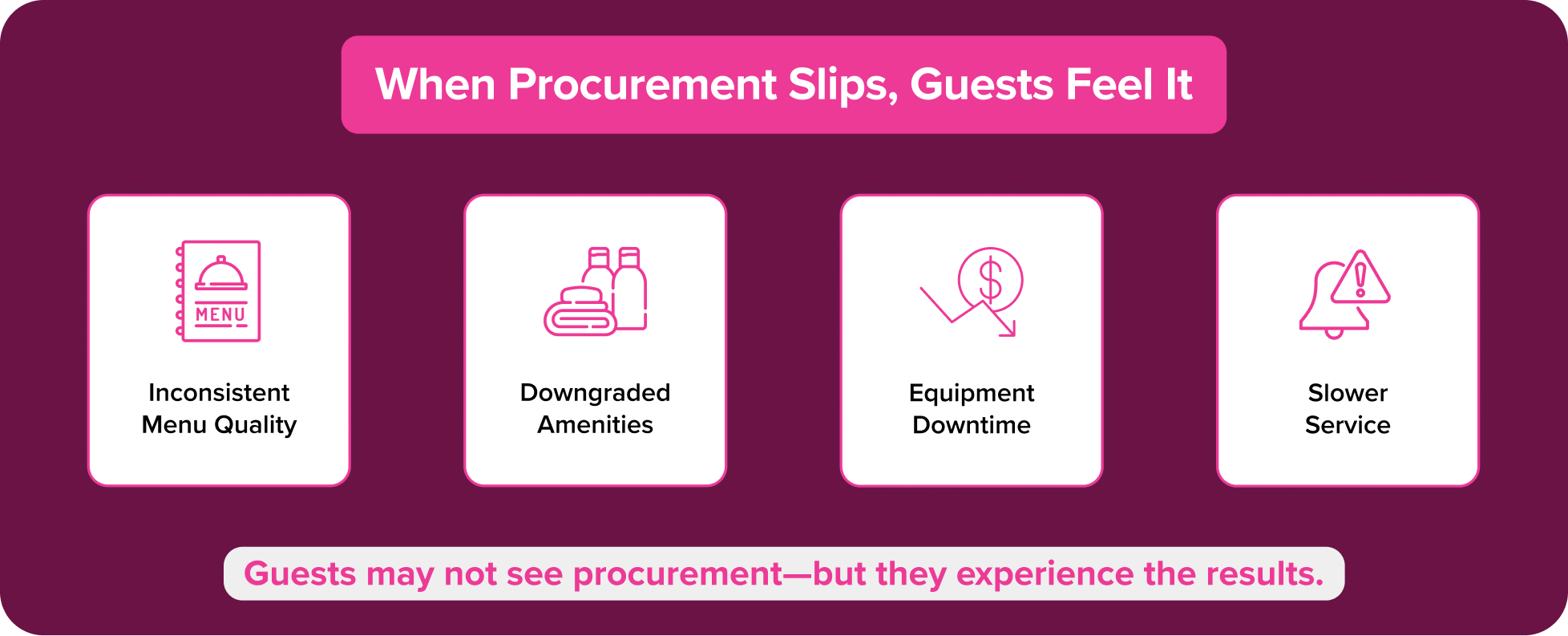
Strong hospitality procurement helps protect brand standards by ensuring locations are using approved products, consistent specifications, and reliable suppliers. That consistency shows up in the guest experience, even if guests never know why.
Cost Control and Margin Protection
Many margin leaks don’t come from obvious cost spikes. They come from small pricing errors, contract terms that aren’t enforced, or locations buying outside approved agreements.
Hospitality procurement helps bring those issues to light. When teams know what prices should be and compare them to what is actually being charged, they often find money that has quietly slipped through the cracks.
Consistency Across Locations and Properties
Multi-location hospitality brands face a familiar challenge: each property has its own rhythms, preferences, and pressures. Without procurement oversight, that flexibility can turn into inconsistency.
Centralized hospitality procurement doesn’t mean removing local control. It means creating guardrails so locations can operate efficiently without drifting into higher costs or uneven quality.
Managing Risk, Compliance, and Supply Reliability
Procurement also plays a role in risk management. Food safety requirements, supplier certifications, service-level agreements, and contract compliance all live within hospitality procurement.
When supply disruptions or performance issues arise, teams with visibility into suppliers and contracts can react faster and with fewer surprises.
What Hospitality Businesses Procure
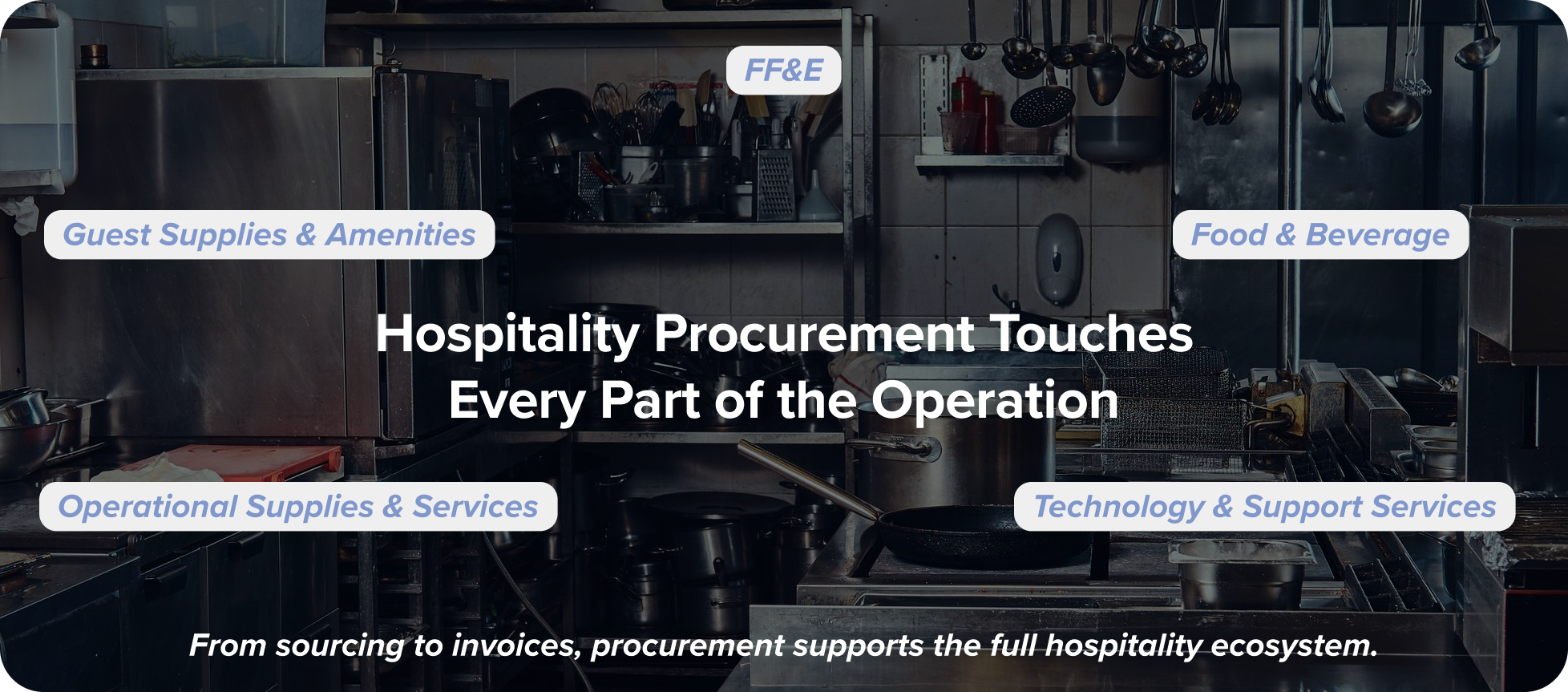
Hospitality procurement reaches far beyond the kitchen. It covers nearly every category that supports daily operations.
Food and Beverage Products
This includes proteins, produce, dry goods, beverages, alcohol, and specialty items. Hospitality procurement in this category must account for quality, availability, seasonality, and pricing volatility, often across multiple distributors.
Guest Supplies and Amenities
Linens, toiletries, paper goods, and cleaning supplies play a bigger role than most people realize. Guests might not talk about them when they’re right, but they definitely remember when they’re wrong.
Furniture, Fixtures, and Equipment (FF&E)
FF&E purchases range from kitchen equipment to guest room furnishings. These decisions typically involve longer timelines, larger investments, and coordination between procurement, operations, and finance.
Operational Supplies and Services
Hospitality procurement includes things like uniforms, cleaning supplies, trash pickup, pest control, and laundry. It’s easy to forget about these categories, but they add up quickly across properties.
Technology and Support Services
Modern hospitality procurement also includes software, analytics tools, and operational support services that help teams better manage their spending, suppliers, and performance.
The Hospitality Procurement Process Explained
Even though every business is different, the process of getting good hospitality is usually the same.
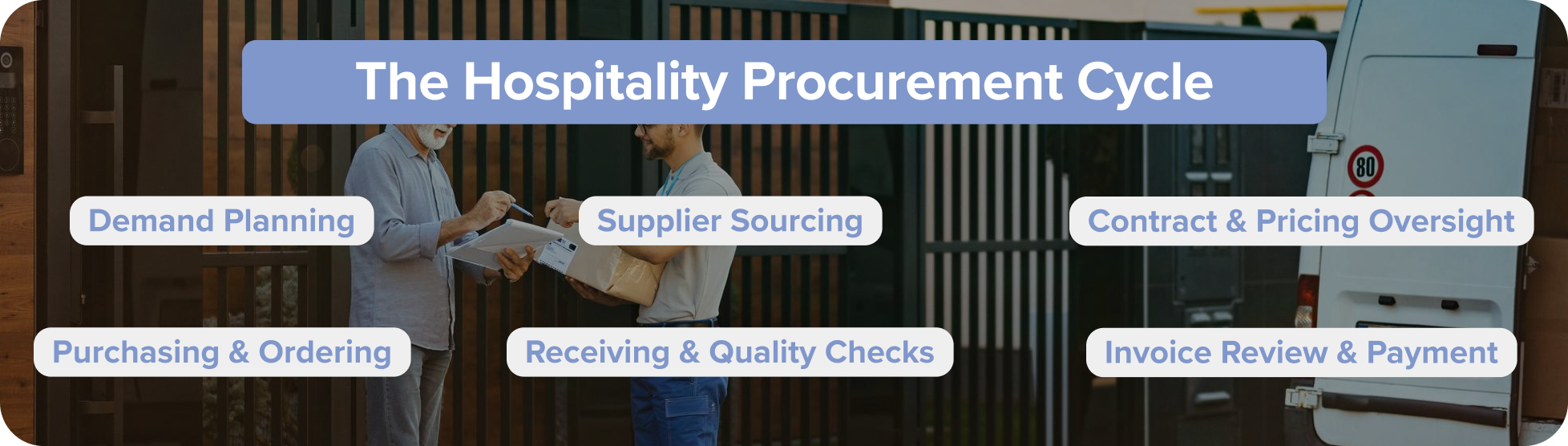
Identifying Needs and Demand Planning
Procurement starts with understanding demand. Occupancy levels, menus, seasonality, and event schedules all influence what is needed and when.
When demand planning is off, teams are forced into last-minute purchases that are usually more expensive and harder to control.
Supplier Sourcing and Evaluation
It’s not just about price when you choose suppliers. When hospitality procurement teams look at suppliers, they look at how reliable they are, how well they serve customers, how consistent their products are, and how well they do over time.
A supplier that looks good on paper but doesn’t always deliver on time causes operational stress that no discount can fix.
Contract Negotiation and Pricing Management
Contracts set expectations, but they only matter if they are enforced. Effective hospitality procurement includes ongoing checks to confirm negotiated pricing and terms are reflected in real transactions.
Purchasing and Order Management
Clear purchasing processes reduce confusion and prevent off-contract buying. The easier it is for teams to order correctly, the more likely they are to follow established guidelines.
Receiving, Inventory, and Quality Control
Verifying deliveries against orders and specifications is a critical but often rushed step. Procurement relies on accurate receiving data to spot supplier issues early.
Invoice Matching and Payment Processing
Invoice review is where many procurement problems finally surface. Matching invoices to contracts and purchasing data helps ensure hospitality businesses pay what they agreed to pay—no more, no less.
Common Hospitality Procurement Challenges
Even experienced hospitality organizations run into familiar procurement issues.
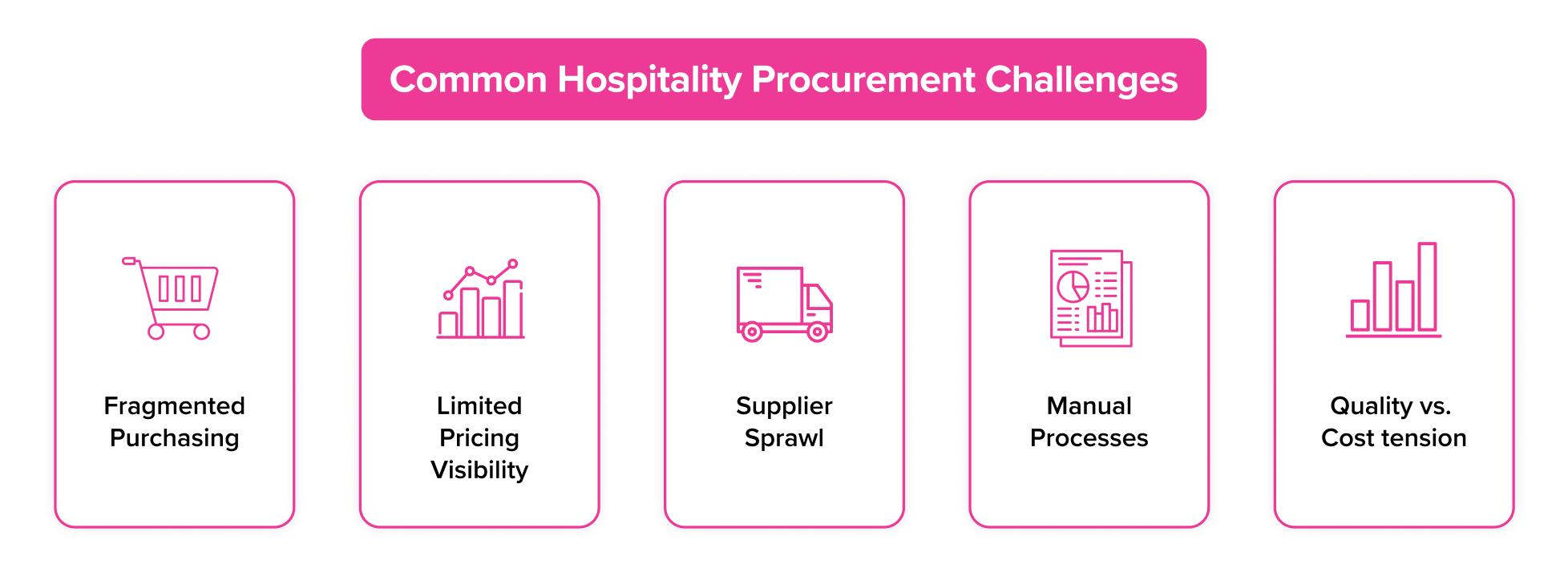
Fragmented Purchasing and Maverick Spend
When locations buy independently without oversight, pricing and supplier consistency quickly break down. These purchases are rarely intentional, but they add unnecessary cost.
Limited Visibility into Pricing and Contracts
Many teams know contracts exist but don’t have an easy way to see whether pricing is being honored. Without visibility, errors linger unnoticed.
Supplier Complexity and Inconsistent Performance
When suppliers are scattered across locations, problems don’t always announce themselves. They build quietly until someone finally sees the pattern.
Manual Processes and Data Silos
When data lives in too many places, teams spend more time chasing information than using it. That’s usually when trends and issues slip through the cracks.
Balancing Cost Savings with Quality Expectations
It’s always a balancing act to buy things for the hospitality industry. Making decisions about costs that don’t take into account what guests want usually leads to bigger problems later on.
Best Practices for Effective Hospitality Procurement
Organizations that manage procurement well tend to focus on a few core principles.
Centralizing Procurement Across Locations
Central oversight creates guardrails without micromanaging. Properties keep the flexibility they need, while the business keeps pricing, suppliers, and standards aligned.
Standardizing Vendors, Contracts, and Pricing
Standardizing vendors and contracts cuts down on chaos and gives hospitality organizations a stronger position at the negotiating table.
Using Data to Monitor Spend and Performance
Spend data doesn’t just live in reports. When teams look at it regularly, it starts to reveal where money is leaking and where performance is slipping.
Strengthening Supplier Relationships
You can’t build strong relationships with suppliers overnight. Over time, they make it easier to talk to each other, make service more reliable, and make it less likely that something will go wrong when there is a problem.
Aligning Procurement with Brand and Menu Strategy
Procurement should help the brand deliver what it promises. When the procurement, operations, and culinary teams work together, the guest experience stays the same.
The Role of Technology in Modern Hospitality Procurement
Technology has taken a lot of the guesswork out of hospitality procurement. Instead of hunting through reports and spreadsheets, teams can pull up purchasing data and see where things aren’t lining up.
Good tools don’t replace people. They give procurement teams clearer information so they can make better calls.
Hospitality Procurement Trends to Watch in 2026
As hospitality procurement continues to mature, several trends are shaping how teams operate.
Greater Focus on Spend Transparency
Leaders want clear answers about where money is going and whether it aligns with expectations.
AI-Driven Forecasting and Insights
Advanced analytics are helping teams anticipate demand shifts and pricing changes before they become problems.
Want a closer look at the insights hospitality and foodservice teams actually use? Click here to explore 10 foodservice insights operators rely on to spot pricing issues, track trends, and stay ahead of change.
Sustainability and Responsible Sourcing
Environmental and sourcing standards are becoming more important in purchasing decisions, especially for companies that are driven by their brands.
Fewer Suppliers, Stronger Partnerships
A lot of hospitality businesses are cutting back on the number of suppliers they work with to focus on reliability and performance.
Procurement as a Strategic Business Function
Procurement is becoming more involved in planning conversations, not just carrying them out.
Streamline Hospitality Procurement with InsideTrack
InsideTrack supports hospitality procurement by bringing clarity to purchasing data, pricing accuracy, and supplier performance.
By normalizing data across locations and suppliers, procurement teams can see where issues exist, address discrepancies, and make decisions with confidence.
Final Thoughts
Even though hospitality procurement works behind the scenes, it has an effect on both the guest experience and the bottom line.
In 2026, the best hospitality companies see procurement as an ongoing discipline that helps them stay consistent, protect their margins, and keep their businesses moving forward.
Want to see how InsideTrack helps hospitality teams bring clarity to procurement, pricing, and supplier performance? Click here to learn how InsideTrack supports smarter hospitality procurement decisions.
FAQs
How is procurement different from purchasing in hospitality?
Purchasing is about placing orders. Hospitality procurement includes sourcing, contract oversight, pricing validation, and supplier management.
What are the biggest challenges in hospitality procurement today?
Limited visibility, decentralized buying, supplier complexity, and manual processes remain common obstacles.
How can technology improve hospitality procurement efficiency?
Technology helps consolidate data, highlight discrepancies, and reduce the manual effort required to manage procurement.
Why is spend visibility critical in hospitality procurement?
Without visibility, pricing errors and inefficiencies often go unnoticed, directly impacting profitability.