

, AlsContract renewals have a way of fading into the background once they’re signed. Pricing is established, suppliers are in place, and day-to-day purchasing keeps moving. Then a renewal date approaches, and suddenly there are a lot of decisions to make.
That’s why contract renewals deserve more attention than simply reviewing an agreement and signing for another term.
For foodservice operators, a contract renewal is an opportunity to look at what has actually happened during the life of an agreement. Did pricing remain competitive? Did the supplier meet expectations? Were rebates collected as expected? Have purchasing needs changed since the contract was originally negotiated?
Taking the time to answer those questions can help operators make better purchasing decisions and enter supplier conversations with a much clearer picture of what they need from the next contract term.
What Does a Foodservice Contract Renewal Involve?
A foodservice contract renewal is the process of reviewing an existing supplier agreement before deciding whether to continue, renegotiate, or replace it.
The process should go beyond checking the expiration date. Effective contract renewals involve reviewing pricing, terms, rebates, supplier performance, service expectations, purchasing requirements, and market conditions.
Operators should also look at what has changed internally. Maybe purchasing volume has grown. New locations have opened. Product specifications have changed. Or a category that once represented a relatively small portion of spend has become much more important.
All of that information can influence whether the existing contract still makes sense.
Why Auto-Renewal Clauses Can Cost Operators More Than They Realize
Auto-renewal clauses can make contract management easier, but they can also allow agreements to continue without receiving the review they deserve.
A contract may automatically renew unless notice is provided within a specific window. If that deadline passes unnoticed, an operator could find themselves committed to another term before evaluating current pricing or negotiating changes.
The bigger issue is what may go unexamined.
Pricing that was competitive when the agreement was signed may no longer be. Rebate structures may not reflect current purchasing volume. Service requirements may have changed. Better options may now be available in the market.
Tracking contract renewal dates and notice periods gives operators time to evaluate those factors before an agreement automatically rolls forward.
When Should You Start Preparing for a Contract Renewal?
Ideally, contract renewals should begin well before the contract expiration date.
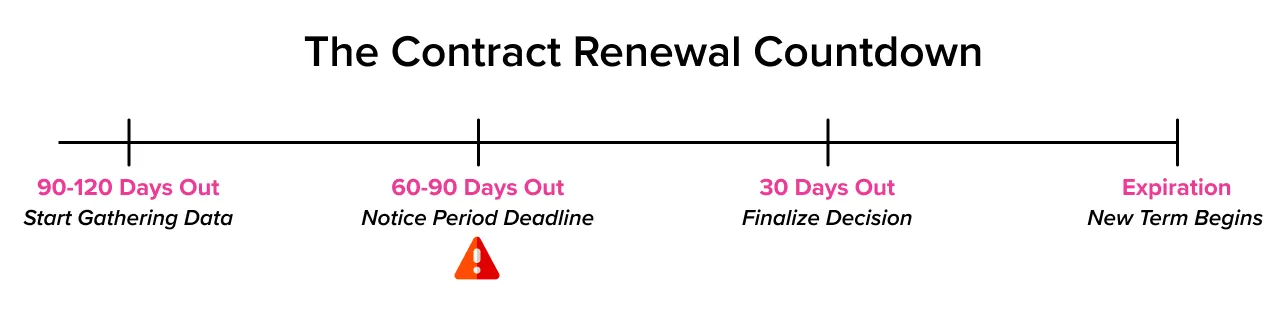
For many foodservice agreements, starting the review process 90 to 120 days ahead provides time to gather information, evaluate supplier performance, review pricing, align internal stakeholders, and begin negotiations.
More complex agreements may require an even longer runway.
The key is to work backward from the contract’s notice period, not just its expiration date. If an agreement requires 60 or 90 days’ notice to make changes or terminate, waiting until the final few weeks could leave very little room to negotiate.
A Step-by-Step Foodservice Contract Renewal Checklist
There’s a lot to look at before deciding what to do with an existing supplier agreement. And if you’re managing several contracts at once, it’s easy for important details to get buried. Before moving forward with contract renewals, work through the agreement piece by piece and make sure it still makes sense for the way your operation buys today.
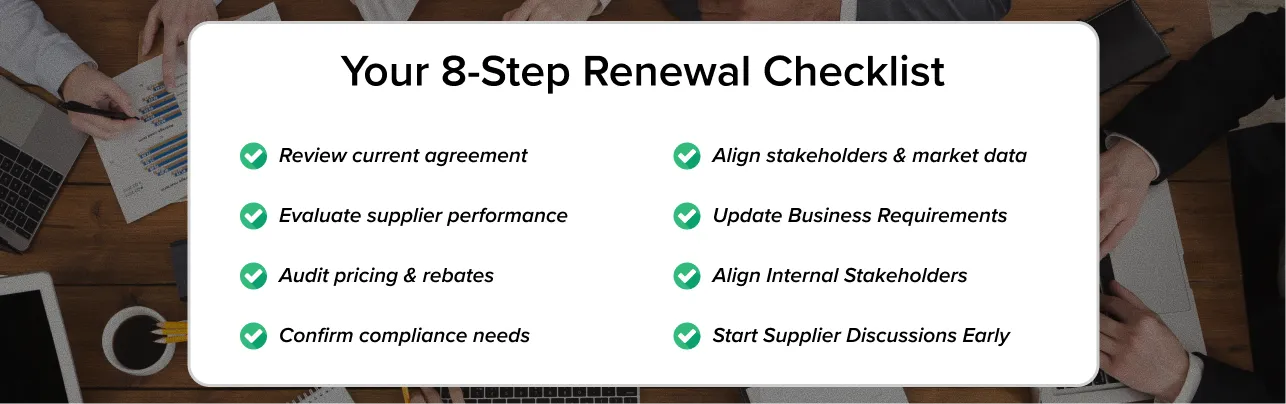
Review the Current Agreement
Pull up the current contract and give it a fresh read. Don’t assume you remember what was negotiated the last time around.
Check the expiration date and, just as importantly, the notice period. Then dig into pricing terms, rebates, contract renewals language, service expectations, termination requirements, and any amendments that have been added along the way.
You may find terms that made perfect sense when the contract was signed but don’t fit quite as well anymore.
Evaluate Supplier Performance
Now look beyond the paperwork. How has the supplier actually performed?
Think about what your locations have experienced throughout the contract. Were deliveries reliable? Were fill rates where they needed to be? How often did substitutions create problems? When an issue came up, did the supplier respond quickly and get it resolved?
This part of contract renewals shouldn’t be based on one bad delivery or one great month. Look at the relationship as a whole and whether the supplier is consistently supporting the needs of your operation.
Review Pricing, Rebates, and Invoice Accuracy
A contracted price only matters if that’s the price you actually paid.
Go back through purchasing and invoice data and see how it lines up with the agreement. Were contracted prices consistently honored? Did unexpected price changes show up? Were rebates earned and collected as expected?
Pay attention to the misses, too. An item that wasn’t covered by the agreement or a rebate that went unclaimed might seem small on its own. Across multiple products, locations, and months, those gaps can add up.
Confirm Legal and Compliance Requirements
Some parts of a contract can’t be evaluated by procurement alone.
If legal, insurance, regulatory, food safety, or other compliance requirements apply to the agreement, bring the appropriate teams into the review. This becomes especially important if the business has added locations, entered new markets, or changed operating requirements since the contract was signed.
You want to catch those changes during the review, not after the next contract term has already started.
Assess Market Conditions and Category Pricing
Take a look at what has happened in the category since the last negotiation.
Maybe commodity costs moved considerably. Maybe freight or labor affected the category. Supply could be tighter, or conditions may have improved since the original agreement was put in place.
Having that market context matters during contract renewals because a supplier asking for a price increase doesn’t automatically mean the increase is out of line. On the other hand, continuing with old pricing assumptions without checking the market could mean leaving an opportunity on the table.
Update Business Requirements and Service Levels
A lot can change over the course of a supplier contract.
Maybe you’ve opened locations, purchasing volume has shifted, delivery schedules need to change, or certain products have become more important to the business. Your team may also have learned where the existing agreement causes headaches in day-to-day operations.
Bring those changes into the renewal conversation. The next version of the contract should reflect what your operation needs now, not what it needed when the original agreement was negotiated.
Align Internal Stakeholders
Before supplier conversations get too far along, check in with the people who deal with the agreement from different sides of the business.
Operations may have concerns procurement hasn’t heard about. Finance may see something different in the numbers. Culinary could have upcoming product needs that will affect purchasing. Accounting may have dealt with invoice or rebate issues throughout the year.
Getting those perspectives early gives you a better picture of what needs to change before contract renewals move forward.
Start Supplier Discussions Early
Give yourself enough time to have an actual conversation with the supplier.
Waiting until an agreement is about to expire can turn a strategic decision into a rushed one. Starting earlier gives you time to talk through performance, ask questions about pricing, bring up service issues, and negotiate changes without a deadline hanging over every discussion.
And if the current agreement no longer looks like the right fit, you still have time to see what else is out there. That flexibility is one of the biggest advantages you can give yourself going into contract renewals.
Should You Renew, Renegotiate, or Re-Bid the Contract?
Reaching the end of a contract doesn’t automatically mean it’s time to renew it as-is. This is your chance to decide whether the agreement is still working for your operation.
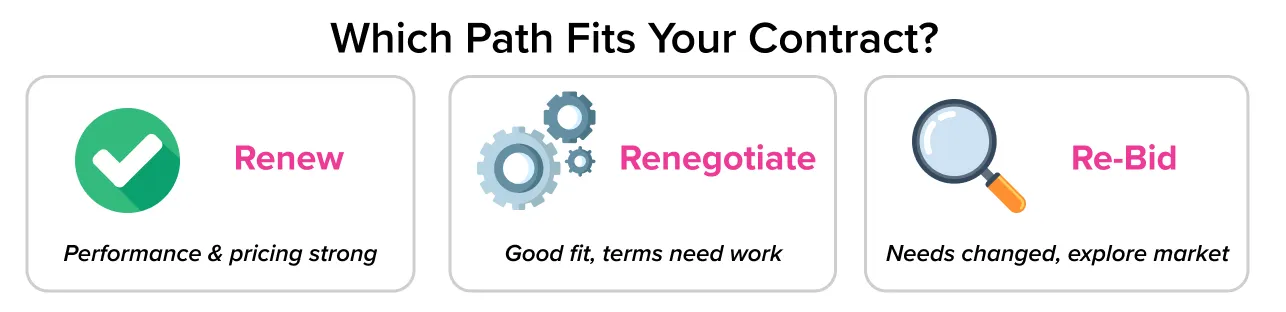
If the supplier is performing well, pricing is competitive, and the terms still fit your needs, renewing may be the easiest choice. But there’s also plenty of middle ground. You might want to keep the supplier while renegotiating certain parts of the agreement, such as pricing, rebates, delivery schedules, product coverage, or service expectations.
Then there are times when going back out to bid makes sense. Maybe service has slipped, your purchasing needs have changed considerably, or you simply don’t know how the current agreement stacks up against other options in the market.
That’s part of what makes contract renewals so valuable. You’re not locked into doing what you did last time. You have an opportunity to look at what’s working, what isn’t, and what makes the most sense going forward.
How Spend and Pricing Data Strengthen Contract Negotiations
It’s much easier to negotiate when you know exactly what your operation has been buying and paying.
Before sitting down with a supplier, look at your spend across the agreement. Which items or categories account for the most purchasing volume? Where have prices moved? Have those changes been consistent across locations? Are invoices matching the pricing you negotiated?
That information can quickly change the conversation. Instead of going into contract renewals with a general sense that pricing needs attention, you can point to specific areas you want to discuss.
Historical data can also help you understand the value your business brings to the supplier relationship. If volume has increased or your purchasing mix has changed, those details may be important when negotiating the next agreement.
InsideTrack gives foodservice operators greater visibility into their purchasing data, contracts, pricing, and rebates. Having that information easier to access means teams can spend less time hunting down numbers and more time using them to prepare for supplier conversations.
Common Contract Renewal Mistakes to Avoid
One of the easiest mistakes to make is simply starting too late. By the time someone realizes a contract is approaching its renewal date, the notice period may be close or may have already passed.
Another is looking only at the price sheet.
A supplier relationship can look good on paper while problems are happening elsewhere. Maybe rebates aren’t being captured as expected. Maybe invoice pricing hasn’t consistently matched the contract. Also, maybe locations are dealing with service issues that never made their way back to procurement.
The opposite can happen, too. A team may be ready to switch suppliers because of a few frustrating experiences without looking at the overall performance of the agreement.
Good contract renewals require the full picture. Pricing, rebates, service, purchasing patterns, market conditions, and feedback from the people using the agreement should all have a seat at the table.
And keep an eye on the fine print. Missing an auto-renewal date or notice requirement can make the decision for you before you’ve had a chance to make it yourself.
How to Document and Manage the Contract Renewal Process
Contract management gets messy fast when information is scattered across spreadsheets, inboxes, shared drives, and individual teams.
At a minimum, you should be able to quickly find the current agreement, any amendments, expiration and notice dates, pricing terms, rebate schedules, and the people responsible for managing the supplier relationship.
It also helps to keep notes as you go. If a service issue keeps coming up throughout the year, document it. If pricing doesn’t match the agreement, capture that too. Waiting until contract renewals begin and trying to reconstruct a year’s worth of supplier performance from memory makes the job much harder.
This is an area where InsideTrack can take some of the manual work off your team.
InsideTrack centralizes direct distributor contracts and rebate agreements, making it easier to find contract terms, keep tabs on rebate schedules, and identify gaps that need attention. Operators also have access to hands-on support for contract management, contract renewals, and rebate collection.
Instead of waiting for renewal season to figure out how an agreement performed, your team can have a clearer view of it throughout the contract term.
Making Every Contract Renewal a Strategic Opportunity
There’s a difference between getting a contract renewed and knowing you’re getting the right value from it.
The challenge is having all the information you need to make that call. Contracts may be stored in one place, purchasing data somewhere else, and rebate information in another spreadsheet or system. By the time contract renewals come around, teams can end up spending more time pulling information together than actually reviewing it.
That’s where InsideTrack can help.
InsideTrack brings contract and rebate information into one place, giving foodservice operators a clearer view of their agreements throughout the year, not just when a renewal date is approaching.
With InsideTrack, operators can:
- Keep contract information organized. Centralize direct distributor contracts and rebate agreements instead of relying on scattered files and manual tracking.
- Stay ahead of important dates. Keep tabs on contract terms and upcoming contract renewals so deadlines are less likely to catch your team off guard.
- Get a clearer picture of pricing. Use purchasing and pricing data to better understand what you’re paying and where something may need a closer look.
- Track rebate performance. Monitor rebate schedules and collections to help make sure your operation is capturing the value available through its agreements.
- Spot gaps sooner. Identify missing items, coverage gaps, or areas where a program may not be performing as expected.
- Get support from people who know the process. InsideTrack pairs the technology with hands-on support for contract management, contract renewals, and rebate collection.
Having that information available changes the renewal conversation. Instead of starting with, “Where is the contract?” your team can spend its time asking better questions about what should happen next.
Maybe the current agreement is still the right fit. Maybe there are a few terms worth renegotiating. Or maybe the numbers show it’s time to explore other options.
Whatever the answer, contract renewals become much more useful when they’re treated as a purchasing decision rather than another date on the calendar.
Ready to make your next contract renewal easier to manage? Click here to contact InsideTrack to learn more.
FAQs
How far in advance should you begin a contract renewal?
For many foodservice contract renewals, 90 to 120 days is a good starting point. More complex agreements may need additional time, especially when multiple teams are involved or you plan to solicit other bids.
What is an auto-renewal clause?
An auto-renewal clause allows an agreement to renew for another term unless one party gives notice by a specified deadline. Check the contract carefully so that deadline doesn’t sneak up on you.
What’s the difference between renewing and renegotiating?
Renewing continues the supplier agreement for another term. Renegotiating means changing parts of the agreement, such as pricing, rebates, service levels, or other terms, before moving forward.
How do you know if your pricing is still competitive?
Look at what you’re actually paying, not just what appears in the contract. Compare invoice and contracted pricing, review category and market movement, and use available purchasing data to see where pricing may deserve a closer look.
What is a contract notice period?
A contract notice period is the amount of advance notice required to change, terminate, or opt out of renewing an agreement. The deadline can fall well before the contract itself expires.
Should you tell your supplier you’re considering other bids?
It depends on the situation. If you have a good supplier relationship, an open conversation about your concerns and what you need from the next agreement may give them an opportunity to address those issues before you make a decision.
Which contract terms are most important to renegotiate?
There isn’t one answer for every operation. Pricing, rebates, delivery requirements, service levels, payment terms, product coverage, and renewal provisions are all worth reviewing during contract renewals. The priority should be the terms that have the biggest impact on your operation and purchasing performance.