

If you ask most restaurant operators what keeps them up at night, labor is almost always near the top of the list. Hiring feels harder. Wages keep climbing. Schedules never seem to line up perfectly with sales. And when labor costs creep too high, margins disappear fast. These challenges don’t exist in isolation. They’re part of broader restaurant inflation, where rising labor, food, and operating costs continue to reshape how restaurants plan, staff, and protect profitability.
Managing labor cost in the restaurant industry isn’t about squeezing teams or cutting corners. It’s about understanding how labor actually behaves inside a restaurant, how it connects to sales and service, and how to make smarter staffing decisions day to day. When operators treat labor as a controllable, data-driven part of the business, it becomes far more manageable.
This guide breaks down what labor cost in the restaurant industry really includes, how benchmarks differ by concept, and what operators can do to control labor without hurting the guest experience.
What is Labor Cost in the Restaurant Industry?
Labor cost in the restaurant industry is the total cost of employing people to run the operation. That includes more than just hourly wages or salaries. Payroll taxes, benefits, overtime, training time, and even inefficiencies caused by turnover all roll into labor cost.
What makes labor different from other expenses is how closely it’s tied to daily operations. Labor moves with traffic, menu mix, service style, and even weather. One slow shift or one overstaffed weekend can throw labor percentages off quickly. That’s why understanding labor cost in the restaurant industry starts with recognizing that it’s variable, not fixed.
Restaurant Labor Cost Benchmarks by Restaurant Type
There is no universal “right” labor percentage. Labor cost in the restaurant industry varies widely depending on service model, menu complexity, and guest expectations. Benchmarks are best used as guardrails, not rigid targets.
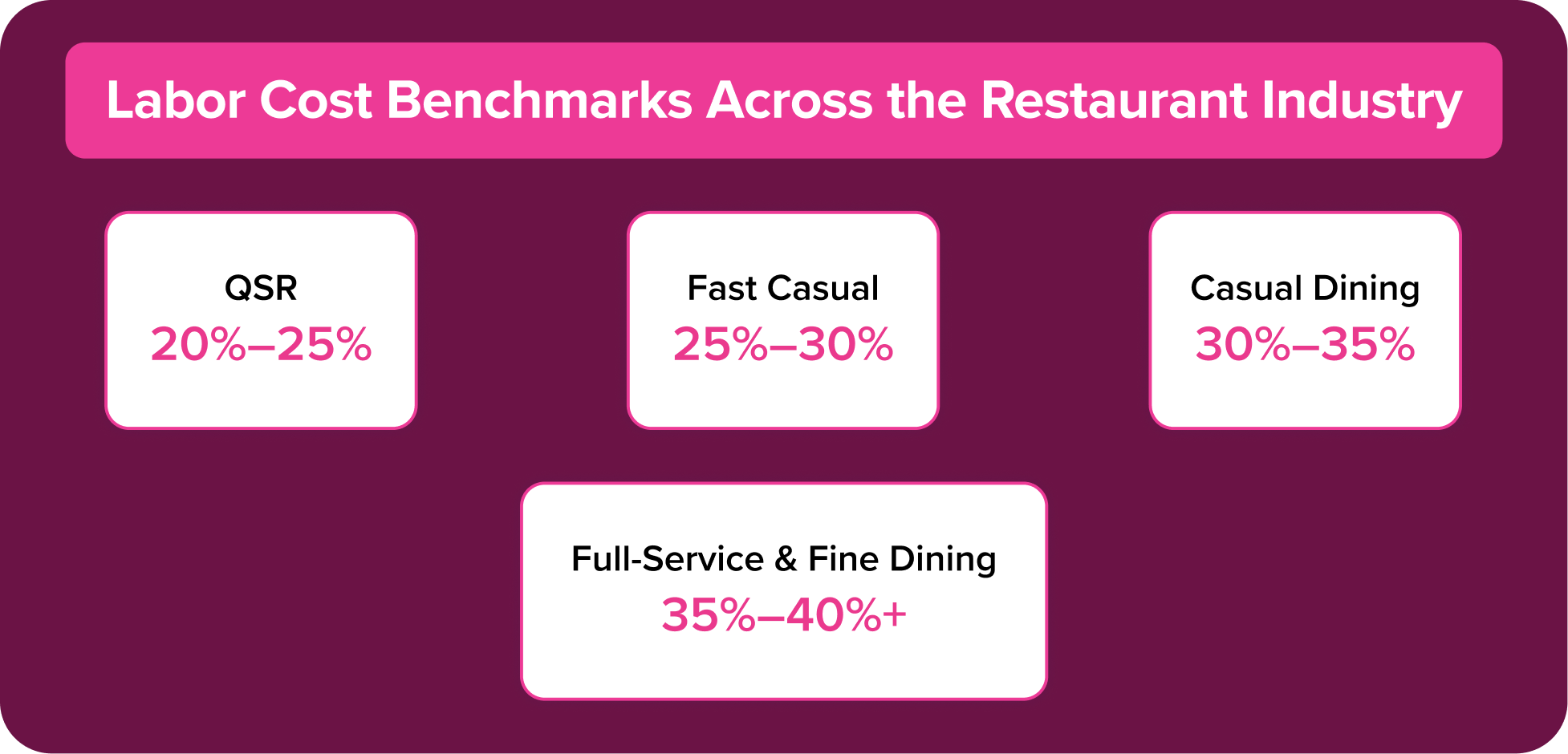
Quick-Service Restaurants (QSR)
Quick-service restaurants rely on speed, volume, and simplified menus. Because of that efficiency, labor cost in the restaurant industry tends to run lower for QSR concepts.
Typical range: 20% to 25% of sales
Tight processes and high throughput help control labor, but even small scheduling mistakes can hurt profitability when margins are thin.
Fast-Casual Restaurants
Fast-casual restaurants blend quick service with higher-quality food and a more elevated guest experience.
Typical range: 25% to 30% of sales
Labor cost in the restaurant industry rises here due to made-to-order food, prep demands, and more guest interaction. Staffing needs to flex carefully with demand to avoid unnecessary labor hours.
Casual Dining Restaurants
Casual dining concepts depend on servers, hosts, bartenders, and kitchen teams working together across longer meal periods.
Typical range: 30% to 35% of sales
Labor cost in the restaurant industry becomes more complex at this level, especially with tipped wages, uneven traffic, and longer table turns.
Full-Service and Fine Dining
Full-service and fine dining restaurants intentionally invest more in labor to deliver a premium experience.
Typical range: 35% to 40% or higher
Here, higher labor cost in the restaurant industry is expected. The key is making sure that labor spend supports higher check averages, repeat visits, and brand reputation.
Key Factors That Drive Labor Cost Variability
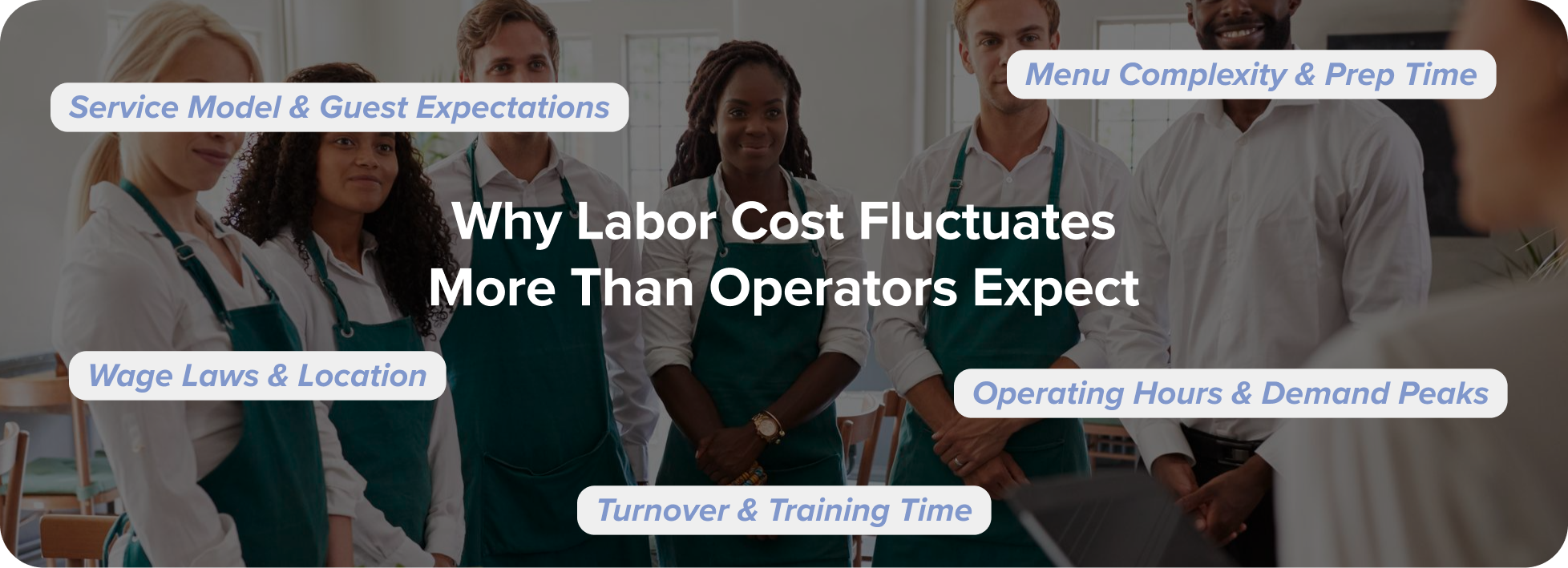
When labor cost in the restaurant industry spikes, it’s rarely because of one big mistake. More often, it’s a handful of small, everyday decisions stacking up over time. Staffing choices, menu design, local regulations, and even team stability all play a role, whether operators realize it in the moment or not.
Service Model and Guest Experience Expectations
How you choose to serve guests sets the tone for labor needs. Counter service, table service, and high-touch hospitality all require very different staffing levels. A concept built around speed needs coverage during rushes. A concept built around experience needs enough people on the floor to deliver it. When expectations and staffing don’t line up, labor cost in the restaurant industry climbs fast.
Menu Complexity and Prep Requirements
Menus matter more than most operators think. Scratch cooking, customization, and long prep lists add hours behind the scenes. That extra labor shows up before the first ticket is even fired. Simpler menus create flexibility. Complex menus demand more hands, more training, and more time.
Location, Minimum Wage, and Labor Laws
Where a restaurant operates can dramatically change labor cost in the restaurant industry. Minimum wage rates, overtime thresholds, tip credits, and scheduling rules all affect how labor is planned. In some markets, compliance alone limits how much flexibility managers have when building schedules.
Operating Hours and Peak Demand Patterns
Restaurants don’t earn sales evenly throughout the day, but labor often gets scheduled that way. Early mornings, late nights, and uneven rushes make staffing tricky. When labor isn’t adjusted to match real traffic patterns, costs rise even on days that feel busy.
Staff Turnover and Training Costs
Turnover is one of the most overlooked drivers of labor cost in the restaurant industry. New hires take weeks to reach full productivity, and constant training pulls experienced staff away from service. Stable teams usually cost less in the long run, even if hourly wages are higher.
How to Calculate Labor Cost in Restaurants
You can’t control what you don’t measure. To keep labor costs down in the restaurant business, you need to be able to do clear and consistent calculations.
Total Labor Cost Components
A full calculation of labor costs includes:
- Wages and salaries
- Overtime pay
- Payroll taxes
- Benefits and insurance
- Training and onboarding time
- Incentives and bonuses
Not including some pieces makes the true labor cost picture less complete.
Labor Cost Percentage Formula
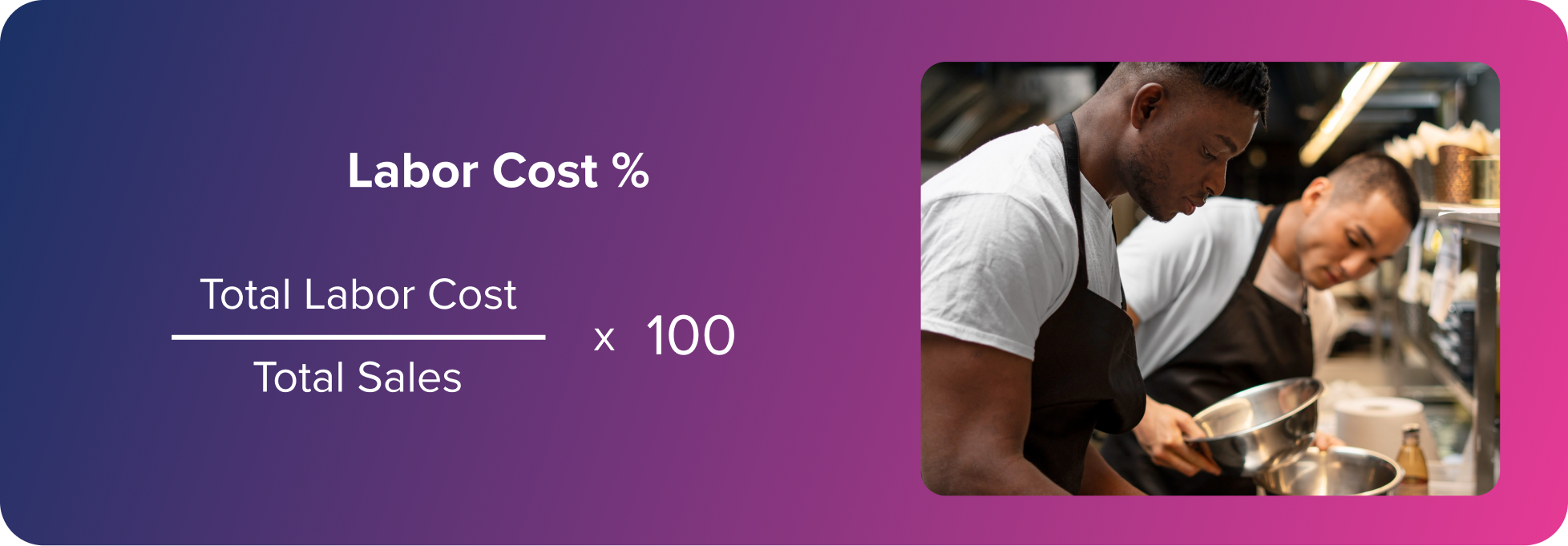
To find the labor cost percentage, divide the total labor cost by the total sales for the same time period.
Labor Cost Percentage = (Total Labor Cost ÷ Total Sales) × 100
Operators can spot trends early by keeping an eye on this regularly instead of waiting until margins drop.
Labor Cost vs Sales Performance
Rising labor costs don’t always mean that you’re spending too much. Sales can go down even when the number of employees stays the same. It stops overcorrection to look at both sales and labor costs in the restaurant business.
Why Labor Cost Control Impacts Profitability
Operators can quickly change the cost of labor, which is one of the few things they can do. Bad labor management cuts into profits, makes it harder to get cash flow, and makes it harder to be flexible when business is slow.
When labor cost in the restaurant industry is managed well, restaurants gain stability. Good planning for workers helps keep service consistent, protects profits, and makes growth more sustainable.
Core Strategies to Manage Restaurant Labor Costs
The best labor strategies don’t cut jobs; they focus on alignment.
Demand-Based Schedule and Shift Optimization
Schedules should be based on actual demand, not habits. Using past sales patterns to help with staffing helps make sure that labor hours match up with actual traffic.
Reduce Overtime and Schedule Inefficiencies
Overtime often sneaks in through little holes and last-minute fixes. Keeping a close eye on hours helps keep labor costs down in the restaurant business without getting in the way of business.
Cross-Train Employees for Flexibility
Managers can quickly change coverage when demand changes with cross-trained teams. That flexibility means you don’t need as many extra staff.
Improve Employee Retention to Lower Hiring Costs
Retention has a direct effect on the cost of labor in the restaurant business. Teams with more experience get things done faster, make fewer mistakes, and save money on training.
Align Labor Planning With Menu and Promotions
Changes to the menu and promotions have an effect on how long it takes to prepare food and how smoothly service runs. To avoid staffing surprises, labor plans should be flexible.
Using Data and Technology to Control Labor Costs
Managing labor costs in the restaurant business is becoming more dependent on technology. Managers can make better decisions faster when they can see real-time information about sales, labor hours, and productivity. For many operators, automation helps reduce manual work, improve accuracy, and support teams navigating ongoing labor shortages.
When labor data is linked to sales and financial systems, operators can spot issues early, adjust schedules, and prevent small inefficiencies from turning into bigger cost problems over time.
Common Labor Cost Mistakes Restaurants Make
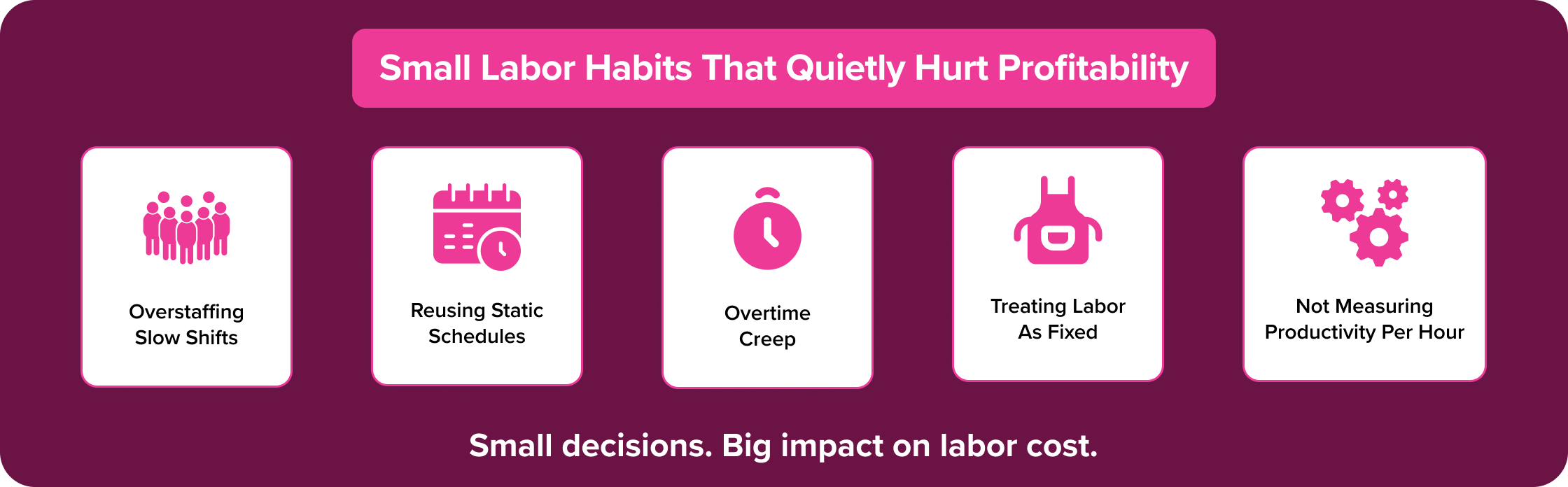
Most labor problems don’t start as big, obvious failures. They build slowly, through routines that feel harmless in the moment but quietly push labor cost in the restaurant industry higher over time.
Overstaffing During Low-Demand Periods
This usually comes from good intentions. Managers staff heavy to be safe, just in case traffic picks up. When it doesn’t, labor hours get burned without sales to support them. A few slow shifts like that each week can drag labor percentages up before anyone notices.
Relying on Static Schedules
Copying last week’s schedule feels efficient, but restaurants rarely operate the same way two weeks in a row. Weather, local events, seasonality, and menu changes all affect traffic. Static schedules ignore those shifts, making labor cost in the restaurant industry harder to control.
Ignoring Overtime Creep
Overtime doesn’t always look like a problem on a single shift. Someone stays late to help close. Another covers a call-out. Individually, it feels manageable. Added together across a pay period, those extra hours quietly inflate labor costs.
Treating Labor as a Fixed Cost
Some operators plan labor the same way they plan rent, assuming it won’t change much. In reality, labor needs to move with demand. When staffing doesn’t flex up and down with sales, labor cost in the restaurant industry becomes disconnected from performance.
Failing to Measure Productivity per Labor Hour
Hours alone don’t tell the full story. Two shifts can cost the same but produce very different results. Without looking at sales, tickets, or output per labor hour, inefficiencies stay hidden and repeat themselves.
Putting Labor Cost Control Into Practice
Labor will always be one of the biggest challenges in restaurant operations. But labor cost in the restaurant industry doesn’t have to feel unpredictable.
Operators who understand their labor drivers, review performance consistently, and align staffing with demand put themselves in a stronger position to protect margins while still delivering great service.
Restaurant Labor Cost FAQs
What is a healthy labor cost percentage for restaurants?
A healthy labor cost percentage depends on the concept, but most restaurants fall between 20% and 35%. Fine dining and full-service restaurants often operate higher.
How often should labor costs be reviewed?
Labor should be reviewed daily at a high level and weekly for trends. Frequent review helps prevent small issues from growing.
How does minimum wage impact labor planning?
Minimum wage increases raise baseline labor cost in the restaurant industry and reduce flexibility, making productivity and scheduling more important.
Can technology really reduce labor costs without hurting service?
Yes. Technology improves visibility and planning so labor aligns with demand instead of being cut blindly.
What’s the biggest cause of rising labor costs in restaurants?
Wage pressure, high turnover, inefficient scheduling, and misalignment between staffing and sales are the most common drivers.