


Alerts & What’s Trending
Small Cost Leaks Usually Start Showing Up Long Before Profitability Drops
Visibility Gets Harder When Your Systems Don’t Talk to Each Other
Operators Aren’t Just Battling Inflation. They’re Battling Margin Erosion.

Produce
Tomatoes fell sharply as new Eastern U.S. and Mexican supply hit the market, with 25 lb. large romas expected back in the $10–$15/carton range by late June — though pent-up demand may keep prices elevated short-term. Onions are leveling out following a big surge over the past month, as the market nearly completed its switch from old crop storage to new crops in California and New Mexico. This suggests a sharp downturn in prices over the coming weeks, though yellows likely won’t fully erase April’s gains in the near term. Lettuce is holding at historically inflated levels following an April surge, but supplies should normalize by month-end, with 24-count iceberg projected back in the $15–$20/carton range by mid-June.
Outlook: Expect easing prices for tomatoes and onions through June and moderating lettuce costs by mid-June; plan menus and produce promotions to capitalize on improving availability.

Grains
The May Crop Production and WASDE reports delivered the first look at 2026/27 balance sheets, with mixed futures reaction. The headline implication for foodservice: despite EPA’s 2026/27 renewable volume obligations projecting biofuel demand up more than 25% year-over-year, U.S. soybean oil carryout is actually expected to rise slightly year-over-year thanks to a significant increase in production and a decline in exports and other domestic use. This fundamentally undermines the case for SBO holding above $70, though the trade has yet to fully adjust. Wheat news was the bigger headline but is a slower-developing operator story.
Outlook: Stagger fryer oil purchases and consider stepped or short-term contracts on SBO exposure—fundamentals point lower even if the futures market hasn’t fully repriced, and a wait-and-see posture is prudent for wheat-driven inputs.

Dairy
The dairy complex eased across the board last week with the exception of butter, which posted a modest two-cent gain. Cheese is now trading roughly 12% below last year and butter a striking 30% below — a substantial tailwind for pizza, burger, bakery, and breakfast programs. Seasonally strong U.S. milk production continues to drive heavy cheese and butter output, with domestic demand steady and exports strong (March cheese exports +29% y/y to a record, with Mexico taking ~one-third). However, softer cheese prices in Oceania and Europe are eroding U.S. global competitiveness, which could slow export momentum and add volatility later in summer.
Outlook: Lock in extended cheese and butter coverage now to protect summer and early-fall menu economics—the year-over-year discount is substantial and unlikely to widen further given the export-momentum risk.
Beef
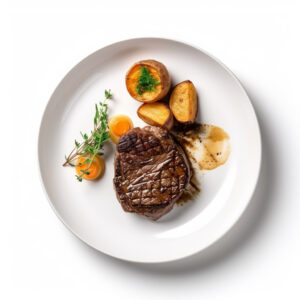
Beef production improved last week, rising 1.4% from the prior week, but year-to-date output still trails 2025 by approximately 6.7%, largely driven by a 9.3% decline in cattle slaughter. This indicates continued structural tightness in the supply chain. Beef markets were mixed last week, with the USDA Choice cutout averaging slightly lower while Select moved higher, finishing above Choice. This can signal consumer trade-down activity within the beef category. Flanks and chucks led the gainers, while briskets and loins paced the decliners. Beef trim markets were firm, with fattier trim outperforming leaner product. China will resume U.S. beef imports, and reports suggest the U.S. could soon ease access for Brazilian beef imports. The USDA sharply lowered its Q2 and Q3/Q4 production estimates, suggesting the expected backlog of cattle in feedlots may not materialize, which remains a bullish signal for beef prices moving forward.
Outlook: Position beef for sustained inflation across the balance of the year; accelerate contract conversations on briskets and loins where short-term softness exists, evaluate Select-grade specs for value LTOs, and build chuck-based menu architecture to protect system-wide food cost.

Pork
Pork output softened last week, declining 3.6% from the prior week and finishing just 0.3% above the same week last year. Despite the tighter supply picture, the USDA pork cutout managed only a modest gain on the week, led by strong advances in the butt and rib complexes. The pork belly market has declined sharply, falling nearly 5% last week alone, almost 13% over the past month, and is trading more than 16% below year-ago levels—presenting a textbook seasonal buying window for bacon. USDA updated 2026 pork supply forecasts show Q2 pork production now expected to run just 1% above last year, with only a modest increase in per capita pork consumption. U.S. pork export sales to China have failed to impress, but exports to Mexico continue to stand out, with March shipments climbing nearly 7% from last year to a record high for the month. Mexico’s pork consumption and imports are both expected to climb to record highs in 2026, which should help keep U.S. pork exports, especially hams, on solid footing and may ultimately help establish a floor under ham prices.
Outlook: This is a high-conviction belly/bacon buying window—secure forward coverage for summer BLT, breakfast, and bacon-LTO programs across the system, and expect hams to firm into Q3/Q4 holiday planning.

Seafood
Frozen tilapia fillet prices fell 8.8% month-over-month in March and remain weak after an extended downturn that started mid-2025. This pricing pattern in 2026 contrasts with typical seasonal surges for tilapia, which has historically peaked between March and April. Tilapia entered 2026 at an all-time low and has been unable to recover from last year’s April–July collapse. April import volumes likely weakened, which should have briefly supported prices, but real-time data suggests tilapia has reverted to sideways-to-slightly-lower drift. Imported whitefish and other lower-cost items may remain competitively priced near term depending on shipment flows and foreign exchange rates.
Outlook: Tilapia remains a high-value protein for system-wide value menu features and LTO rotation—pricing should stay flat to softer near-term, supporting consistent food cost across units.
Poultry
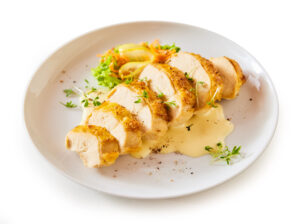
Chicken production continues to run strong, with year-to-date output up approximately 3% versus last year. Young chicken slaughter dipped slightly week-over-week but remains about 1% above last year, and production for the week ending May 9 was +1.7% year-over-year. This ample supply is translating to favorable pricing. Boneless skinless chicken breasts dipped just over 1% last week and are on pace to average lower in May than April—a rare occurrence, only the third such instance in 15 years. Breasts are also trading at record discounts to hamburger in wholesale and retail channels, positioning them as a significant value play. Chicken wings continue to trade near decade-low May levels. Table egg prices moved higher last week, while turkey breast markets eased. While the resumption of U.S. beef exports to China has fueled hope for chicken to follow, Chinese chicken imports are projected to hit a 13-year low, limiting the upside risk to domestic pricing.
Outlook: Lean into chicken-forward LTOs and category-wide menu repositioning around breasts and wings; the value gap versus beef is a portfolio-level margin opportunity worth capturing across all units.