

Hidden cost drivers could be quietly eroding your margins. Are you tracking the ones that matter most?
In a previous blog, we shared 10 insights that foodservice operators need to succeed, from vendor pricing and inventory tracking to purchasing compliance and rebate management. But improving profitability requires more than covering the basics.
The next level of operational success comes from identifying the visibility gaps you may not even realize exist: the disconnects between systems, inconsistencies across locations, and blind spots within supplier relationships.
That’s where InsideTrack can help. Our technology uncovers hidden inefficiencies and gives foodservice operators the insight they need to make smarter, faster decisions.
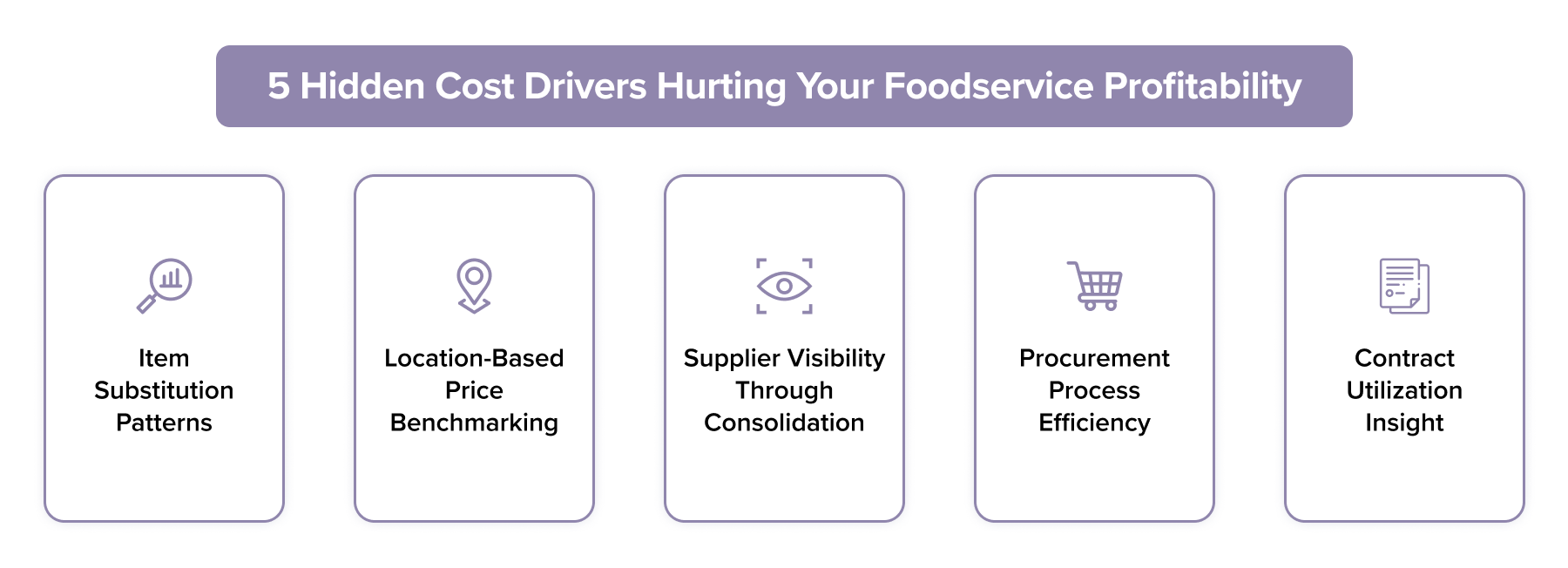
1. Item Substitution Patterns
Why it matters:
Frequent product substitutions can disrupt consistency, confuse staff, and drive up costs, especially when higher-priced alternatives are introduced without clear oversight. If substitution activity goes untracked, its impact on margins can be easy to miss.
How InsideTrack helps:
InsideTrack monitors substitution activity and alerts you when items are swapped. Detailed reporting shows the cost difference between original and substituted products, making it easier to understand margin impact and take corrective action.

2. Location-Based Price Benchmarking
Why it matters:
When prices vary by location, profitability varies too. Without clear benchmarking, it can be difficult to spot inconsistencies, negotiate effectively, or identify where overspending is happening.
How InsideTrack helps:
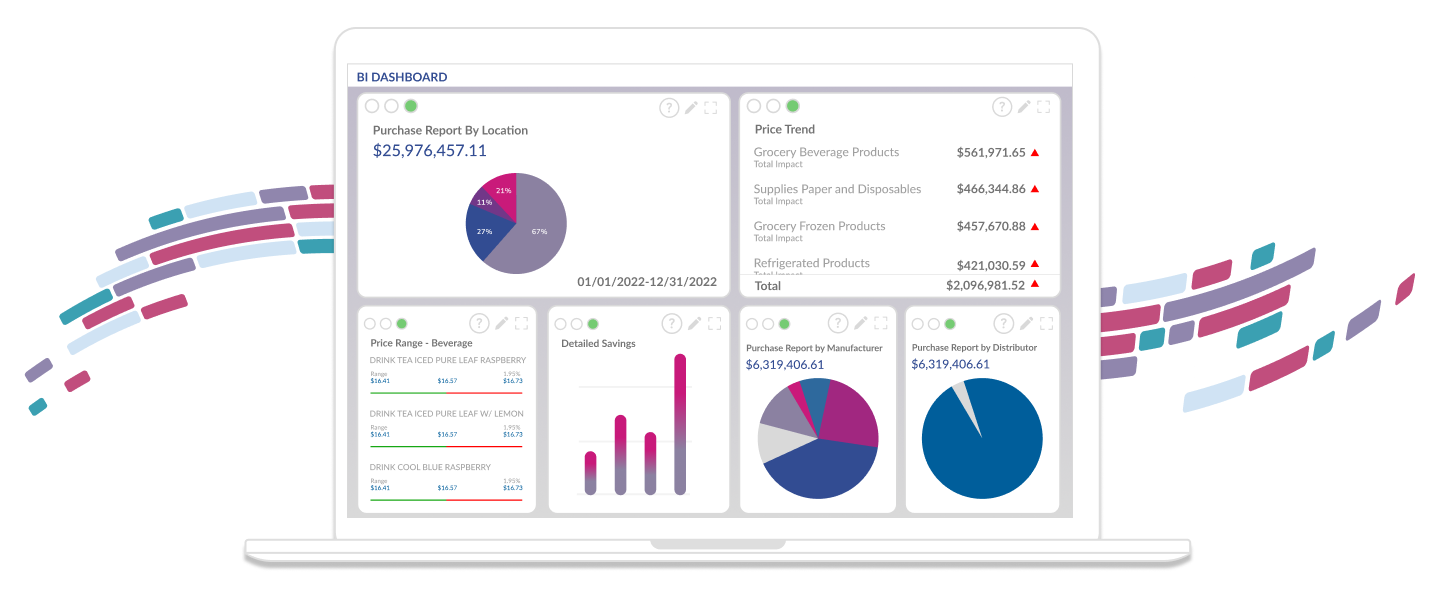
InsideTrack Price Health Check lets you compare pricing across locations by item, category, and manufacturer. It highlights where locations are paying more for the same products, helping you improve contract compliance and standardize pricing across the business.

3. Supplier Visibility Through Consolidation
Why it matters:
Managing multiple suppliers across categories like broadline, produce, OS&E, and linen often creates disconnected data and limited visibility. Without a centralized view, it becomes much harder to make informed purchasing decisions.
How InsideTrack helps:
InsideTrack brings supplier data together in one platform, giving you a complete view of purchases across vendors and categories. With better visibility, you can identify spending trends, uncover savings opportunities, and simplify procurement oversight — all without changing suppliers.

4. Procurement Process Efficiency
Why it matters:
An inefficient procurement process can lead to delays, miscommunication, and costly mistakes. When teams rely on manual workarounds, purchasing becomes slower, less accurate, and harder to manage.
How InsideTrack Helps:
InsideTrack works alongside your existing tech stack to close critical process gaps and improve procurement efficiency. By centralizing purchasing insights and streamlining tasks like price verification, contract tracking, and reporting, it gives your team more control without disrupting current workflows.
5. Contract Utilization Insight
Why it matters:
Negotiating strong contracts is only part of the equation. If locations or departments purchase outside approved contracts, you risk losing negotiated pricing, rebate opportunities, and supply chain consistency.
How InsideTrack Helps:
InsideTrack tracks contract utilization in real time, showing where purchases fall outside preferred vendors or approved product lists. These insights help you reinforce purchasing discipline, improve rebate capture, and protect your margins without micromanaging daily decisions.

Success Starts with Visibility
Even the best operators cannot optimize what they cannot see. By exposing overlooked issues like substitution patterns, pricing inconsistencies, procurement inefficiencies, and off-contract spending, InsideTrack helps foodservice organizations operate more efficiently and profitably.
Want to see the impact for yourself? Click here to request a demo or fill out the form below to learn how InsideTrack can help you take control of purchasing, improve performance, and protect profitability.